
Sign In
  • UGANDA
  • AFRICA
  • WORLD
watchdog uganda logo
Submit an Article
  • Home
  • News
    • National
    • Politics
    • World News
    • Media Outreach Newswire
    • Africa News
    • Tourism
    • Community News
    • Luganda
    • Sports
      • Football
      • Motorsport
  • Op-Ed
    • #Out2Lunch
    • Conversations with
    • Politics
    • Relationships
  • Business
    • Agriculture
    • CEOs & Entrepreneurs,
    • Companies
    • Finance
    • Products
    • RealEstate
    • Technology
  • Entertainment
    • Lifestyle
  • People
    • Showbiz
      • Salon Mag
  • Special Report
    • Education
    • Voices
  • Reviews
    • Products
    • Events
    • Hotels
    • Restaurants
    • Places
  • Forums
  • Donate
  • China News

Archives

  • June 2026
  • May 2026
  • April 2026
  • March 2026
  • February 2026
  • January 2026
  • December 2025
  • November 2025
  • October 2025
  • September 2025
  • August 2025
  • July 2025
  • June 2025
  • May 2025
  • April 2025
  • March 2025
  • February 2025
  • January 2025
  • December 2024
  • November 2024
  • October 2024
  • September 2024
  • August 2024
  • July 2024
  • June 2024
  • May 2024
  • April 2024
  • March 2024
  • February 2024
  • January 2024
  • December 2023
  • November 2023
  • October 2023
  • September 2023
  • August 2023
  • July 2023
  • June 2023
  • May 2023
  • April 2023
  • March 2023
  • February 2023
  • January 2023
  • December 2022
  • November 2022
  • October 2022
  • September 2022
  • August 2022
  • July 2022
  • June 2022
  • May 2022
  • April 2022
  • March 2022
  • February 2022
  • January 2022
  • December 2021
  • November 2021
  • October 2021
  • September 2021
  • August 2021
  • July 2021
  • June 2021
  • May 2021
  • April 2021
  • March 2021
  • February 2021
  • January 2021
  • December 2020
  • November 2020
  • October 2020
  • September 2020
  • August 2020
  • July 2020
  • June 2020
  • May 2020
  • April 2020
  • March 2020
  • February 2020
  • January 2020
  • December 2019
  • November 2019
  • October 2019
  • September 2019
  • August 2019
  • July 2019
  • June 2019
  • May 2019
  • April 2019
  • March 2019
  • February 2019
  • January 2019
  • December 2018
  • November 2018
  • October 2018
  • September 2018
  • August 2018
  • July 2018
  • June 2018
  • May 2018
  • April 2018
  • March 2018
  • February 2018
  • January 2018
  • December 2017
  • November 2017
  • October 2017
  • September 2017
  • August 2017
  • July 2017
  • June 2017
  • May 2017
  • April 2017
  • March 2017
  • February 2017
  • January 2017
  • November 2016
  • October 2016
  • September 2016
  • August 2016
  • July 2016
  • September 2015
  • April 2014
  • June 2013

Categories

  • #Out2Lunch
  • Agriculture
  • Big Brother Naija Dairy
  • Business
  • CEOs & Entrepreneurs,
  • China News
  • Community News
  • Companies
  • Conversations with
  • Court
  • culture
  • Deplomacy
  • Education
  • Education
  • Entertainment
  • Entrepreneurs
  • Events
  • Fashion
  • Finance
  • Football
  • Gadgets
  • Health
  • Hotels
  • Innovation
  • Lifestyle
  • Luganda
  • Motorsport
  • National
  • News
  • Op-Ed
  • Opinion
  • People
  • Photography
  • Photos
  • Places
  • Politicians
  • Politics
  • Politics
  • Products
  • Products
  • RealEstate
  • Relationships
  • religion
  • Reports
  • Restaurants
  • Reviews
  • Roadtrip
  • Salon Magazine
  • Showbiz
  • Special Report
  • Sports
  • Stars
  • Technology
  • Tourism
  • Travel
  • Traveler
  • Trips
  • Video
  • Voices
  • World
  • World News
Reading: WILFRED ARINDA: 2026: NRM Hunting the Poor
Share
Watchdog UgandaWatchdog Uganda
Font ResizerAa
  • Home
  • News
  • Op-Ed
  • Business
  • Entertainment
  • People
  • Special Report
  • Reviews
  • Forums
  • Donate
  • China News
Search
  • Home
  • News
    • National
    • Politics
    • World News
    • Media Outreach Newswire
    • Africa News
    • Tourism
    • Community News
    • Luganda
    • Sports
  • Op-Ed
    • #Out2Lunch
    • Conversations with
    • Politics
    • Relationships
  • Business
    • Agriculture
    • CEOs & Entrepreneurs,
    • Companies
    • Finance
    • Products
    • RealEstate
    • Technology
  • Entertainment
    • Lifestyle
  • People
    • Showbiz
  • Special Report
    • Education
    • Voices
  • Reviews
    • Products
    • Events
    • Hotels
    • Restaurants
    • Places
  • Forums
  • Donate
  • China News
Have an existing account? Sign In
Follow US
© 2026 Watchdog Uganda. Ruby Design Compan. All Rights Reserved.
Op-EdPolitics

WILFRED ARINDA: 2026: NRM Hunting the Poor

watchdog
watchdog
Share
SHARE

In the aftermath of the 2026 general elections, where President Yoweri Museveni and the National Resistance Movement (NRM) secured another term with a 71.65 per cent of the presidential vote, Ugandans might have expected some respite. After all, the electorate had once again “gifted” the ruling party the mandate to govern. Yet, barely months into the new term, the government has tabled a raft of tax proposals for the 2026/27 financial year that read less like a development blueprint and more like a calculated assault on the very poor who form the backbone of NRM’s rural and urban support base.

Coupled with aggressive enforcement of urban “clean-up” operations demolitions of unplanned structures and forced eviction of street vendors, and the newly tabled Protection of Sovereignty Bill, 2026, this year is shaping up to be a year of profound hardship for the ordinary mwananchi.

Let’s look at the numbers. The Ministry of Finance is pushing tax measures designed to raise an additional Shs4.8 trillion, with Shs2.3 trillion expected from new or increased levies. Among the most punitive are those hitting daily essentials and the informal economy. The Excise Duty (Amendment) Bill, 2026, proposes a flat Shs1,000 levy per 50-kilogram bag of cement and excise duties of Shs50 per litre or kilogram on locally manufactured paints (rising to Shs2,000 on imports). Fuel excise will jump by Shs200 per litre for both petrol and diesel. Stamp duty on land transfers is to be doubled from 1.5 per cent to 3 per cent. Traders are also staring at higher taxes on second-hand clothes (including a proposed 30 per cent environmental levy on imports), sugar, cooking oil and motorcycle registrations. These are not abstract figures. They strike directly at the informal sector that dominates Uganda’s labour market.

- Advertisement -

According to the Uganda Bureau of Statistics (UBOS) Labour Market Survey 2025, informal employment stands at 89.2 per cent nationally. This means nearly nine in every ten Ugandan workers operate without formal contracts, social security, or regulatory protections. In absolute terms, informal establishments employ about 7.35 million people, compared to just 2.37 million in the formal sector, out of a total employed population of around 11.8 million. Even when agriculture, forestry and fishing are excluded, informal employment remains stubbornly high at 87.6 per cent nationally, rising to 95.1 per cent among youth aged 15-24 years and 91.5 per cent for those aged 18-30 years.

Informal trade alone accounts for 53.1 per cent of employment within informal establishments, making it the single largest source of jobs outside agriculture. These statistics reveal an economy where low-productivity, unregulated activities, from street vending and boda riding to small-scale masonry and market trading, sustain the majority of households.The dominance of informality is not a minor feature; it is structural. Recent government reviews indicate that the informal sector now contributes 54.5 per cent of Uganda’s GDP (up from earlier targets aimed at reduction under NDP III), underscoring its central role in economic output while simultaneously explaining the persistently low tax-to-GDP ratio.

Vulnerable employment, self-employed or unpaid family labour, affects 52 per cent of workers, and multidimensional poverty afflicts 27 per cent of Ugandans, with deprivations most acute in rural areas and among those reliant on informal livelihoods. For these citizens, every extra Shs200 on fuel or Shs1,000 on cement is not a minor inconvenience; it is the difference between eating once or twice a day, or between repairing a leaking roof and sleeping under rain.

- Advertisement -

Higher costs on sugar, cooking oil, paints and second-hand clothes directly erode the thin margins of market women, carpenters and small traders who have no formal safety net.The pain does not end with taxes. In parallel, authorities are executing a nationwide crackdown on “unplanned” urban spaces. Kampala Capital City Authority (KCCA) began evicting street vendors from the Central Business District in February 2026, giving them days to relocate to formal markets or face demolition of their stalls. Similar operations are underway in Kabale, Moroto, Ntungamo and other municipalities, backed by a March 2026 directive from the Ministry of Local Government ordering the removal of illegal trading structures, kiosks and boda stages. The human cost is immediate and statistical. Street vending and small informal trade employ millions, particularly women and youth, in a country where over 90 per cent of young employed people work informally and where formal job creation has lagged far behind population growth.

Evicting vendors without viable, affordable alternatives does not formalise the economy; it destroys livelihoods overnight. The same poor households already reeling from higher transport and construction costs will now lose their only source of daily income. In a nation where the informal sector contributes over 54 per cent of GDP and where nearly 90 per cent of workers depend on it for survival, these policies risk pushing more citizens deeper into poverty rather than lifting them out. Youth unemployment stands at 17.9 per cent nationally (18 per cent for ages 15-24), with some sub-regions like Bukedi recording rates as high as 37 per cent, leaving young people with few options beyond informal hustles that are now under siege.

Adding to this burden is the recently tabled Protection of Sovereignty Bill, 2026, introduced in Parliament on April 15 by State Minister for Internal Affairs Gen David Muhoozi. The Bill seeks to regulate dealings with foreigners, requiring Cabinet approval for certain interactions involving foreign funding, influence or partnerships, with stiff penalties including fines up to Shs4 billion for companies and Shs2 billion or 20 years in prison for individuals. While framed as a shield for national sovereignty, its sweeping provisions risk choking the flow of foreign investment, remittances, tourism, and NGO support that indirectly sustain many poor Ugandans. Diaspora remittances, estimated at US$2.5 billion (about Shs9.3 trillion) in 2025, equivalent to roughly 3.8 per cent of GDP and delivered through over 16 million small transactions, serve as a critical lifeline for low-income households, funding food, school fees, healthcare and small businesses. Bureaucratic hurdles could disrupt these flows, hitting the very informal households that rely on them most. Tourism and NGO services, which support countless small vendors, guides and community programmes, may similarly contract, reducing income opportunities in the informal sector already battered by taxes and demolitions.

- Advertisement -

There is bitter irony here. The very voters who handed NRM another five years, largely the rural poor, informal traders and urban hustlers, are the first to feel the fiscal fist. The government argues these measures are necessary to close a widening fiscal deficit, service a public debt now exceeding Shs126 trillion, and fund infrastructure while protecting sovereignty. Yet when the burden falls heaviest on those least able to pay, when cement becomes dearer for the muzigo dweller, when a vendor’s kiosk is reduced to rubble, and when sovereignty measures threaten the modest external support that keeps many afloat, one cannot escape a conclusion that the fish eating its own.

If 2026 is to be remembered as anything other than the year the government turned decisively against its most vulnerable citizens, a fundamental rethink is urgent. Taxes must target the untaxed wealthy and genuine economic growth, not consumption by the struggling masses. Urban planning must include, not evict, the informal sector that keeps Uganda’s cities alive. And sovereignty protections must be calibrated to avoid collateral damage on the very citizens they claim to defend.

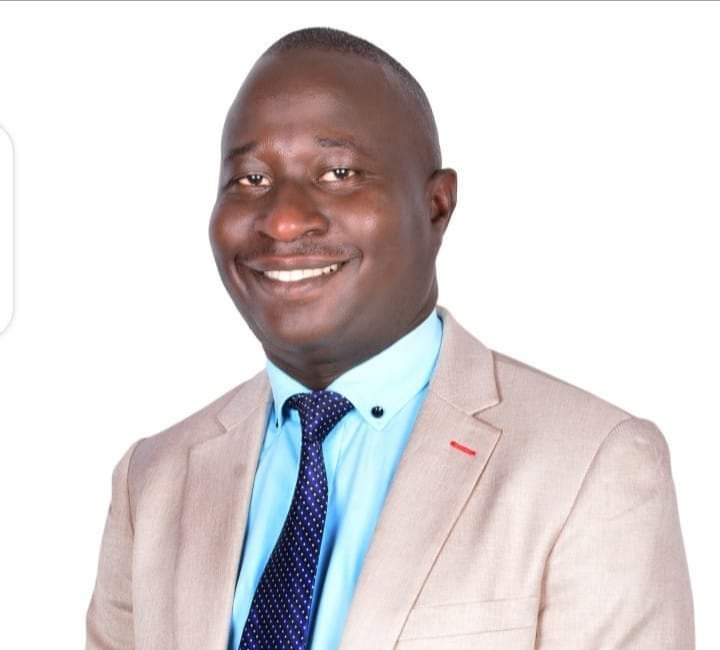
The writer is the LC 5 Male Youth Councillor for Rubanda District
wilfredarinda@gmail.com


Do you have a story in your community or an opinion to share with us: Email us at Submit an Article
Subscribe to Our Newsletter
Subscribe to our newsletter to get our newest articles instantly!
Share This Article
Facebook Whatsapp Whatsapp Email Copy Link
Bywatchdog
Follow:
Watchdog Uganda is a news portal for trending news and commentaries in the areas of politics, security, business, tourism, technology, education, et al.
Previous Article Rajiv’s Legacy Drives On: Ruparelia Foundation Opens Pearl Tower for Motorsport Memorial Meet
Next Article ENG. JONARD ASIIMWE: The Sovereign Mandate to Believe: Why Uganda’s Bet on Indigenous Science Defines Our Liberation and Future!

Editor's Pick

DeplomacyHealthNationalNewsPoliticsWorld News

US Ambassadorial Transition in Kampala Signals Continuity in Uganda–US Relations

KAMPALA – The United States Embassy in Kampala has entered a new…

By
Mike Ssegawa
7 Min Read
Community NewsNationalNewsPeoplePoliticiansPoliticsVoices

INTERVIEW: David Kabanda Opens Up on Anita Among, Muhoozi and His Journey From Humble Beginnings to National Politics

In this David Kabanda Interview, the Unapologetic 'Omutume' Opened Up on Anita…

6 Min Read
Community NewscultureDeplomacyEntertainmentNewsPoliticsShowbiz

Singer King Saha Revives Feud With Minister Haruna Kasolo at Kazibwe Kapo’s Concert

King Saha Takes Swipe at Minister Haruna Kasolo During Kazibwe Kapo's Concert…

3 Min Read

Top Writers

Mike Ssegawa 834 Articles
Two decades of reporting, editing and managing news content. Reach...
Mulema Najib 4423 Articles
News and Media manager since 2017. Specialist in Political and...

Op-ED

Can Masaka Become Uganda’s Model District? Inside Oscar Mutebi’s Vision for Technology, Skills and Transformation

SPECIAL FEATURE: Can Masaka Become Uganda's Model District? Inside Oscar…

13th June 2026 at 17:13

#OutToLunch: English soccer fanaticism provides opportunities for business

By Denis Jjuuko The European soccer…

13th June 2026 at 15:20

Dr. NESTOR BASEMERA: Unemployment, Drug Addiction And Government’s Inaction- Who Will Save Uganda’s Youth?

Uganda, like many developing nations around…

13th June 2026 at 15:20

BWANIKA JOSEPH: Blood on the streets, Blindness in high offices, Every 1 out of 4 Ugandans experiencing mental illness

Uganda's mental health crisis is at…

13th June 2026 at 08:21

MIKE SSEGAWA: Karamoja Airport Is More Than Infrastructure—It Is the Beginning of a New Economic Revolution

Three years ago, at the height…

12th June 2026 at 12:50

You Might Also Like

Conversations with

Districts Embrace Kumumanya’s Transparency Agenda as Local Governments Advertise Jobs Publicly

PS Kumumanya argues Uganda's District, City's Authorities to embrace Transparency Agenda as Local Governments Advertise Jobs freely By Brian Mugenyi…

5 Min Read
Op-Ed

EDRINE BENESA: 2026/27 Budget And How Government Plans to Send More Ugandans Into The Money Economy

The 2026/27 national budget is built around one central mission: moving millions of Ugandans from subsistence survival into the money…

10 Min Read
BusinessOp-Ed

The Tax Risks Every NGO and Charity Should Understand

By Joshua Kato, CA. There is a common belief in Uganda that once an organization is called a charity, church,…

9 Min Read
CEOs & Entrepreneurs,Conversations withOp-Ed

Why Trade Management Is Critical to Uganda’s Economic Transformation By Brian Mugenyi

TRADE ORDER BEFORE PROSPERITY — Why Effective Trade Management Is Critical to Uganda's Economic Transformation By Brian Mugenyi mugenyijj@gmail.com  …

9 Min Read
watchdog uganda logo

About Us

Watchdog Uganda is a portal for solution journalism, trending news plus cutting edge commentaries in the fields of politics, security, business, tourism, entertainment, technology, agriculture, climate change, environment, public health et al. We also give preference to Ugandan community news and topical discussions. The portal also publishes community news and topical discussions.

Quick Links

  • Submit an Article
  • Forums
  • About Us
  • Contact Us
  • Advertise
  • Terms and Conditions

Follow Us

FacebookLike
XFollow
YoutubeSubscribe
TiktokFollow

© 2026 Watchdog Uganda. All Rights Reserved.

Welcome Back!

Sign in to your account

Username or Email Address
Password

Lost your password?