Misplaced priorities in governance are a widespread issue, not confined to Uganda alone but we have taken it a notch higher. The phrase describes leadership where there is rampant misalignment of budget priorities, with government spending on luxuries rather than essential and the immediate, fundamental needs of the population.
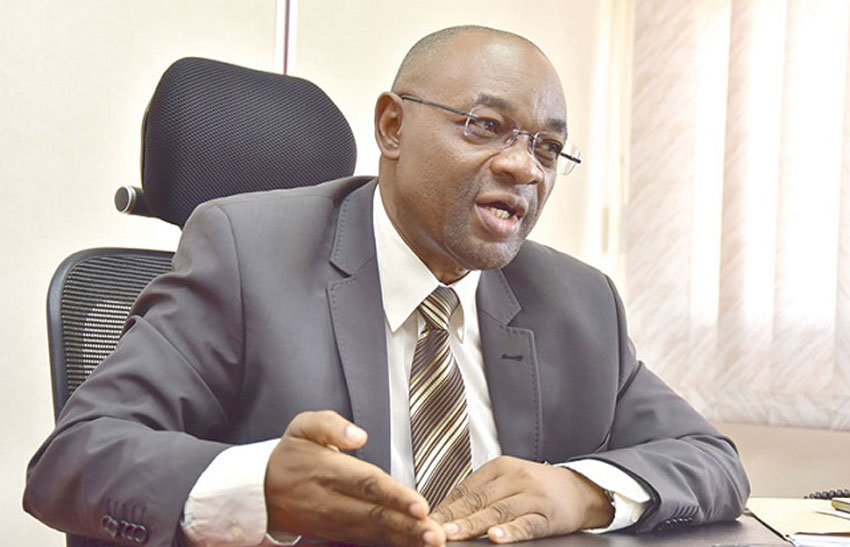
Last month the Director of Government Analytical Laboratories, Kepher Kuchana Kateu, asked Parliament to provide at least Ugx 2 billion to purchase specialized age-detection equipment. This bogus request was made during a hearing before the Public Accounts Committee as part of discussions on the Auditor General’s report.
On whether Uganda “really knows its priorities” is a complex, often debated, and subjective question that depends heavily on the lens through which it is examined. True priorities are revealed by behavior and time allocation, not just stated intentions. When actions do not reflect stated goals, it suggests that priorities are misplaced or poorly defined.
There is a tendency to focus on what is urgent rather than what is important, leading to a neglect of long-term goals. Often, there is too much investment in areas that do not yield long-term value while neglecting essential and foundational needs. When roles are unclear and outcomes are not tracked, even well-intentioned plans are misunderstood.
Prioritization can be defined through frameworks like the 4 Quadrants (Urgent vs. Important) or the 5 Priorities Model (Customers, Support, Processes, Technology, People). Countries often identify specific, actionable priority areas such as health, agriculture, infrastructure, education, energy, and defense but do nothing to arrange them according to priority.
There is a well-known fact that priorities change over time; what was important in the last financial year may not be the top priority this year. Thus, effective leadership requires aligning actions with declared, long-term goals, not fanciful projects that do not serve the common good. I think that is the price we pay for employing unpatriotic decision makers.
Ultimately, while countries often have established, stated priorities, they frequently struggle with aligning their actual time, resources, and actions with those goals, suggesting that knowing and implementing priorities is a constant and difficult challenge that a country with its people at heart must deal with firmly.
In his defence of the allocation, Kepher told lawmakers that they are increasingly receiving referrals from the National Identification and Registration Authority (NIRA) especially during renewal of ID cards, where there is a need to verify people’s ages scientifically. It has always been a norm in this country for civil servants and women to “alter “their age but what loss is occasioned as a result of the reduction or increase in age?
For a long time, government has been in the habit of creating problems and then coming up with clumsy solutions. Long before, we had a law called the Births and Deaths Registration Act which among others required authorities to register all children born in the borders of Uganda at birth but this was neglected for unknown reasons.
Before the request for the age detection equipment, we were relying on school records, immunization cards as well as birth and baptism certificates. Some people were simply using the ancient method of counting a child’s teeth to determine their age. Kepher argued that the machine will strengthen forensic verification capacity if their request is granted.
My view is that no money should be allocated for that machine as it is not a priority given the ailing economy. With the enactment of the Registration of Persons Act, 2015 (as amended in 2024), registration of birth should be made compulsory through NIRA at grassroot level.
If this law is implemented in its entirety, we can have the age conundrum solved but for future generations. Many Ugandans including President Yoweri Museveni have previously confessed to not knowing when they were actually born. Their documentations like driving permits, birth certificates, academic papers, passports and national identity cards have imaginary ages which we may have to ignore as we cannot force people to amend their documents.
Buying a machine to tell their true age is only for psychological gratification and not a national priority. After all, even an artificial intelligence-based age detection machine cannot accurately tell the exact date, month, and year of birth. Even when these systems are advanced, they are only designed to estimate a person’s age based on facial features (wrinkles, skin texture) rather than retrieving specific, legally binding biographical data.
The request is my view is a foregone conclusion that should not deplete money from the consolidated fund. We could redirect that money to more pressing needs of the country. With the new law in place, Registration of persons can be done immediately at health facilities for newborns, or at village, parish, sub-county and or district offices for home births.
The local government District offices then disseminate the child birth information on birth notification forms to NIRA which issues formal registration of birth certificates. These are measures that have been employed by more developed countries over the years and have solved the confusion associated with age alterations or falsification.
With this approach, whoever desires to obtain a birth certificate or whoever qualifies for a national identity card will find their information already captured in the national data base making it hard to falsify somebody’s age. It is only the failure in this system that will call for age detections machines, not now but only in the future.
Otherwise, we have many health facilities without essential diagnostic and treatment machines, specifically X-ray and cancer care equipment. However, the Ministry of Health which is also in charge of the Government Analytical Laboratories are now asking for an age detection machine instead of urgent medical equipment. We need to remind the Ministry of Health that what is killing Ugandans is not falsified age but undetected diseases.
Wadada Rogers is a commentator on political, legal and social issues. wadroger@yahoo.ca
Do you have a story in your community or an opinion to share with us: Email us at Submit an Article