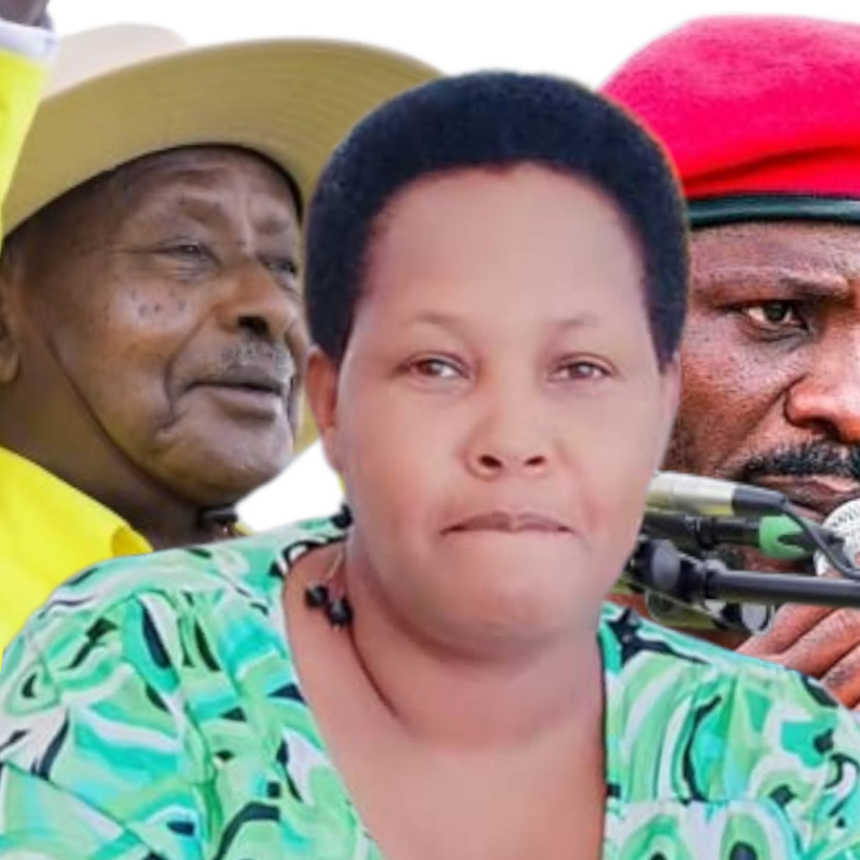
When one first hears the word Masaka, the first things that pops into their mind is the hostile politics that has rarely allowed the ruling National Resistance Movement and President Museveni to breath. Equally so, the person deployed to rein as the President’s representative must ideally be very sophisticated. Surprisingly, naked eyes would see that picture on the first glance at Billy Janet Mulindwa- the Resident District Commissioner ( RDC) for Masaka District. Soft spoken, and simple on the outlook yet made of the strongest metal on a deeper examination.
When Ms. Billy Janet Mulindwa was deployed to Masaka in 2024, many whispered that she had been sent into the “lion’s den.” The district was a bastion of opposition politics, a place where Robert Kyagulanyi’s National Unity Platform (NUP) had swept nearly everything in 2021—Members of Parliament, district chairperson, and almost 90% of local councils. For the ruling National Resistance Movement (NRM), Masaka was enemy territory.
Two years later, the story is very different. Mulindwa, a former teacher turned Resident District Commissioner (RDC), is credited with orchestrating one of the most dramatic political turnarounds in Uganda’s recent history. In the 2026 elections, President Yoweri Kaguta Museveni’s vote share in Masaka jumped from a meager 31% in 2021 to an impressive 43%. The NRM captured one of the three parliamentary seats, secured the district chairperson position, swept all four LCIII chairpersons, and claimed 98% of the district council.
In Kyanamukaka Town Council, Zaina Nakidde was elected Mayor on the NRM ticket, backed by an all-NRM council. Kyesiiga was a clean sweep. Buwunga delivered the chairperson and all but two councilors. Even Bukakata, once a stronghold of opposition, fell in line. For a district once painted red, the new shade is unmistakably yellow.
Mulindwa insists this wasn’t luck—it was strategy. “The performance of the President and the NRM in this election didn’t surprise me,” she says confidently. “There had been various interventions intended to win back the hearts of the ordinary population through viable and practical strategies which were adequately implemented.”
Service Delivery as the Game-Changer
At the heart of this turnaround was service delivery. Mulindwa emphasizes that programs like the Parish Development Model (PDM) and Emyooga were not just slogans—they became lifelines.
She recounts with pride how eleven young men in Kyesiiga pooled their PDM funds to grow passion fruit, now earning at least one million shillings each month. Another farmer used his capital to start a piggery, expanding from three pigs to thirty. A women’s group invested six million shillings from Emyooga into tents and chairs, building a thriving rental business. These weren’t abstract policies; they were tangible stories of transformation that voters could touch, taste, and trust.
Education and health also saw visible improvements. Absentee teachers were checked, drugs secured in health facilities, and children pulled out of fishing boats and coffee fields back into classrooms. Service delivery ratings soared from 34% to 86%, and with them, NRM’s popularity.
Museveni’s Voice in Masaka
Mulindwa’s office became the President’s voice in Masaka. “I found myself addressing people’s problems on behalf of the President whom I represent,” she explains. Working closely with the Internal Security Organization (ISO), she reached fishing communities, assuring them of smoother transitions from military to civilian lake management and mobilizing them into government programs.
Fishing communities, once skeptical, began to embrace initiatives like PDM and the upcoming fund to support their livelihoods. The result was a surge of support from landing sites that had previously been hostile to the ruling party.
Diplomacy Over Force
While RDCs elsewhere faced accusations of meddling, Mulindwa’s approach was diplomacy over force. She cultivated good working relationships within the District Security Committee, political leaders, civil servants and candidates. Regular consultative meetings with opposition, independents, and NRM candidates kept tensions low.
“We held several meetings and telephone engagements with stakeholders from all political sides. Opposition, NRM, Independents—and we were always able to pacify the process. That’s why we have not been loudly mentioned in the accusations,” she recalls.
Her emphasis on peaceful elections reassured voters who had been intimidated in 2021. “There were concerns about the safety of the ordinary voter. Women, the elderly—many were forced to stay away from the vote in 2021. We needed to assure the people,” she says.
Reformed RDC Office
Mulindwa also credits reforms at the Presidency under Minister Milly Babirye Babalanda. Capacity-building retreats, improved welfare, vehicles for RDCs, and allowances that finally matched the workload transformed the office.
“You no longer hear many RDCs implicated in land grabbing scandals, abuse of office, corruption. There is unusual sanity in the office thanks to the Minister for the Presidency and Secretary to the Presidency and their teams,” she says.
She applauds the periodic training sessions, both physical and virtual, which helped RDCs exchange knowledge and address area-specific challenges. Welfare improvements, including vehicles and enhanced allowances, boosted morale and efficiency. “We have seen the PS, the Minister, the HR, and others visit us, call us to guide, encourage or even rebuke us for the better. That means a lot to the morale of the officers. This is not usual, it’s a new thing,” she adds.
Yet, she remains grateful for the opportunity. “As a professional teacher, a former University Lecturer and a former National Youth Leader, the experience I have gained in this capacity has undeniably made me a better person. Without any doubts, I am confident I would be able to serve in any other capacity should there arise the need.”
The Bigger Picture
Mulindwa’s story is not just about Masaka—it’s about the evolving role of RDCs in Uganda’s political landscape. Once criticized for corruption and heavy-handedness, RDCs are now being repositioned as frontline mobilizers, service delivery monitors, and community problem-solvers.
Her success in Masaka demonstrates how grassroots programs, when properly implemented, can shift political loyalties even in opposition strongholds. It also highlights the importance of building trust through transparency, responsiveness, and diplomacy.
For the NRM, Masaka’s turnaround is a symbolic victory. For Mulindwa, it is proof that with strategy, patience, and service, even the toughest political terrain can be transformed.
From classroom chalk as a university lecturer to the hot seat of national politics, Billy Mulindwa has walked a remarkable journey. She has shown that politics is not just about rallies and slogans—it is about solving real problems, building trust, and delivering services that change lives.
As the dust settles on 2026, one thing is clear: Masaka’s story is no longer about NUP’s dominance. It is about how one RDC, armed with strategy and service, turned the tide and rewrote the district’s political destiny.
Do you have a story in your community or an opinion to share with us: Email us at Submit an Article