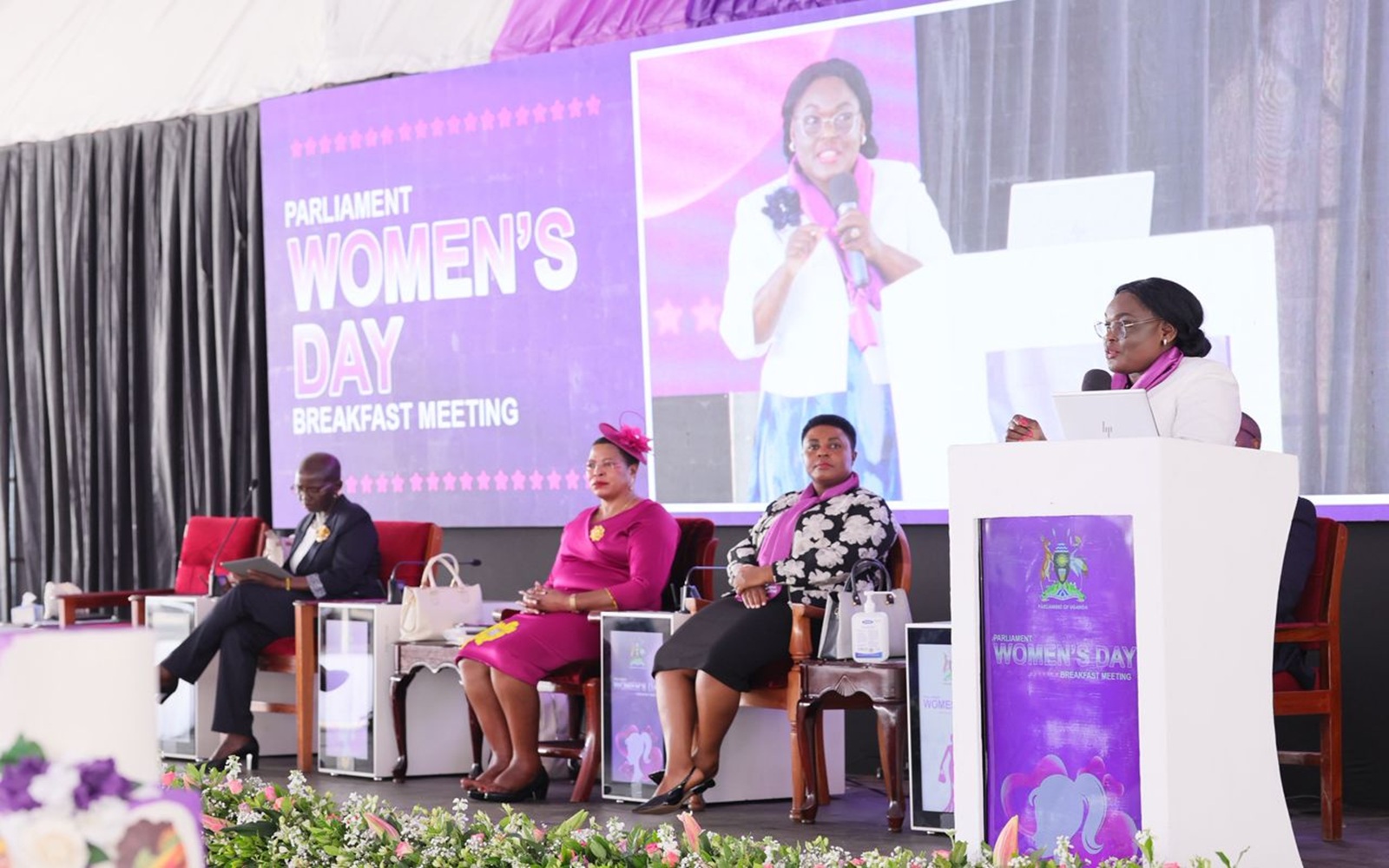
As the world marks International Women’s Day, Uganda joins the global community in celebrating the women with the theme “Scaling up Investment to Accelerate Access to Justice for all Women and Girls in Uganda,” Over the past decades, Uganda has made notable progress in promoting women into positions of authority from Parliament and cabinet ministries to district leadership and public institutions. These gains were not accidental, they were the result of deliberate policies, advocacy by women’s movements, and the determination of generations who believed that women must have a voice in shaping the future of the nation.
However, celebrations such as International Women’s Day also offer a moment for reflection. As Ugandans celebrate women’s achievements, an important question emerges towards how effectively are women in leadership using their positions to advance justice, peace, and the protection of citizens’ rights?
Many citizens hoped that increasing the number of women in positions of power would bring stronger advocacy for social justice and human dignity. Women leaders are often viewed as voices for families, communities, and vulnerable populations. They carry the expectation that their leadership will reflect empathy, fairness, and courage when national challenges arise. Yet during times when the country faces serious political and social concerns, many citizens feel that these voices are not always as strong or visible as expected.
Uganda continues to face complex political and social realities that affect ordinary families. In some cases, families struggle with the consequences of prolonged legal and political disputes that leave parents detained for extended periods while awaiting resolution through the justice system. When a parent is absent due to imprisonment without timely judicial processes, the impact extends beyond the individual to children, spouses, and entire communities. Women leaders, many of whom understand the role parents play in holding families together, are uniquely positioned to advocate for fairness, transparency, and efficiency within legal systems.
At the same time, broader political tensions have, over the years, shaped Uganda’s social and economic landscape. Citizens often look to leaders especially those trusted to represent marginalized voices to encourage dialogue, fairness, and accountability in governance. Women leaders can play a critical role in strengthening public trust by standing firmly for justice and promoting peaceful engagement when national disagreements arise.
International Women’s Day is also a reminder of the everyday struggles faced by many women across the country. Workplace harassment, insecurity in communities including domestic violence, and limited access to legal protection remain challenges that affect girls, Women’s dignity and economic independence. When such issues persist, the presence of Women in leadership becomes even more significant. Their voices can influence laws, shape policies, and push institutions to respond more effectively to the concerns of Girls Women and Families.
The experiences of Women working in informal sectors further illustrate the importance of responsive leadership. In urban centers such as Kampala, many street vendors are Women who rely on small-scale trade to support their families. A significant number are single mothers or young mothers striving to provide food, education, and stability for their children. While city authorities must manage urban order and regulation, policies that affect livelihoods should also consider social realities. Women leaders have the opportunity to advocate for balanced solutions that protect both city planning goals and the survival of vulnerable families.
Ultimately, the question is not whether women are present in leadership positions, Uganda has made clear progress in that regard. The real question is how these positions are used to strengthen justice, defend human rights, and build trust in public leadership. Representation alone is not enough, meaningful leadership requires courage, independence of thought, and a willingness to speak when society faces difficult moments.
International Women’s Day should therefore be more than a celebration. It should also be a reminder of responsibility. Women in leadership hold to transform governance by promoting fairness, and accountability. Their voices can help bridge divisions, protect vulnerable citizens, and strengthen confidence.
As Uganda celebrates International Women’s day, the country also looks to its women leaders with hope and expectation. By standing up for justice, peace, and the protection of families, they can reinforce the values that inspired the struggle for gender equality in the first place. In doing so, they will not only honour the spirit of International Women’s Day but also help build a balanced and trusted leadership for the future of Uganda.
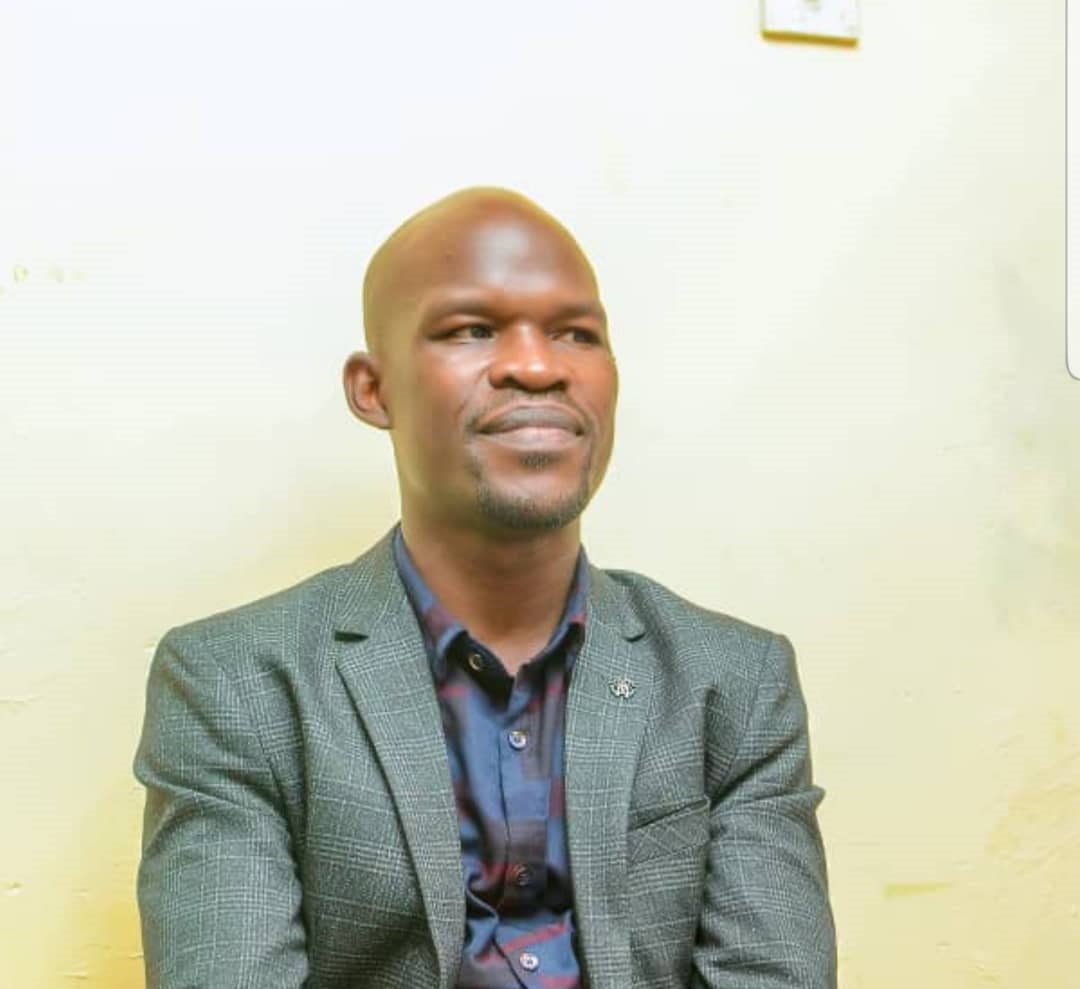
The author is a social development specialist and CEO Bridge your mind Centre.
Email: bwani.jose@gmail.com
Do you have a story in your community or an opinion to share with us: Email us at Submit an Article