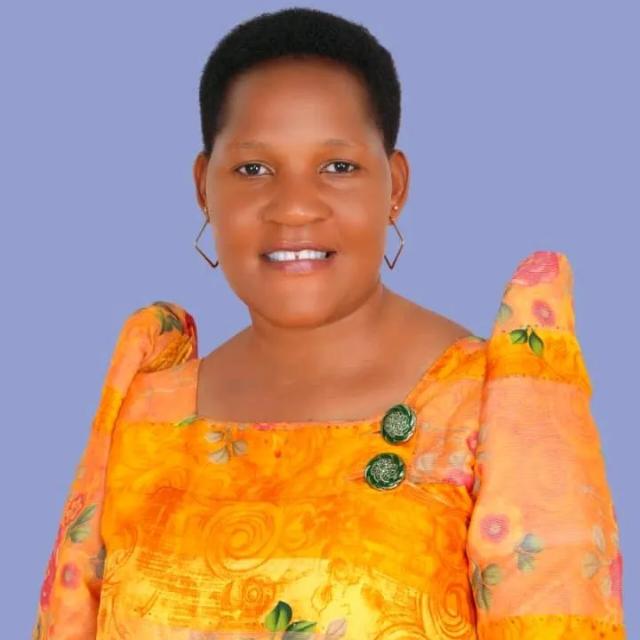
Milly Babalanda’s return as Minister for the Presidency is more than just a reshuffle; it is a reaffirmation of faith, vision, and performance. To many, her bounce-back may have seemed surprising, but to those who have followed her journey closely, it is a natural progression of a leader whose compass has always been guided by God.
As a devoted Seventh-day Adventist, Babalanda’s God-fearing character has been the bedrock of her leadership style, shaping her decisions, her resilience, and her achievements. President Museveni’s recognition of her potential when few believed she could handle such a crucial docket was a masterstroke of vision, and her reappointment now is proof that faith and competence can indeed converge to produce transformative leadership.
Her achievements in the past five years speak volumes, each one reflecting not just administrative efficiency but also the moral clarity that comes from a leader who believes she is accountable to a higher power. Take, for instance, her work on staff welfare improvement. By enhancing salaries and allowances, she did not merely adjust figures on a payroll; she restored dignity to public servants. In a system where morale can easily be eroded by neglect, Babalanda’s insistence on fair compensation was an act of stewardship rooted in her belief that every worker deserves respect. It was her faith-driven conviction that those who labor in service of the nation must not be left to struggle, and this conviction translated into tangible improvements that uplifted the entire ministry.
The construction of office accommodation blocks was another milestone that bore her imprint. Infrastructure projects often risk being bogged down by bureaucracy or corruption, but under her watch, these blocks rose as symbols of order and foresight. For Babalanda, providing decent working spaces was not just about bricks and mortar; it was about creating an environment where service delivery could flourish. Her God-fearing nature meant she saw these offices as sanctuaries of public duty, places where integrity and accountability should thrive. By ensuring that staff had proper facilities, she reinforced the idea that government service is sacred work, deserving of proper support.
Transport provision to Resident District Commissioners (RDCs) may sound like a logistical detail, but in reality, it was a strategic intervention. RDCs are the President’s representatives on the ground, tasked with monitoring government programs and ensuring accountability. Without reliable transport, their effectiveness is crippled. Babalanda’s decision to prioritize this was a reflection of her practical faith—understanding that stewardship requires equipping those entrusted with responsibility. By giving RDCs the means to reach communities, she strengthened the link between government and citizens, ensuring that oversight was not just theoretical but active and present. This was leadership that saw beyond the immediate to the deeper mission of service.Capacity building through orientation workshops and zoom interactions was another area where her faith-driven vision shone. In a rapidly changing world, government staff cannot remain static; they must be equipped with new skills and perspectives. Babalanda’s initiatives in this regard were not just about professional development but about nurturing a culture of continuous learning. Her God-fearing character meant she valued humility—the recognition that no one knows everything and that growth is a lifelong process. By fostering workshops and virtual engagements, she instilled in her staff the discipline of reflection and renewal, qualities that mirror her own spiritual journey.
Human resource enhancement through the recruitment of Assistant RDCs was a bold move that addressed a long-standing challenge. The workload in the office of the RDC had often been overwhelming, leading to inefficiencies.
By bringing in Assistant RDCs, Babalanda demonstrated her understanding of shared responsibility. Her faith teaches that burdens are meant to be carried together, and she applied this principle in governance. Delegation, in her hands, was not abdication but empowerment, ensuring that the office functioned smoothly and that no one was crushed under the weight of excessive demands. This was a practical manifestation of her belief in collective stewardship.Her fight against corruption among RDCs and affiliated agencies like the Uganda Printing and Publishing Corporation (UPPC) and Uganda Security Printing Company (USPC) was perhaps the most telling of her God-fearing character. Corruption is not just a governance issue; it is a moral crisis. For Babalanda, tackling it was a spiritual duty. She understood that corruption corrodes trust, undermines service, and dishonors the nation. Her interventions in cleaning up these agencies were acts of moral courage, driven by her conviction that leadership must be accountable to God and to the people. In a political environment where corruption can easily be normalized, her stand was a beacon of integrity, reminding all that righteousness must guide public service.
President Museveni’s vision in identifying Babalanda for such assignments cannot be overstated. At a time when many doubted her capacity, he saw in her the qualities of a mobilizer, a Deputy RDC, and the Head of the Office of the NRM Chairperson. These roles had honed her skills in organization, communication, and grassroots engagement.
Museveni’s choice was not just political; it was strategic. He recognized that her faith, loyalty, and experience would make her thrive in the Presidency docket. His trust in her was a bet on character, and it has paid off handsomely. Her reappointment is therefore not just a reward but a reaffirmation of the President’s foresight.Her experience as a mobilizer is particularly significant. Mobilization requires not just energy but conviction, the ability to inspire people to believe in a cause. Babalanda’s Seventh-day Adventist faith gave her that conviction, grounding her in values that resonate with communities. As Deputy RDC, she learned the intricacies of local governance, the challenges of implementation, and the importance of presence. As Head of the Office of the NRM Chairperson, she mastered the art of coordination, ensuring that the party machinery functioned effectively. Each of these roles was a stepping stone, preparing her for the Presidency docket, and each was infused with the discipline and humility of her faith.Her God-fearing character is not incidental; it is central. In a political landscape often marked by ambition and self-interest, Babalanda stands out as a leader who sees her role as service to God and country.
This is why her reappointment is a masterstroke. It signals that Uganda values integrity, that leadership is not just about technical skills but about moral compass. It reassures citizens that the Presidency docket is in the hands of someone who will not compromise on values, someone who will continue to fight corruption, uplift staff, and strengthen institutions.
Looking ahead, her reappointment is a bet on excellence. With her track record, her faith, and her experience, there is every reason to believe she will excel further. She has already demonstrated that she can deliver, and with renewed mandate, she is poised to deepen reforms, expand capacity, and entrench integrity. Her journey is a testament to the power of faith in leadership, showing that when leaders are guided by God, they can transform institutions and inspire nations.In the end, Milly Babalanda’s story is one of vision, faith, and resilience.
President Museveni’s trust in her was visionary, her achievements have been transformative, and her reappointment is a promise of more to come. She embodies the principle that leadership is service, that governance is stewardship, and that faith is the ultimate compass. Uganda is fortunate to have her back in the Presidency docket, and her God-fearing character will continue to be the masterstroke that defines her success.
The writer is a Former MP Aspirant for Gomba East
Do you have a story in your community or an opinion to share with us: Email us at Submit an Article