Open Letter to H.E. Yoweri Kaguta Museveni, President of the Republic of Uganda
Your Excellency,
Warm greetings and prolonged congratulations, best wishes in your new leadership period 2026-2031 from Gulu University, Quality Education Consultancy Ltd (QECL), OPUL Skilling Foundation Africa (OSFA), Rotary Clubs of Uganda and Uganda Red Cross Society (URCS).
I write to you with utmost respect and patriotism regarding the longstanding question of cattle compensation in Teso, Acholi and Lango sub-regions in the last 40 years. As the African proverb states, “The best time to plant a tree was twenty years ago; the second-best time is now.” Four decades after devastating cattle rustling and insurgencies ravaged Northern and Eastern Uganda, the nation still grapples with how best to restore livelihoods. While compensation remains an important moral obligation, universal (all who own livestock) improvement of livestock breeds presents a cheaper, more sustainable and economically transformative solution capable of creating wealth for present and future generations.
Your Excellency, the history of cattle rustling in Teso, Acholi and Lango is a painful chapter in Uganda’s development journey. Since 1986, armed cattle raids largely associated with Karimojong warriors, coupled with insecurity caused by insurgencies and civil conflicts, led to the loss of hundreds of thousands of cattle. In many communities, cattle were not merely animals; they were banks, tractors, school fees, marriage dowries and symbols of dignity. When the cows disappeared, entire household economies collapsed like a house built on sand. The Bible reminds us in Proverbs 27:23, “Be sure you know the condition of your flocks, give careful attention to your herds.” Similarly, the Holy Quran states in Surah An-Nahl 16:5, “And the cattle He has created for you; in them there is warmth and numerous benefits, and from them you eat.” These scriptures affirm that livestock are not only economic assets but divine resources entrusted to humanity. Therefore, rebuilding livestock wealth should be viewed as a sacred national duty.
Government deserves recognition for the various efforts undertaken to compensate affected communities. Over the years, verification exercises, restocking programmes, financial compensation initiatives and political commitments have been implemented. Thousands of claimants have received partial payments while others benefited from livestock restocking interventions. The Ugandan Cabinet of 2021-2026 approved a compensation of 5 heifers valued at 1 million each thus UGX 5 million per household across the Teso, Lango, and Acholi sub-regions. Vice President Jessica Rose Alupo Epel announced in late December 2025 that the Ugandan Cabinet approved UGX 80 billion (approx. $21 million USD) to kick-start a new cattle restocking and compensation program.
These efforts demonstrate government’s willingness to address historical injustices and promote reconciliation. The disbursement of these livestock compensation funds was allegedly temporarily halted by President Yoweri Museveni until after the elections to avoid political confusion. Even this exasperated the thirsty beneficiaries, the President elucidated that the program’s timing ahead of the 2026 general elections drew criticism from opposition leaders, who suggested it could be a campaign gimmick.
However, significant gaps remain. The compensation process has often been characterized by disputed records, incomplete verification, delayed payments, discriminatory, inflationary erosion of livestock values and allegations of exclusion. Many elderly claimants have passed away before receiving compensation. Others continue to possess documents and memories but lack closure. As the proverb says, “Justice delayed is justice denied.” The compensation journey has become a marathon whose finishing line appears to move further away each year. If this didn’t succeed to logical conclusion in the last 40 years , not sure if it can be concluded in the next 5 years.
Your Excellency, the economic reality is sobering. If government were to fully compensate all cattle allegedly lost in Teso, Acholi and Lango over the last forty years, the financial requirement would likely run into trillions of Uganda shillings. In contrast, investment in universal livestock breed improvement offers a multiplier effect. Rather than compensating for the past alone, improved breeds create future wealth and improves the popularity of government in the eyes of the citizens. One improved dairy cow can produce milk volumes several times higher than indigenous breeds. Crossbreeding programmes can increase household incomes, improve nutrition, create jobs for youth and women, stimulate milk processing industries and expand Uganda’s export potential.
According to the 2021 National Livestock Census conducted by the Uganda Bureau of Statistics (UBOS), Teso has approximately 1.184 million cattle, Acholi has about 833,165 cattle and Lango has approximately 783,583 cattle, bringing the combined total to over 2.15 million cattle. The census further indicates that these sub-regions have among the lowest proportions of exotic and crossbred cattle in Uganda, highlighting substantial opportunities for genetic improvement. (Uganda Bureau of Statistics)
The census data further reveals that Teso possesses approximately 1.184 million cattle, Acholi 833,165 cattle and Lango 783,583 cattle, representing one of Uganda’s largest livestock belts outside the cattle corridor. Yet most of these animals remain predominantly indigenous breeds with relatively low productivity. The irony is striking: the regions that suffered some of the greatest livestock losses now possess some of the lowest proportions of improved cattle genetics. (Uganda Bureau of Statistics)
Technically, livestock transformation in these sub-regions requires a comprehensive breed improvement strategy. This should include establishment of regional livestock breeding centres, artificial insemination services, embryo transfer technologies, multiplication centres for superior bulls, pasture improvement programmes, veterinary extension services and farmer training. The National Animal Genetic Resources Centre and Data Bank (NAGRC&DB), MAAIF, universities and development partners can spearhead this transformation.
Furthermore, government could establish a special “Northern and Eastern Livestock Modernization Fund” targeting Teso, Acholi and Lango. Instead of spending vast sums on retrospective compensation alone, resources could support distribution of improved dairy breeds, beef breeds, goats, sheep and poultry. Such investments would generate recurring returns rather than one-time payments. A proverb wisely says, “The child who is carried on the back sees farther than the one walking alone.” Modern genetics can carry our farmers into a more prosperous future.
Your Excellency, satire teaches us that sometimes governments become accountants of yesterday while citizens are investors in tomorrow. We continue counting cows that disappeared decades ago while ignoring calves that could be born tomorrow. The nation risks becoming trapped in a compensation cycle that satisfies neither the treasury nor the beneficiaries. Sustainable development demands that we move from lamentation to transformation, from compensation to commercialization, and from survival to prosperity.
The metaphor of rebuilding Uganda’s livestock sector is similar to repairing a damaged bridge. One can continue compensating every traveler who fell into the river, or one can rebuild the bridge stronger than before. Breed improvement is that stronger bridge. It promises increased milk yields, improved meat production, disease resistance, household incomes and rural industrialization. It transforms victims into entrepreneurs and beneficiaries into wealth creators.
Therefore, I respectfully recommend that government: Establish Universal Livestock Breed Improvement and Restocking Programme for Teso, Acholi and Lango, expand, Accelerate artificial insemination and veterinary extension services, establish livestock breeding and multiplication centres in the three sub-regions:Acholi Sub region has Aswa Ranch with a massive, 132-square-mile (84,480-acre) state-owned livestock breeding facility in Pader District, Northern Uganda but this is yet to fully benefit the people of Acholi sub region and Promote farmer cooperatives and dairy value chains.
Your Excellency, history has given Uganda an opportunity to convert a painful legacy into a development success story. The future belongs not merely to those who compensate losses but to those who create opportunities. Let us transform empty kraals into productive enterprises, tears into milk, and memories of loss into symbols of prosperity. As the Luo saying goes, “Kodi yen matino me apita pe twero dongo ka pe kikiro pii iye” a plant cannot grow without being watered. The livestock sector in Teso, Acholi and Lango requires not only compensation for what was lost but Universal investment in what can still be gained. Universal Livestock Breed improvement is the Cheapest, Inclusive, Sustainable and Transformative Alternative to Cattle Compensation in Teso, Acholi and Lango Sub-regions. The time to act is now.
Yours faithfully,
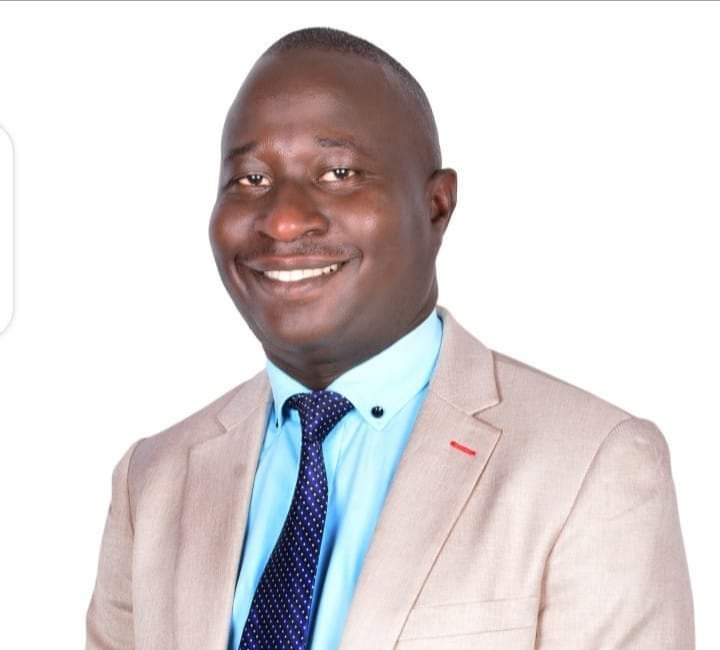
Dr. Opul Joseph, PhD
Lecturer, Gulu University
Founder, Quality Education Consultancy Ltd (QECL)
CEO, OPUL Skilling Foundation Africa (OSFA)
President, Rotary Club of Soroti Central
Life Member, Uganda Red Cross Society
ceo@opulskillingfoundationafrica.org
Do you have a story in your community or an opinion to share with us: Email us at Submit an Article