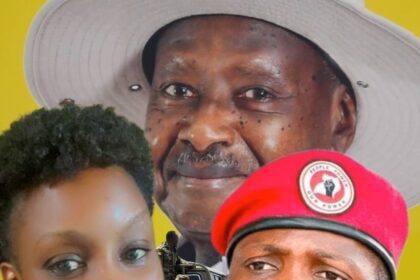

In this article, I am aware that some of Kyagulanyi’s supporters, followers, and sympathisers may not immediately understand the argument I make. A few may even rush to the comments section to respond harshly before reading carefully. However, to illustrate my point clearly, let me begin with one of Kyagulanyi’s own statements.
While campaigning at one of his rallies, Robert Kyagulanyi declared, “Even if I win the election, I will not be declared the winner.” This statement forms the central question of this article and prompts a deeper inquiry: Could Kyagulanyi’s declining presidential prospects be attributed to President Museveni’s domestic diplomacy or the enduring NRM legacy?
During his first attempt at the presidency, Kyagulanyi generated significant hope among his supporters. Many genuinely believed he stood a realistic chance of becoming Uganda’s next president. Today, however, various indicators suggest that Kyagulanyi himself appears less confident in the possibility of securing the presidency. Two major factors may explain this shift: Museveni’s sophisticated internal diplomacy and the NRM’s deeply entrenched legacy.
President Museveni has mastered a form of domestic diplomacy characterised by coalition-building, elite co-optation, and strategic engagement with religious and cultural institutions. He also cultivates support among influential groups such as teachers, business communities, and local leaders. This network creates a buffer of political insulation and sustains narratives of continuity and stability—often making Kyagulanyi appear inexperienced, unpredictable, or risky by comparison.
The NRM’s long-standing grassroots presence further complicates Kyagulanyi’s ambitions. Decades of institutional structures, historical achievements, and community-level networks have produced a strong sense of loyalty—or at least tolerance—toward the ruling party. For many Ugandans, especially in rural areas, the NRM represents familiarity and stability. Opposition figures, by contrast, often appear untested or overly emotional.
Kyagulanyi’s weakening prospects are also influenced by internal challenges: a lack of strong party structures, inconsistent messaging, organisational weaknesses, and limited penetration beyond urban centers.
In conclusion, Kyagulanyi’s declining presidential hopes are not sudden but structural. Museveni’s domestic diplomacy, combined with the resilience of the NRM legacy, continues to reinforce the ruling party’s dominance. Unless Kyagulanyi strengthens his grassroots networks and recalibrates his political strategy, the presidency is likely to remain out of reach—at least for now.
Ayub Mukisa, PhD
Executive Director, Karamoja Anti-Corruption Coalition (KACC)
Email: ayubmukisa@gmail.com
Do you have a story in your community or an opinion to share with us: Email us at Submit an Article