
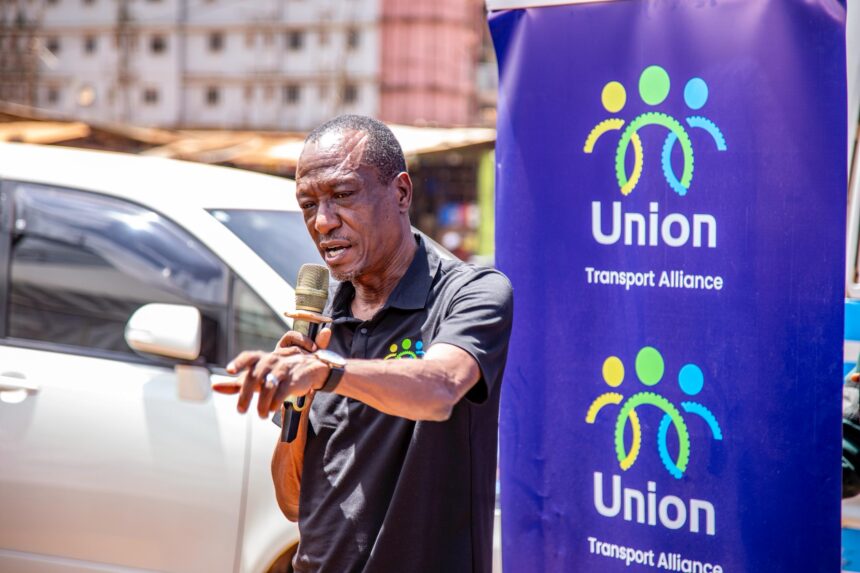
KAMPALA, UGANDA — Uganda is a nation of remarkable beauty, rightfully earning its moniker as the “Pearl of Africa.” Yet, a massive part of this charm lies in its people—innovators and visionaries driven by an unyielding spirit to transform livelihoods. In the country’s bustling commercial ecosystem, entrepreneur Fred Ssenoga Bagenda stands out as a prime example of this transformative drive.
Uganda’s modern economic story cannot be told without the boda boda (motorcycle taxi) sector. What began in the early 1990s as a marginal, informal experiment has matured into a dominant urban and rural mobility lifeline. Historically, low-capacity transport expanded rapidly when motorcycle services emerged alongside traditional bicycle taxis, filling a critical gap left by weak public infrastructure and a surging demand for flexible, point-to-point transit.
The Structural Shift
By the mid-1990s, this informal system began reshaping Uganda’s urban economy. Motorcycle registrations rose sharply, signaling a permanent structural shift in national mobility patterns. Driven by policy gaps, minimal regulation, and congested urban centers like Kampala, the sector grew organically into a primary employment engine.
Today, hundreds of thousands of riders operate across the country. The sector serves as a vital financial pillar supporting not just the riders, but a vast network of mechanics, spare parts dealers, fuel stations, and informal financiers.
However, this explosive, unregulated growth has introduced compounding structural bottlenecks:
Severe traffic congestion and strain on urban road networks.
Rising fuel dependency and extreme vulnerability to global price volatility.
Persistent public safety concerns and regulatory compliance hurdles.
Despite repeated government frameworks to formalize operations—shifting from the historical infrastructure innovations under General Katumba Wamala to the current regulatory gaze of Hon. Fred Byamukama (State Minister for Works and Transport)—enforcement remains fragmented across local jurisdictions.
Enter the “Dream to 100,000 Rides”
It is within this complex socioeconomic matrix that Fred Ssenoga’s “Dream to 100,000 Rides” enters the national conversation. Acting as the Business Product Advisor for the newly launched Union Transport Alliance, Ssenoga is driving an ambitious agenda to transition the informal transit sector into a structured, technology-driven powerhouse.
Through commercial innovations like Union Oil, the Union App ride-hailing platform, and asset-backed financing networks, Ssenoga’s framework directly targets the rider’s most punishing cost driver: daily fuel expenditure. For the average operator, fuel costs swallow a disproportionate share of daily revenues, trapping youth in cycles of hand-to-mouth financial vulnerability.
The Cost Revolution: Traditional vs. Electric Mobility
| Feature | Traditional Fuel Systems | Electric Mobility Model |
| Energy Overhead | High daily fuel expenses | Significantly reduced operational costs |
| Price Stability | Volatile pump prices | Predictable, stable charging/swapping rates |
| Maintenance | Frequent mechanical and service cycles | Simplified mechanics and fewer moving parts |
| Financial Output | Depleted rider net savings | Enhanced daily income retention |
Navigating the Infrastructure Frontier
Transport analysts point out that while the 1990s expansion solved the “missing middle” between expensive private taxis and absent bus routes, today’s electric mobility push operates under the heightened pressures of climate change and rapid urbanization. Kampala’s high traffic density and the national burden of fuel imports make this transition an economic imperative rather than an alternative lifestyle choice.
Yet, policy experts caution that a total green transition demands rigorous institutional support. To scale Ssenoga’s 100,000-ride vision, Uganda requires:
Deep capital investments in battery-swapping infrastructure.
Accessible, low-interest rider financing models.
Clear, standardized regulatory frameworks.
Robust public-private partnerships.
“Uganda’s transport destiny will not be determined by vehicles alone, but by the financial and energy systems built to sustain them.”
Backed by strategic corporate allies like Housing Finance Bank, Spiro, and MTN, the Union Alliance aims to integrate boda bodas, taxis, and trucks into a single commercial “supermarket” to maximize collective bargaining power.
Uganda’s transport policies have historically been reactive—scrambling to catch up with a population rapidly expanding toward 45 million people. This current innovation-led push represents a rare, proactive attempt to anticipate the future. Led by Ssenoga’s market-disrupting vision, the road ahead promises to be cleaner, smarter, and profoundly more inclusive.
Do you have a story in your community or an opinion to share with us: Email us at Submit an Article