Kampala, Uganda | Members of Parliament have demanded answers from officials at the Ministry of Works and Transport regarding the whereabouts of former Uganda National Roads Authority (UNRA) Executive Director Allen Kagina, following the dissolution of the agency under the government’s rationalisation programme.
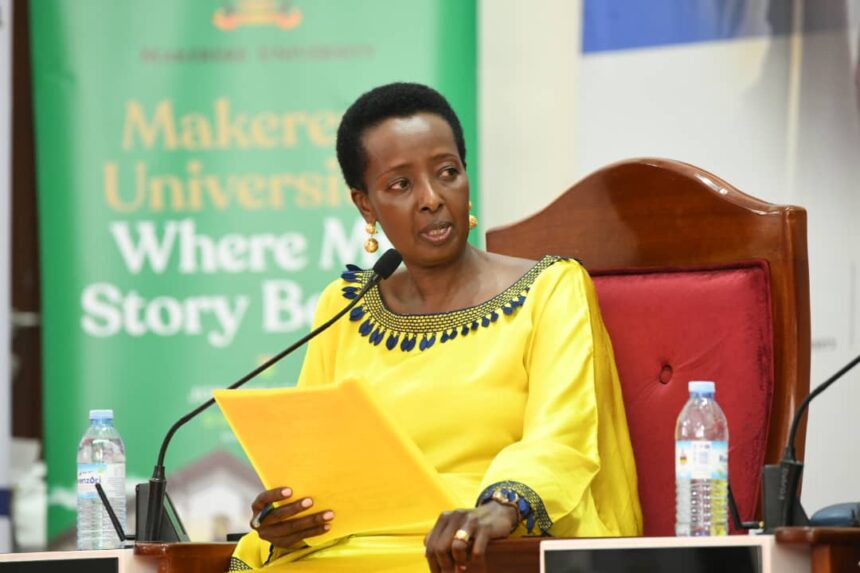
The matter arose during a session of Parliament’s Public Accounts Committee (PAC) reviewing the Auditor General’s report for the 2024/25 financial year. MPs questioned why Kagina, widely credited for transforming Uganda’s road sector, was not among the former UNRA staff absorbed into the ministry after the authority was merged back into its parent ministry.
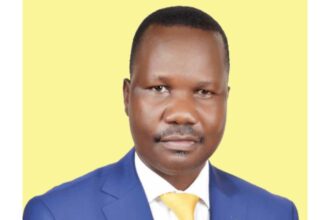
Permanent Secretary Bageya Waiswa told the committee that Kagina never applied for a position in the ministry.
“The former UNRA Executive Director did not express interest in taking up a job at the Ministry,” Waiswa said while responding to questions from Mawogola South MP Gorreth Namugga.
The revelation surprised several legislators, who wondered why one of the government’s most celebrated technocrats opted out of the transition process.
Kagina was appointed UNRA Executive Director by President Yoweri Museveni in 2015 after serving as Commissioner General of the Uganda Revenue Authority (URA), where she spearheaded reforms that improved tax collection.
During her nearly decade-long leadership at UNRA, Uganda’s paved road network expanded significantly—from about 3,500 kilometres to more than 5,600 kilometres, according to official government figures.
Her tenure also followed the high-profile Commission of Inquiry into Land Matters and related governance issues, chaired by Justice Catherine Bamugemereire, which exposed widespread mismanagement in the roads sector but acknowledged reforms implemented during Kagina’s leadership.
UNRA was dissolved in late 2024 under the government’s Rationalisation of Agencies and Public Expenditure (RAPEX) programme aimed at reducing duplication of roles and cutting public expenditure.
Out of the 1,371 staff who worked with UNRA, 1,254 employees—about 91 percent—were absorbed into the Ministry of Works and Transport.
Kagina’s absence from the transition, however, has fueled speculation about whether the move was personal or influenced by internal government dynamics.
Sources familiar with the matter suggest the decision was largely personal.
Following the dissolution of UNRA, Kagina was appointed Chairperson of the Uganda Technical and Vocational Education and Training (TVET) Council in early 2025.
Government officials have continued to speak highly of her contribution to public service.
State Minister for Relief, Disaster Preparedness and Refugees Musa Francis Ecweru previously said government would still find ways to utilise her expertise.
“The UNRA Executive Director role is no longer there, but I am sure the appointing authority will always find some responsibility for Allen Kagina. She has done well,” Ecweru said.
Meanwhile, the rationalisation process has not been entirely smooth. Some former UNRA employees have taken legal action against government, demanding about Shs196 billion in unpaid terminal benefits.
The transition has also reignited debate about whether merging agencies back into ministries could weaken operational efficiency in critical sectors such as infrastructure development.
As Uganda’s roads sector adjusts to the new structure, the lingering question among lawmakers remains: Why did Allen Kagina choose not to return to the ministry she once helped shape?
Do you have a story in your community or an opinion to share with us: Email us at Submit an Article