Sign In
  • UGANDA
  • AFRICA
  • WORLD
watchdog uganda logo
Submit an Article
  • Home
  • News
    • National
    • Politics
    • World News
    • Media Outreach Newswire
    • Africa News
    • Tourism
    • Community News
    • Luganda
    • Sports
      • Football
      • Motorsport
  • Op-Ed
    • #Out2Lunch
    • Conversations with
    • Politics
    • Relationships
  • Business
    • Agriculture
    • CEOs & Entrepreneurs,
    • Companies
    • Finance
    • Products
    • RealEstate
    • Technology
  • Entertainment
    • Lifestyle
  • People
    • Showbiz
      • Salon Mag
  • Special Report
    • Education
    • Voices
  • Reviews
    • Products
    • Events
    • Hotels
    • Restaurants
    • Places
  • Forums
  • Donate
  • China News

Archives

  • March 2026
  • February 2026
  • January 2026
  • December 2025
  • November 2025
  • October 2025
  • September 2025
  • August 2025
  • July 2025
  • June 2025
  • May 2025
  • April 2025
  • March 2025
  • February 2025
  • January 2025
  • December 2024
  • November 2024
  • October 2024
  • September 2024
  • August 2024
  • July 2024
  • June 2024
  • May 2024
  • April 2024
  • March 2024
  • February 2024
  • January 2024
  • December 2023
  • November 2023
  • October 2023
  • September 2023
  • August 2023
  • July 2023
  • June 2023
  • May 2023
  • April 2023
  • March 2023
  • February 2023
  • January 2023
  • December 2022
  • November 2022
  • October 2022
  • September 2022
  • August 2022
  • July 2022
  • June 2022
  • May 2022
  • April 2022
  • March 2022
  • February 2022
  • January 2022
  • December 2021
  • November 2021
  • October 2021
  • September 2021
  • August 2021
  • July 2021
  • June 2021
  • May 2021
  • April 2021
  • March 2021
  • February 2021
  • January 2021
  • December 2020
  • November 2020
  • October 2020
  • September 2020
  • August 2020
  • July 2020
  • June 2020
  • May 2020
  • April 2020
  • March 2020
  • February 2020
  • January 2020
  • December 2019
  • November 2019
  • October 2019
  • September 2019
  • August 2019
  • July 2019
  • June 2019
  • May 2019
  • April 2019
  • March 2019
  • February 2019
  • January 2019
  • December 2018
  • November 2018
  • October 2018
  • September 2018
  • August 2018
  • July 2018
  • June 2018
  • May 2018
  • April 2018
  • March 2018
  • February 2018
  • January 2018
  • December 2017
  • November 2017
  • October 2017
  • September 2017
  • August 2017
  • July 2017
  • June 2017
  • May 2017
  • April 2017
  • March 2017
  • February 2017
  • January 2017
  • November 2016
  • October 2016
  • September 2016
  • August 2016
  • July 2016
  • September 2015
  • April 2014
  • June 2013

Categories

  • #Out2Lunch
  • Agriculture
  • Big Brother Naija Dairy
  • Business
  • CEOs & Entrepreneurs,
  • China News
  • Community News
  • Companies
  • Conversations with
  • Court
  • culture
  • Deplomacy
  • Education
  • Education
  • Entertainment
  • Entrepreneurs
  • Events
  • Fashion
  • Finance
  • Football
  • Gadgets
  • Health
  • Hotels
  • Innovation
  • Lifestyle
  • Luganda
  • Motorsport
  • National
  • News
  • Op-Ed
  • Opinion
  • People
  • Photography
  • Photos
  • Places
  • Politicians
  • Politics
  • Politics
  • Products
  • Products
  • RealEstate
  • Relationships
  • religion
  • Reports
  • Restaurants
  • Reviews
  • Roadtrip
  • Salon Magazine
  • Showbiz
  • Special Report
  • Sports
  • Stars
  • Technology
  • Tourism
  • Travel
  • Traveler
  • Trips
  • Video
  • Voices
  • World
  • World News
Reading: IBRAHIM E. KASITA: From Darkness to Surplus: A 40-Year Journey of Uganda’s Electricity Pricing (1986–2026)
Share
Watchdog UgandaWatchdog Uganda
Font ResizerAa
  • Home
  • News
  • Op-Ed
  • Business
  • Entertainment
  • People
  • Special Report
  • Reviews
  • Forums
  • Donate
  • China News
Search
  • Home
  • News
    • National
    • Politics
    • World News
    • Media Outreach Newswire
    • Africa News
    • Tourism
    • Community News
    • Luganda
    • Sports
  • Op-Ed
    • #Out2Lunch
    • Conversations with
    • Politics
    • Relationships
  • Business
    • Agriculture
    • CEOs & Entrepreneurs,
    • Companies
    • Finance
    • Products
    • RealEstate
    • Technology
  • Entertainment
    • Lifestyle
  • People
    • Showbiz
  • Special Report
    • Education
    • Voices
  • Reviews
    • Products
    • Events
    • Hotels
    • Restaurants
    • Places
  • Forums
  • Donate
  • China News
Have an existing account? Sign In
Follow US
© 2026 Watchdog Uganda. Ruby Design Compan. All Rights Reserved.
BusinessOp-EdProducts

IBRAHIM E. KASITA: From Darkness to Surplus: A 40-Year Journey of Uganda’s Electricity Pricing (1986–2026)

watchdog
watchdog
Share
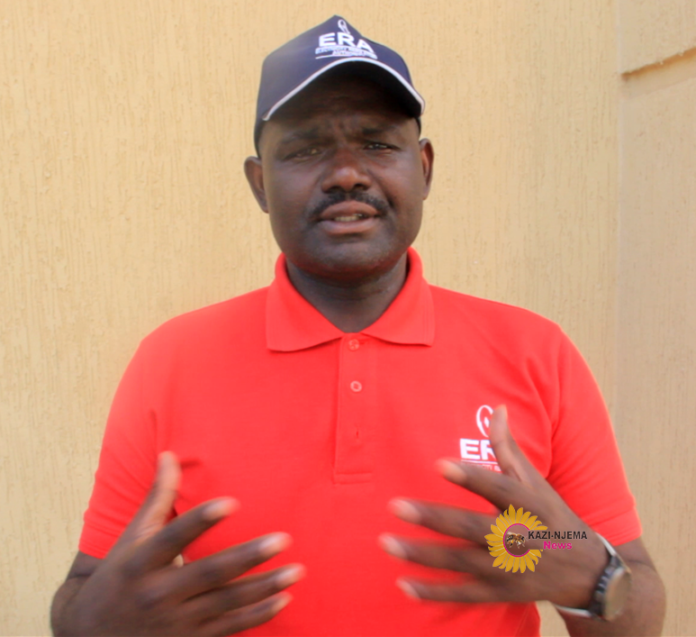
Ibrahim Kasiita works at Electricity Regulatory Authority
SHARE

In 1986, as the National Resistance Movement (NRM) government took the reins of a war-weary Uganda, the nation’s electricity grid was more a memory than a utility. With an installed capacity of 150 megawatts (MW) at the Owen Falls Dam—of which only 60MW was actually functional—and an access rate of less than 2%, electricity was a luxury for the elite.

Contents
The UEB Era (1986–1999): The Illusion of Cheap PowerThe Great Unbundling (1999–2005): Shock TherapyThe Concessionaire Model Era (2003–2024): Growth at a CostThe 2025 Pivot: The Second-Generation Reforms2026: A Sophisticated Social and Industrial BalanceThe Analytical Verdict: Was the Journey Worth It?Conclusion

Fast-forward to the first quarter of 2026, and the landscape is unrecognizable. Uganda now boasts a generation capacity exceeding 2,000MW, a grid access rate of over 60%, and a dynamic tariff structure that targets everything from “lifeline” social equity to industrial competitiveness.

The journey from 1986 to 2026 is not merely a story of poles and wires; it is a four-decade analytical map of shifting economic ideologies—from state monopoly to aggressive privatization, and finally to the modern “hybrid” model of state and private cooperation.
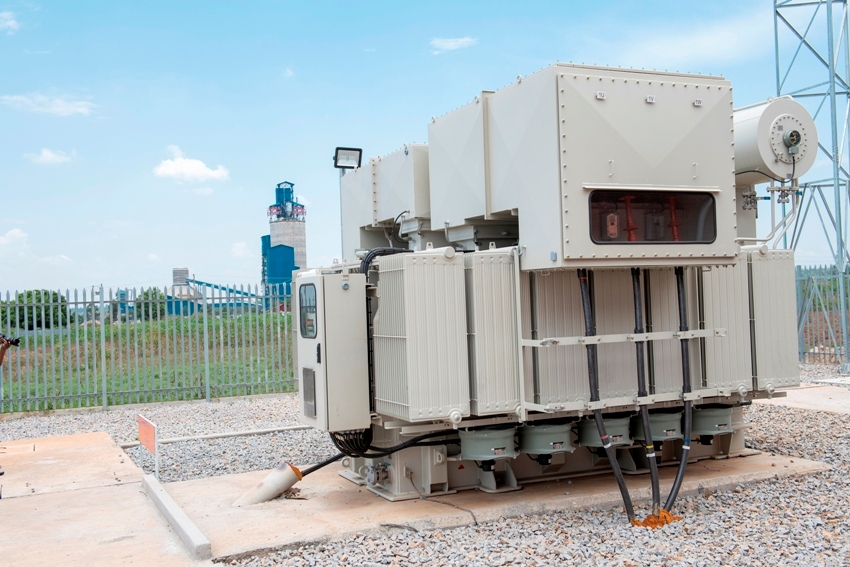
Umeme Ground Transformer Tororo
A ground transformer in Tororo, near the Simba Cement Factory. Uganda’s continued investment in the distribution grid has significantly contributed to increased stability and reliability of electricity in Uganda.

The UEB Era (1986–1999): The Illusion of Cheap Power

For the first 13 years of the NRM government, the Uganda Electricity Board (UEB) operated as a vertically integrated monopoly. It generated, transmitted, and distributed power. During this era, pricing was largely a political tool rather than an economic one. Tariffs were heavily subsidized, but the “low price” was an illusion.

By 1993, the tariff stood at an average of 7.3 US cents per kWh (a unit of electricity), but the system was collapsing. Revenue collection was as low as 50%, and distribution losses were staggering, often exceeding 40%.

Because the government could not afford to maintain the infrastructure, “load shedding” became a national anthem. Power was “cheap” on paper but unavailable in practice. The government, working with development partners, eventually stepped in, arguing that the only way to save the sector was through “cost-reflective” pricing and private-sector efficiency.

The Great Unbundling (1999–2005): Shock Therapy

The passage of the 1999 Electricity Act was the seismic shift that defined the next 20 years. UEB was unbundled into three entities: Uganda Electricity Generation Company Limited (UEGCL – responsible for generation), Uganda Electricity Transmission Company Limited (UETCL – responsible for transmission), and Uganda Electricity Distribution Company Limited (UEDCL – responsible for distribution).

This period saw “shock therapy” in pricing. Between 1999 and 2002, electricity tariffs nearly doubled in shilling terms as the government moved to satisfy donor requirements for a self-sustaining sector. The establishment of the Electricity Regulatory Authority (ERA) in 2000 ushered in an arm’s-length independent regulator—one of the key pillars in fostering cost reflectivity and attracting much-needed private capital.

The Concessionaire Model Era (2003–2024): Growth at a Cost

In 2003 and 2005, the government handed over the generation and distribution networks to Eskom Uganda Limited and Umeme Limited, respectively, under 20-year concessions. This era was defined by a paradox: massive expansion coupled with public outcry over high costs.

Eskom was tasked with efficiently running, at the time, the largest power generation facility in the country, while Umeme had the more uphill task of revamping and expanding the distribution network. Umeme succeeded in growing the customer base from 280,000 in 2005 to over 2.3 million by 2024. However, the early years of the concession were brutal for consumers. In 2005, prices jumped by 24%, followed by twin hikes of 35% and 41% in 2006. These increases were driven by a supply crisis—a drought in Lake Victoria reduced hydro output, forcing the government to rely on expensive emergency thermal (diesel) generation.

By 2012, when the Bujagali Hydropower Plant was commissioned, Uganda achieved “cost-reflective” status. But this meant domestic consumers were paying some of the highest rates, often exceeding 18 US cents per unit. The narrative of “expensive power” became the primary political grievance of the 2010s.

The 2025 Pivot: The Second-Generation Reforms

In April 2025, the 20-year Umeme concession expired, and the government, through UEDCL, took back the national grid. This transition was driven by a desire to lower the return-on-investment costs required by private players, thereby creating room for tariff reductions.

The commissioning of the 600MW Karuma Hydropower Plant in late 2024 provided an even cheaper source of electricity generation, which is expected to translate into lower end-user prices as consumption increases. For the first time in 40 years, the government had more power than the market could consume—shifting the focus from rationing electricity to marketing it.

2026: A Sophisticated Social and Industrial Balance

As we stand in the first quarter of 2026, the ERA tariff schedule reflects a mature, multi-tiered strategy that would have been unthinkable in 1986.

1. The Industrial Engine (The 5-Cent Dream):
The flagship policy of 2026 is the 5 US cent tariff for extra-large manufacturers. Currently, the average rate for extra-large industrial consumers is UGX 203.6 per kWh (approximately 5.6 US cents). During off-peak hours (midnight to 6:00 a.m.), this drops to UGX 184.6 (5 US cents). This is a strategic move to turn Uganda into a regional manufacturing hub, shifting the burden of sector costs away from factories to stimulate job creation.

2. The Social Lifeline:
For the “bottom of the pyramid,” the 2026 tariff maintains a “lifeline” rate of UGX 250 for the first 15 units. This ensures that even as the standard domestic rate sits at UGX 756.2, the poorest households can afford basic electricity use.

3. The Cooking Transition:
To save Uganda’s disappearing forests, the 2026 schedule includes a “cooking tariff” of UGX 412 per unit for domestic users who consume between 81 and 150 units. This is a direct attempt to shift households from charcoal to electricity for cooking.

The Analytical Verdict: Was the Journey Worth It?

Comparing 1986 to 2026 requires looking beyond the numbers to the underlying mechanics.

  • Currency Vulnerability: In 1986, the shilling was in freefall. Today, while it has depreciated significantly over 40 years, the 2026 tariff is stabilized by a stronger-than-expected exchange rate (averaging UGX 3,624 to the dollar).

  • Losses: Distribution losses have dropped from over 40% in 1988 to roughly 18% in 2026. These efficiency gains are what allow for the current lower tariffs.

  • Knowledge Transfer: Unbundling UEB enabled knowledge transfer by creating specialized entities (UEGCL, UETCL, UEDCL), attracting private-sector expertise, fostering institutional capacity, and developing local skills through training, research, and benchmarking best practices. This transformed a struggling monopoly into a modern electricity sector with improved service delivery and increased generation capacity.

Conclusion

Uganda’s electricity pricing history from 1986 to 2026 mirrors the country’s broader economic evolution. The sector has moved from a broken state monopoly to a high-cost private regime, and now to a state-led “surplus” era.

While the 2026 tariffs are among the most competitive the country has seen in decades—particularly for industry—the challenge for the next ten years will be reliability. As the grid now powers over 2.5 million customers, the focus is shifting from “how much does it cost?” to “can we keep it on?”

After 40 years, the lights are finally on—and for the first time, the price is beginning to make sense.

The author serves at the Electricity Regulatory Authority.


Do you have a story in your community or an opinion to share with us: Email us at Submit an Article
Subscribe to Our Newsletter
Subscribe to our newsletter to get our newest articles instantly!
TAGGED:Electricity in UgandaElectricity Regulatory Authority (ERA)Ibrahim KasiitaPresident MuseveniUEDCLUEGCLUETCL
Share This Article
Facebook Whatsapp Whatsapp Email Copy Link
Bywatchdog
Follow:
Watchdog Uganda is a news portal for trending news and commentaries in the areas of politics, security, business, tourism, technology, education, et al.
Previous Article Directorate of Ethics and Integrity Commissioner Nicholas Abola Praises Karamoja Anti-Corruption Coalition Integrity Clubs Initiative
Next Article ‘Hajat’ Faridah Nakazibwe Reaches Sacred Points at Kaaba in Record Time During Ramadan Umrah

Editor's Pick

Op-EdPolitics

DR. SAMUEL B. ARIONG: Norbert Mao is wrong on alleged “dysfunction” of Uganda’s 11th parliament

Recent press remarks attributed to Norbert Mao describing Uganda’s 11th Parliament under…

By
Our Correspondent
9 Min Read
DeplomacyNewsPoliticsWorld News

Kenya’s Miguna Miguna Blasts Bobi Wine’s Capitol Hill Photo-Op: “Wrong Place to Start” for a True Pan-African Freedom Fighter

WATCHDOG UGANDA Miguna Miguna Blasts Robert Kyagulanyi’s Capitol Hill Photo-Op: “Wrong Place…

5 Min Read
Politics

Hope Atuheire: The EX Corp-Cum RDC Shares Secret Behind Museveni’s Landslide Win in 2026, PDM Comes on Top

  When Uganda went to the polls on January 15, 2026, the…

9 Min Read

Top Writers

Mike Ssegawa 751 Articles
Two decades of reporting, editing and managing news content. Reach...
Mulema Najib 4366 Articles
News and Media manager since 2017. Specialist in Political and...

Op-ED

DR. SAMUEL B. ARIONG: Norbert Mao is wrong on alleged “dysfunction” of Uganda’s 11th parliament

Recent press remarks attributed to Norbert Mao describing Uganda’s 11th…

20th March 2026 at 10:59

OP-ED: The value of Leadership while conforming to Gendered narratives; An exploratory view of Leadership and Gender

By Natukunda Fazirah Magezi Leadership in…

19th March 2026 at 12:31

IBRAHIM E. KASITA: From Darkness to Surplus: A 40-Year Journey of Uganda’s Electricity Pricing (1986–2026)

In 1986, as the National Resistance…

18th March 2026 at 10:17

Museveni Hosts Ex U.S. Security Chief Michael Flynn in Entebbe for High-Level Talks on Military Cooperation and Bilateral Ties

Kampala – President Yoweri Museveni today…

17th March 2026 at 22:22

DENIS JJUUKO: Bank of Uganda should create a gold exchange

Gold has become Uganda’s leading export…

17th March 2026 at 11:41

You Might Also Like

BusinessCommunity NewsDeplomacyRoadtripTourismTravelTravelerTrips

Rwenzori Marathon 2026 Goes Global as Registration Opens Without Country Limits

Kasese – The Tusker Lite Rwenzori Marathon 2026 has taken a decisive leap onto the global stage, with organisers scrapping…

3 Min Read
BusinessChina NewsCommunity NewsGadgetsInnovationNewsProductsTechnology

WhatsApp to Hide Phone Numbers Behind Usernames in 2026: Privacy Boost or New Spam Frontier?

Kampala — Millions of Ugandans who rely on WhatsApp for everything from family communication and mobile money transactions to political…

4 Min Read
BusinessCompaniesFinanceNationalNews

Uganda Manufacturers Enjoy Competitive Electricity Rates into 2026

By Ibrahim E. Kasita In a major move to ensure industrial stability, the Electricity Regulatory Authority (ERA) has maintained electricity…

4 Min Read
Business

URSB LAUNCHES 39TH TECHNOLOGY AND INNOVATION SUPPORT CENTRE AT ST. JOSEPH’S COLLEGE OMBACI

The Uganda Registration Services Bureau (URSB) has today launched its 39th Technology and Innovation Support Centre (TISC) at St. Joseph's…

3 Min Read
watchdog uganda logo

About Us

Watchdog Uganda is a portal for solution journalism, trending news plus cutting edge commentaries in the fields of politics, security, business, tourism, entertainment, technology, agriculture, climate change, environment, public health et al. We also give preference to Ugandan community news and topical discussions. The portal also publishes community news and topical discussions.

Quick Links

  • Submit an Article
  • Forums
  • About Us
  • Contact Us
  • Advertise
  • Terms and Conditions

Follow Us

FacebookLike
XFollow
YoutubeSubscribe
TiktokFollow

© 2026 Watchdog Uganda. All Rights Reserved.

Welcome Back!

Sign in to your account

Username or Email Address
Password

Lost your password?