Sign In
  • UGANDA
  • AFRICA
  • WORLD
watchdog uganda logo
Submit an Article
  • Home
  • News
    • National
    • Politics
    • World News
    • Media Outreach Newswire
    • Africa News
    • Tourism
    • Community News
    • Luganda
    • Sports
      • Football
      • Motorsport
  • Op-Ed
    • #Out2Lunch
    • Conversations with
    • Politics
    • Relationships
  • Business
    • Agriculture
    • CEOs & Entrepreneurs,
    • Companies
    • Finance
    • Products
    • RealEstate
    • Technology
  • Entertainment
    • Lifestyle
  • People
    • Showbiz
      • Salon Mag
  • Special Report
    • Education
    • Voices
  • Reviews
    • Products
    • Events
    • Hotels
    • Restaurants
    • Places
  • Forums
  • Donate
  • China News

Archives

  • March 2026
  • February 2026
  • January 2026
  • December 2025
  • November 2025
  • October 2025
  • September 2025
  • August 2025
  • July 2025
  • June 2025
  • May 2025
  • April 2025
  • March 2025
  • February 2025
  • January 2025
  • December 2024
  • November 2024
  • October 2024
  • September 2024
  • August 2024
  • July 2024
  • June 2024
  • May 2024
  • April 2024
  • March 2024
  • February 2024
  • January 2024
  • December 2023
  • November 2023
  • October 2023
  • September 2023
  • August 2023
  • July 2023
  • June 2023
  • May 2023
  • April 2023
  • March 2023
  • February 2023
  • January 2023
  • December 2022
  • November 2022
  • October 2022
  • September 2022
  • August 2022
  • July 2022
  • June 2022
  • May 2022
  • April 2022
  • March 2022
  • February 2022
  • January 2022
  • December 2021
  • November 2021
  • October 2021
  • September 2021
  • August 2021
  • July 2021
  • June 2021
  • May 2021
  • April 2021
  • March 2021
  • February 2021
  • January 2021
  • December 2020
  • November 2020
  • October 2020
  • September 2020
  • August 2020
  • July 2020
  • June 2020
  • May 2020
  • April 2020
  • March 2020
  • February 2020
  • January 2020
  • December 2019
  • November 2019
  • October 2019
  • September 2019
  • August 2019
  • July 2019
  • June 2019
  • May 2019
  • April 2019
  • March 2019
  • February 2019
  • January 2019
  • December 2018
  • November 2018
  • October 2018
  • September 2018
  • August 2018
  • July 2018
  • June 2018
  • May 2018
  • April 2018
  • March 2018
  • February 2018
  • January 2018
  • December 2017
  • November 2017
  • October 2017
  • September 2017
  • August 2017
  • July 2017
  • June 2017
  • May 2017
  • April 2017
  • March 2017
  • February 2017
  • January 2017
  • November 2016
  • October 2016
  • September 2016
  • August 2016
  • July 2016
  • September 2015
  • April 2014
  • June 2013

Categories

  • #Out2Lunch
  • Agriculture
  • Big Brother Naija Dairy
  • Business
  • CEOs & Entrepreneurs,
  • China News
  • Community News
  • Companies
  • Conversations with
  • Court
  • culture
  • Deplomacy
  • Education
  • Education
  • Entertainment
  • Entrepreneurs
  • Events
  • Fashion
  • Finance
  • Football
  • Gadgets
  • Health
  • Hotels
  • Innovation
  • Lifestyle
  • Luganda
  • Motorsport
  • National
  • News
  • Op-Ed
  • Opinion
  • People
  • Photography
  • Photos
  • Places
  • Politicians
  • Politics
  • Politics
  • Products
  • Products
  • RealEstate
  • Relationships
  • religion
  • Reports
  • Restaurants
  • Reviews
  • Salon Magazine
  • Showbiz
  • Special Report
  • Sports
  • Stars
  • Technology
  • Tourism
  • Travel
  • Traveler
  • Trips
  • Video
  • Voices
  • World
  • World News
Reading: ATWEMEREIREHO ALEX: “Oh Uganda, May God Uphold Thee”: A National Prayer, A Constitutional Covenant, Or A Mirror Held Up to Our Collective Conscience!
Share
Watchdog UgandaWatchdog Uganda
Font ResizerAa
  • Home
  • News
  • Op-Ed
  • Business
  • Entertainment
  • People
  • Special Report
  • Reviews
  • Forums
  • Donate
  • China News
Search
  • Home
  • News
    • National
    • Politics
    • World News
    • Media Outreach Newswire
    • Africa News
    • Tourism
    • Community News
    • Luganda
    • Sports
  • Op-Ed
    • #Out2Lunch
    • Conversations with
    • Politics
    • Relationships
  • Business
    • Agriculture
    • CEOs & Entrepreneurs,
    • Companies
    • Finance
    • Products
    • RealEstate
    • Technology
  • Entertainment
    • Lifestyle
  • People
    • Showbiz
  • Special Report
    • Education
    • Voices
  • Reviews
    • Products
    • Events
    • Hotels
    • Restaurants
    • Places
  • Forums
  • Donate
  • China News
Have an existing account? Sign In
Follow US
© 2026 Watchdog Uganda. Ruby Design Compan. All Rights Reserved.
Op-EdPolitics

ATWEMEREIREHO ALEX: “Oh Uganda, May God Uphold Thee”: A National Prayer, A Constitutional Covenant, Or A Mirror Held Up to Our Collective Conscience!

watchdog
watchdog
Share
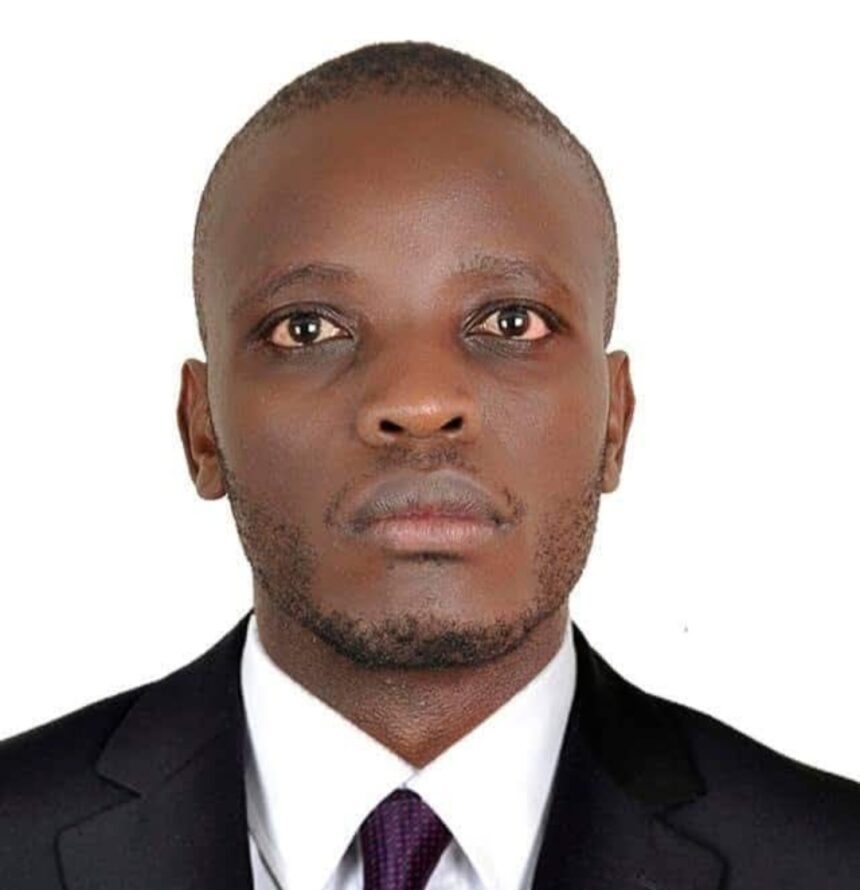
Atwemereireho Alex
SHARE

Every serious nation is ultimately defined not by the length of its highways, the height of its buildings, or the longevity of its rulers, but by the moral language it teaches its children before they can read statutes, understand power, or name injustice. National anthems are not ornamental songs; they are condensed philosophies of statehood. They are civic scriptures, short, memorable, and deliberately aspirational. Uganda’s national anthem, composed at the moment of political birth, is one such foundational text. Written by George Wilberforce Kakoma and set to music by Peter Wingaard, the anthem was formally adopted in 1962 at the moment of independence, deliberately crafted to compress a national philosophy, a moral code, and a constitutional vision into a few restrained yet enduring lines. Sparse in words yet dense in meaning, it carries within its verses a complete political theology, a constitutional ethic, and a demanding vision of citizenship.

When Ugandans sing, “O Uganda, may God uphold thee; we lay our future in thy hands; united for liberty; together we always stand,” they are making a collective oath. They are declaring what kind of country Uganda claims to be, what values it professes to uphold, and what moral standards it binds itself to across generations. This is not nostalgia. It is accountability. For a republic that has now lived more years under independence than under colonial rule, the anthem stands not as a relic of hope, but as a standing audit of national conduct.

To examine this anthem closely is not to weaken the state; it is to strengthen it. True patriotism does not avert its eyes from uncomfortable truths. It insists that national symbols mean something and that words sung publicly must correspond, at least in trajectory, with lives lived collectively. George Orwell warned in Notes on Nationalism (1945) that nationalism becomes dangerous when it demands loyalty without moral inquiry. Patriotism, by contrast, protects a nation’s ethical core. Uganda’s anthem invites precisely this form of loyal scrutiny.

The opening line – “Oh Uganda, may God uphold thee” is a deliberate act of restraint. Written in 1962, at the threshold of sovereignty, it reflects an extraordinary political maturity by Uganda’s early thinkers. They understood, as history repeatedly confirms, that unchecked power corrodes both rulers and institutions. By invoking God rather than glorifying the state, the anthem rejects the deification of authority. It echoes Psalm 127: ‘‘Unless the Lord builds the house, the builders labour in vain.’’ and affirms that the nation is subject to moral judgment beyond itself.

This principle is not symbolic; it is constitutional. Uganda’s 1995 Constitution opens with gratitude to Almighty God and vests sovereignty unequivocally in the people (Article 1). It establishes constitutional supremacy (Article 2), placing the law, and not individuals above transient power. The anthem and the Constitution are in philosophical alignment: leadership is a trust; authority is conditional; power must answer to conscience. This echoes Lord Acton’s timeless warning in his essay The History of Freedom in Antiquity (1907) that power tends to corrupt when it forgets its limits.

Yet Uganda’s political practice has often strained against this humility. Where public office becomes entitlement, where institutions are personalized, where legality appears elastic depending on circumstance, the anthem’s first line stands as a quiet but relentless rebuke. It asks, with unsettling calm: if God is to uphold Uganda, why do those entrusted with power so often behave as though they alone are sufficient? and reminds the nation that no government upholds itself indefinitely; moral legitimacy is the true infrastructure of stability.

The second line, “We lay our future in thy hands” is perhaps the anthem’s most demanding promise. It speaks to intergenerational justice. It affirms that the present holds the future in trust, not in ownership. Philosophically, it resonates with John Rawls’ theory of justice between generations in A Theory of Justice (1971) and with John Locke’s insistence in Two Treatises of Government (1689) that political authority exists to safeguard posterity as much as the present.

Here, the contrast between word and deed becomes painfully sharp. Uganda’s demographic reality renders this line unavoidable. Over 78% of Ugandans are below the age of 30. According to World Bank and UBOS data, youth unemployment and underemployment remain structurally high, with the informal sector absorbing over 90% of the labour force. Public debt now exceeds USD 25 billion, with debt servicing consuming resources that would otherwise strengthen healthcare, education, and innovation. Uganda’s doctor-to-patient ratio remains far below WHO recommendations, maternal mortality persists at over 280 deaths per 100,000 live births, and public hospitals routinely report shortages of essential medicines. These figures are not abstract; they are the lived texture of the future being laid down today.

Environmental decline further sharpens the moral question. Wetlands have been reduced by more than 30% in recent decades, forest cover has steadily declined, and land conflicts continue to displace communities. These are intergenerational decisions with irreversible consequences. To invoke the future while constricting its possibilities is to hollow out the promise unless deliberate corrective action follows.

The anthem’s phrase “united for liberty” elevates unity from mere coexistence to moral purpose. Unity here is not silence, not conformity, not fear-based cohesion. It is unity directed toward freedom. Isaiah Berlin’s distinction between negative and positive liberty in Four Essays on Liberty (1969) finds poetic convergence in this line: freedom from arbitrary interference and freedom to meaningfully shape one’s life.

Uganda’s legal framework affirms this aspiration. Article 20 of the Constitution declares rights inherent and not state-granted; Article 38 guarantees participation in governance; regionally, the African Charter on Human and Peoples’ Rights affirms similar liberties. These are not external impositions. They are Uganda’s own declared commitments. Where civic space narrows, where dissent is pathologized, where elections generate contestation of legitimacy rather than renewal of consent, liberty risks becoming rhetorical rather than real.

African philosopher Kwasi Wiredu cautioned against “consensual silence”, the illusion of unity achieved by suppressing disagreement in Cultural Universals and Particulars (1996). Genuine unity, he argued, is dialogical and principled. Uganda’s anthem does not celebrate mute harmony; it calls for a courageous togetherness anchored in freedom.

The final line, “together we always stand,” is the anthem’s ethical summit. It asserts solidarity across class, region, belief, and generation. It anticipates what international law would later codify as collective responsibility for social harmony and justice. Standing together, however, demands equitable distribution of opportunity, consistent application of law, and institutions that serve the public interest rather than sectional advantage.

When corruption persists despite constitutional bodies, when accountability is indefinitely deferred, when public trust erodes, the anthem remains unchanged, and therefore accusatory. It does not shout. It endures.

The enduring power of Uganda’s anthem lies precisely here. It has outlived governments, crises, and political fashions. Sung in schools, at national ceremonies, in moments of grief and triumph alike, it continues to articulate a vision of Uganda that remains attainable precisely because it has not been abandoned.

Long after speeches dissolve into archives and administrations pass into memory, the anthem remains unrevised, unbending, and morally intact. It waits for the republic to rise to its own words. And in that waiting, it testifies that love of country need not be blind to be loyal, nor silent to be patriotic. Some love Uganda bravely by insisting that her most sacred words still mean exactly what they say.

Atwemereireho Alex,
alexatweme@gmail.com

The writer is a lawyer, researcher and governance analyst.


Do you have a story in your community or an opinion to share with us: Email us at Submit an Article

Subscribe to Our Newsletter
Subscribe to our newsletter to get our newest articles instantly!
Share This Article
Facebook Whatsapp Whatsapp Email Copy Link
Bywatchdog
Follow:
Watchdog Uganda is a news portal for trending news and commentaries in the areas of politics, security, business, tourism, technology, education, et al.
Previous Article Ongoing Vote Recount in Masaka City Woman MP Election Reveals Discrepancies as Hon. Justine Nameere Challenges Declared Results
Next Article Uganda Looks Upward: Landmark Towers Signal a Permanent Shift in the Nation’s Skyline

Editor's Pick

DeplomacyNewsPoliticsWorld News

Kenya’s Miguna Miguna Blasts Bobi Wine’s Capitol Hill Photo-Op: “Wrong Place to Start” for a True Pan-African Freedom Fighter

WATCHDOG UGANDA Miguna Miguna Blasts Robert Kyagulanyi’s Capitol Hill Photo-Op: “Wrong Place…

By
Lawrence Kazooba
5 Min Read
Politics

Hope Atuheire: The EX Corp-Cum RDC Shares Secret Behind Museveni’s Landslide Win in 2026, PDM Comes on Top

  When Uganda went to the polls on January 15, 2026, the…

9 Min Read
Politics

From PDM Reforms to Poll Dominance: How RDC Hope Atuheire Delivered Museveni’s Landslide in Kween

When Uganda went to the polls on January 15, 2026, the outcome…

9 Min Read

Top Writers

Mike Ssegawa 750 Articles
Two decades of reporting, editing and managing news content. Reach...
Mulema Najib 4366 Articles
News and Media manager since 2017. Specialist in Political and...

Op-ED

OP-ED: The value of Leadership while conforming to Gendered narratives; An exploratory view of Leadership and Gender

By Natukunda Fazirah Magezi Leadership in the mainstream perspective takes…

19th March 2026 at 12:31

IBRAHIM E. KASITA: From Darkness to Surplus: A 40-Year Journey of Uganda’s Electricity Pricing (1986–2026)

In 1986, as the National Resistance…

18th March 2026 at 10:17

Museveni Hosts Ex U.S. Security Chief Michael Flynn in Entebbe for High-Level Talks on Military Cooperation and Bilateral Ties

Kampala – President Yoweri Museveni today…

17th March 2026 at 22:22

DENIS JJUUKO: Bank of Uganda should create a gold exchange

Gold has become Uganda’s leading export…

17th March 2026 at 11:41

KAGENYI LUKKA: Why Anita Among Deserves to Lead Uganda’s 12th Parliament

Anita Among, a force to be…

17th March 2026 at 07:45

You Might Also Like

Community NewsConversations withPolitics

Rogers Bulegeya: The NRM Strategist Turning Masaka Into Museveni’s Stronghold

Determination, Courage and Patriotism Driving NRM’s Golden Son Bulegeya to Serve President Museveni’s Government, writes Brian Mugenyi MASAKA – In…

6 Min Read
Op-EdPolitics

MATHIAS LUTWAMA: Amazing lessons on President Museveni 

Our times, being enriched with a trichotomy of ideas, we shall be delving further on the heroic virtues of His…

2 Min Read
Op-EdPolitics

WADADA ROGERS: Understanding Mukasa Mbidde’s claim that Museveni is “just a symbol” and no longer fully in control of Uganda’s top leadership

Doubts regarding whether or not Uganda’s President Yoweri Museveni is still fully in control of this country have surfaced severally…

9 Min Read
Conversations withOp-Ed

ALEX ATWEMEREIREHO: Uganda’s Youth Bulge: Is it an Opportunity or a Ticking Time Bomb?

“The wealth of nations lies not in their natural resources, but in the productive capacities of their people.”- Adam Smith,…

15 Min Read
watchdog uganda logo

About Us

Watchdog Uganda is a portal for solution journalism, trending news plus cutting edge commentaries in the fields of politics, security, business, tourism, entertainment, technology, agriculture, climate change, environment, public health et al. We also give preference to Ugandan community news and topical discussions. The portal also publishes community news and topical discussions.

Quick Links

  • Submit an Article
  • Forums
  • About Us
  • Contact Us
  • Advertise
  • Terms and Conditions

Follow Us

FacebookLike
XFollow
YoutubeSubscribe
TiktokFollow

© 2026 Watchdog Uganda. All Rights Reserved.

Welcome Back!

Sign in to your account

Username or Email Address
Password

Lost your password?