“There’s a reason you separate the military and the police. One fights the enemy of the state, the other serves and protects the people. When the military becomes both, then the enemy of the state tends to be the people.”
There’s a video trending on social media at the moment. On 06 January 2026, the video shows a group of uniform officers brutally assaulting a BBS Terefayina journalist in broad daylight. “The victim was surrounded and assaulted continuously.
The movie
In Battlestar Galactica there’s a scene where President Laura Roslyn and chief military Commander William Adama debate how to respond to the potential rioting of civilians. In the absence of a police force capable of handling the situation, Roslyn wants the military to police the civilians. Adama tells her the military won’t be her police.
“There’s a reason you separate the military and the police,” he says. “One fights the enemy of the state, the other serves and protects the people. When the military becomes both, then the enemy of the state tends to be the people.”
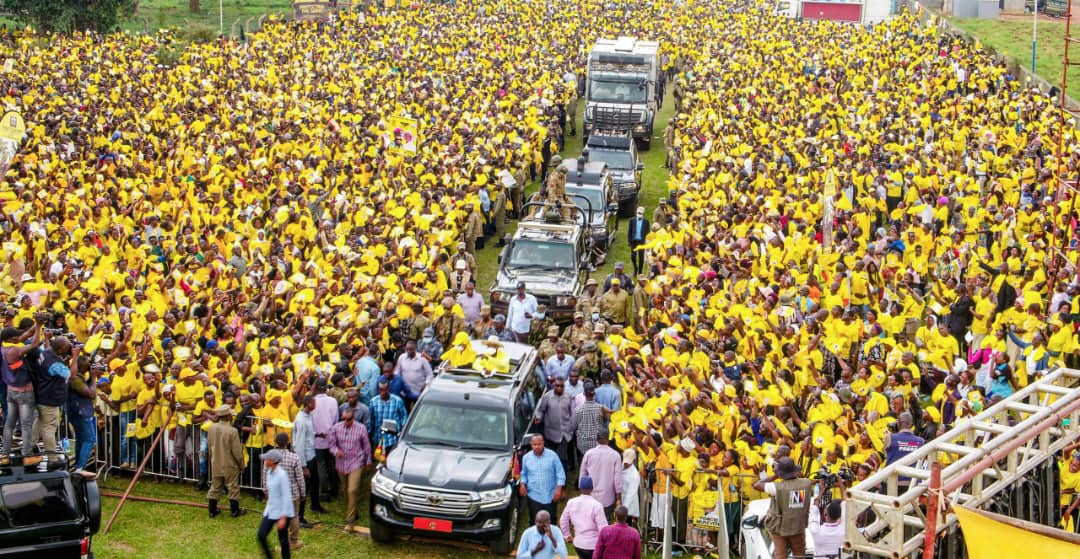
It’s difficult to imagine a more succinct warning for what’s unfolding in Uganda right now. The images in kawempe and gulu show police who are militarizing their policing tactics because they believe they cannot maintain law and order through regular policing. Police cars and batons have been traded for armoured vehicles, tear gas, and assault weapons.
Do citizens consider this behaviour within the acceptable range of police enforcement?
This unfolding military-style policing highlights how difficult it is to determine what reasonable limits we should expect from our civilian police forces. Police do not possess absolute authority, nor do they wield the powers of the military. Yet many ordinary people are unsure what limits are, or should be, in place to restrict police behaviour—or what lines should be drawn to protect citizens from the police.
For the past four weeks, we have seen images of police in camouflage aiming assault rifles at citizens, arresting journalists, opposition supporters and using tear gas on opposition politicians’ supporters. It is worth asking: Do citizens consider this behaviour within the acceptable range of police enforcement?
The other problem is, there’s no consensus on what the limits of police behaviour should be. This makes determining the limits of Ugandan policing complicated.
Perhaps this is why popular culture so frequently explores these questions. The militarization of civilian police and the role of protests in police states are subjects that arise regularly in movies and television—especially in science fiction.
Here is another scene that questions the corrupting power of police authority.
Minority Report
In Minority Report, a film based on Philip K. Dick’s 1956 short story, the police have access to group pre-cognitive psychics who can predict murder. The Pre-Crime unit of the police force uses this information to stop murders before they occur. With absolute authority, they capture murderers before they act, place them into a catatonic state, and imprison them underground.
But here lies the same old question about the limits of law enforcement: If you arrest a murderer before a murder is committed, did you not just arrest an innocent civilian?
If it didn’t happen, how can you be guilty? What right do the police have to seize an innocent man?
Early in Minority Report, this question is addressed by Detective John Anderton of the Pre-Crime unit, and Danny Witwer, a Department of Justice official sent to investigate the program.
In my view
In my view, militarization is a mindset. It is a tendency to see the world through the lens of national security, a tendency to exaggerate existing threats. In policing, this can manifest itself as a belief that physical security is more important than civil liberties and that dissent can be dangerous to national security. This same mindset encourages police to treat opposition politicians – and in particular NUP supporters – as if they might undermine the government.
All of which leads to the question: which is more dangerous to democracy – the small-groups of opposition supporters singing and dancing in streets in support of their leader, or a militarized police force?
Richard Musaazi
Mobile forensics investigator
www.richardspi.com
Do you have a story in your community or an opinion to share with us: Email us at Submit an Article