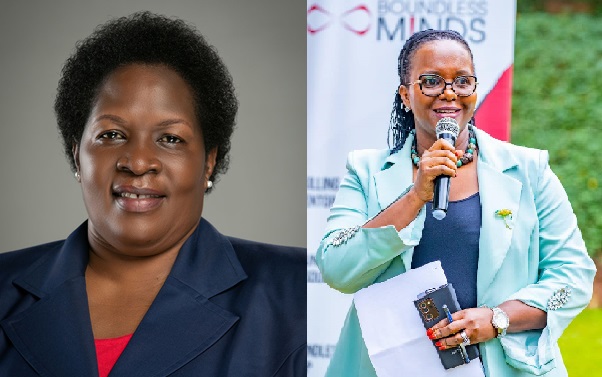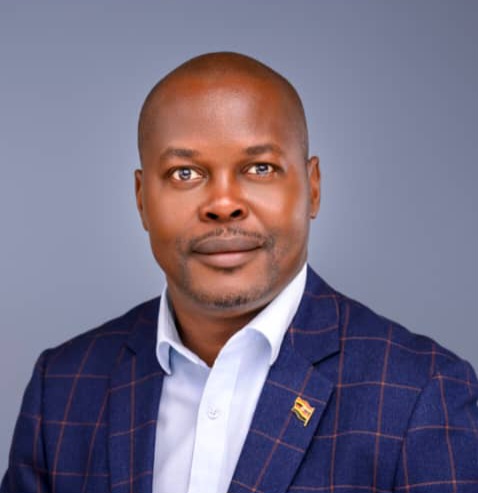
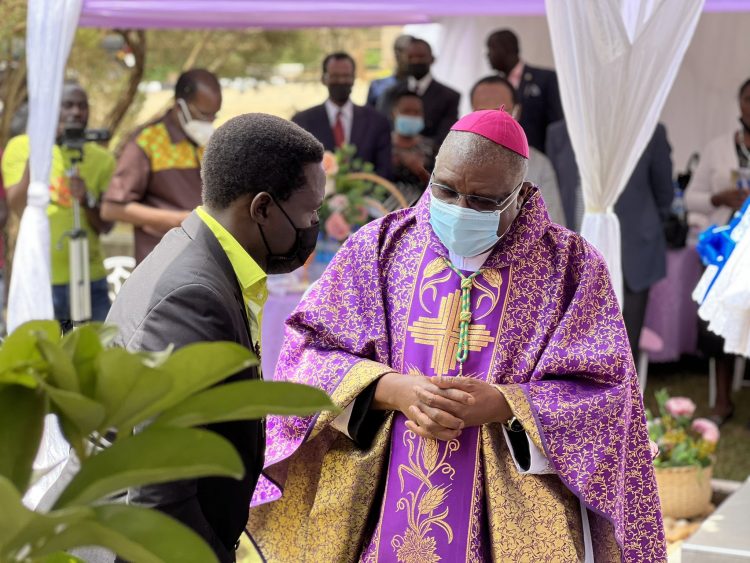
The recent controversy surrounding the postponed Holy Mass at Rubaga Cathedral has ignited passionate debate across Uganda’s political and religious landscape. What was intended as a prayer service for detained opposition leader Kizza Besigye and other political prisoners instead became a flashpoint in the country’s ongoing tensions between faith and power.
At the center of the storm stands Archbishop Paul Ssemogerere, portrayed in some quarters as having yielded to State House pressure. Most prominently, Winnie Byanyima—wife to Besigye and executive director of UNAIDS—publicly accused President Yoweri Museveni of pressuring the Archbishop into cancelling the Mass. Her account suggests an alarming intrusion of political authority into sacred space.
But that is only half the story.
A fuller examination reveals a far more complex and delicate balancing act—one that reflects prudence rather than capitulation.
The Chronology Matters
The Mass was organized following a request from Byanyima and her supporters. Archbishop Ssemogerere initially agreed to preside, and preparations moved forward. The event was publicized, and an organizing committee established. However, on the eve of the service, the Archbishop informed Byanyima that he had received a call from President Museveni expressing concern that the Mass might carry political undertones.
Crucially, the Archbishop did not conceal this development. He reportedly advocated for the service to proceed, emphasizing its spiritual intent. Only after failing to persuade the President did he relay the decision to postpone—framing it as temporary, pending further dialogue to ensure harmony.
This was not a secret cancellation sprung upon unsuspecting organizers. Byanyima received advance notice, with sufficient time to communicate the change. Yet the following day, hundreds gathered at the cathedral, where an impromptu prayer session proceeded without official sanction. Speeches were made, references to the presidential call were repeated publicly, and the Church found itself thrust into precisely the political spotlight it had sought to avoid.
The Church’s Burden of Memory
Uganda’s history offers sobering lessons about the risks faced by religious leaders who are drawn too directly into political confrontation. The 1977 martyrdom of Anglican Archbishop Janani Luwum under the regime of Idi Amin remains a defining moment in church–state relations. It is a reminder that ecclesiastical courage must often be paired with strategic wisdom.
As shepherd of the Kampala Archdiocese, Archbishop Ssemogerere carries a responsibility not only to speak prophetically, but also to safeguard the Church as an institution. A cathedral is not merely a building; it is a sanctuary meant to transcend partisan lines. Its moral authority depends, in part, on its perceived neutrality.
This does not mean silence in the face of injustice. The Catholic Church in Uganda has a long tradition of social engagement and advocacy. But engagement must be calibrated. The Archbishop’s decision appears rooted not in fear, but in caution—an effort to prevent the Church from becoming an arena for political contestation.
Agency and Accountability
In the public narrative that followed, much emphasis was placed on presidential “orders.” Less attention was given to the Archbishop’s attempt to mediate, or to Byanyima’s own agency in choosing to proceed with informal prayers after being notified of the postponement.
Church officials, including Chancellor Pius Male, described the delay as a measure to resolve concerns amicably. That framing suggests prudence, not surrender.
One may sympathize deeply with the plight of political detainees and still question whether transforming a cathedral into a platform for political messaging serves the long-term interests of either justice or faith. By proceeding despite the postponement, organizers risked placing the Archbishop in a precarious position—caught between State authority and a politically charged congregation.
Preserving the Sacred
In polarized societies, institutions that remain above factional struggle are invaluable. The Church must be able to minister to government officials and opposition figures alike. Its doors must remain open to all, precisely because they are not claimed by one side.
Archbishop Ssemogerere’s decision, viewed in this light, reflects an effort to preserve that fragile balance. He honored the initial request for prayers. He sought to defend the service’s spiritual purpose. And when confronted with external pressure, he opted for postponement rather than escalation.
This was not the easy choice. It exposed him to criticism from activists and suspicion from the State. Yet leadership often requires absorbing criticism in order to shield the institution one serves.
Uganda’s democratic health depends not only on courageous activists and vocal critics, but also on steady custodians of shared spaces. In defending Archbishop Ssemogerere, we are not dismissing concerns about political interference. Rather, we are recognizing that wisdom sometimes lies in restraint.
The cathedral must remain a sanctuary—not a stage.
Do you have a story in your community or an opinion to share with us: Email us at Submit an Article