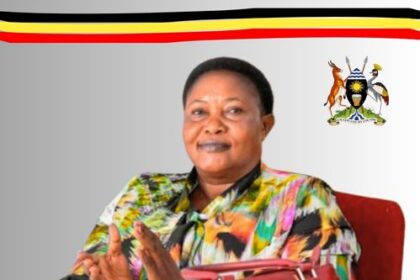
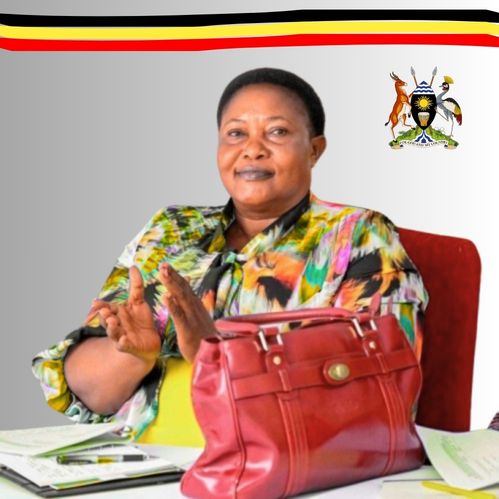
The story of the Busoga Rural Development Agency (BURUDA) and the Parish Development Model (PDM) is a fascinating continuum of Uganda’s struggle to lift its people from subsistence into the money economy. When Minister Milly Babalanda first presented the BURUDA concept to President Museveni in 2003 at Jinja State Lodge, she was essentially planting the seed of what would later become a nationwide transformation program. BURUDA was simple yet profound: provide vulnerable youth and women with small, interest-free start-up capital, identify those willing to grow wealth from minimal government support, and empower them to better their lives. The President, whose vision has always been to move Ugandans from subsistence farming into commercial production, immediately saw the potential. Billions were injected into the fund, and the results were visible—small-scale businesses thrived, farmers began producing for markets, and the Basoga region experienced a surge in economic activity. Museveni was pleased, remarking that such initiatives were “touching the very nerve of prosperity for our people.”
However, as often happens with successful programs, internal fights and leadership struggles disrupted BURUDA’s progress. Leaders sought to wrest control from Babalanda, and the President, dismayed by the wrangles, chose to close the program altogether. Yet, the impact had already been made. Babalanda had demonstrated her ability to mobilize, to innovate, and to deliver prosperity to the grassroots. This endeared her to Museveni, who later enlisted her into mainstream government, first as a deputy RDC, then as Special Presidential Advisor, head of the Office of the NRM National Chairman, and eventually Minister for the Presidency. Her industriousness and foresight had set her apart.
Nearly two decades later, the BURUDA concept was reborn, but this time on a national scale. In Kibuku, President Museveni launched the Parish Development Model (PDM), a program designed to cover the entire country. The PDM is built on seven pillars: agriculture value-chain development, infrastructure and economic services, financial inclusion, social services, community mobilization and mindset change, parish-based management information systems, and governance and administration. Its objective is clear: transition 3.5 million households—about 33 percent of Uganda’s population—from subsistence to a monetized economy. It is holistic, integrating rural households into the money economy by addressing not just capital but also infrastructure, mindset, and governance.
The similarities between BURUDA and PDM are striking. Both aim to empower vulnerable groups with capital and support, both emphasize grassroots mobilization, and both align with Museveni’s vision of wealth creation. BURUDA was localized, targeting Busoga, while PDM is national, targeting every parish in Uganda. BURUDA focused primarily on interest-free capital for youth and women, while PDM expands this to include financial inclusion through SACCOs, agricultural value chains, and infrastructure development. BURUDA’s impact was immediate but limited in scope; PDM’s impact is designed to be systemic and nationwide. In essence, PDM is BURUDA scaled up, refined, and institutionalized.
The impact of PDM is already being felt. According to the Uganda National Household Survey 2023/24, poverty levels have dropped to 16.1 percent, down from higher levels in previous years. This is significant progress, considering that Uganda has historically struggled with high poverty rates, especially in rural areas. The survey also highlights improvements in household enterprises, access to financial services, and food security. President Museveni has often said, “We cannot continue with 39 percent of Ugandans in subsistence farming. We must move them into the money economy.” The PDM is the practical realization of that vision, and its roots can be traced back to BURUDA.
Babalanda’s role in this continuum cannot be overstated. As Minister for the Presidency, she now plays a key role in monitoring the distribution of PDM funds through the RDC Secretariat. This is a natural progression from her earlier role in BURUDA, where she directly oversaw the empowerment of vulnerable groups. Her foresight in conceptualizing BURUDA, her resilience in the face of political wrangles, and her industriousness in government have all contributed to her rise. It is no wonder she has reached this far and continues to soar. She embodies the spirit of grassroots mobilization and national transformation.
The PDM, therefore, can be seen as the improved result of the BURUDA concept. Where BURUDA was localized, PDM is national. Where BURUDA focused on capital, PDM integrates multiple pillars for holistic transformation. Where BURUDA was disrupted by leadership wrangles, PDM is institutionalized within government structures, ensuring sustainability. The vision remains the same: empower Ugandans to move from subsistence to prosperity. The difference is scale, structure, and sustainability.
Uganda’s poverty statistics underscore the importance of such initiatives. With poverty now at 16.1 percent, down from 21.4 percent in 2016, the country is making progress, but challenges remain. Rural poverty is still higher than urban poverty, and vulnerable groups such as women and youth continue to face barriers. Programs like PDM are essential to bridge this gap. As Museveni once said, “The wealth of a nation is not in the skyscrapers of the city but in the prosperity of its villages.” By targeting parishes, the smallest administrative units, PDM ensures that prosperity begins at the grassroots.
In conclusion, the Parish Development Model is the rebirth and refinement of the Busoga Rural Development Agency. It carries forward the vision of empowering vulnerable groups with capital and support, but expands it into a nationwide, multi-pillar program. It is BURUDA scaled up, institutionalized, and aligned with Uganda’s broader development goals. Minister Babalanda’s foresight in conceptualizing BURUDA, her industriousness in government, and her resilience in the face of challenges have all contributed to this continuum. No wonder she has reached this far and continues to soar. As Uganda moves forward, the legacy of BURUDA lives on in PDM, and the vision of prosperity for all Ugandans is closer to realization.
Do you have a story in your community or an opinion to share with us: Email us at Submit an Article