The recent press reports attributed to Hon. Norbert Mao declaring the Speaker of the 11TH Parliament as accidental is not only misleading, its hugely concerning, and dangerously reckless for nation building. At a time when Uganda needs sober, unifying leadership, his remarks risk dragging national discourse back into the murky waters of ethnic arithmetic and political opportunism of the past. Uganda deserves better.
The Speakership was won, not handed out
To describe Rt. Hon. Anita Among as an “accidental Speaker” is a distortion of both fact and process. Following the untimely death of Rt. Hon. Jacob Oulanyah, Parliament did not anoint a successor through sympathy, accident, or tribal entitlement. It conducted a constitutionally mandated election. A man who spent four years at the Law school, ten years in parliament, a leader of Uganda’s oldest party, and presently a Minster of Justice and Constitutional Affairs should surely arise above this.
The position was openly contested. Members of Parliament nominated candidates. Campaigns were held. Arguments were made. Ballots were cast. Votes were counted. Rt. Hon. Anita Among emerged the winner. That is not an accident. That is democracy.
To trivialize that outcome as accidental is to insult the intelligence of Ugandans and to undermine the authority of Parliament itself. It diminishes the legitimacy of every Member of Parliament who participated in that vote. It suggests that their decision was not the result of deliberation but of circumstance, a claim that borders on contempt for the institution.
If Hon. Mao disagreed with the outcome, the time to mobilize support was during the election. Once Parliament has spoken through the ballot, responsible leaders respect the verdict. Democracy does not become illegitimate simply because one is dissatisfied with the result.
The tribal card: a dangerous and divisive strategy
Even more troubling is Hon. Mao’s attempt to frame the Speakership within tribal calculations. By invoking his Acholi/Luo heritage and suggesting that the Iteso “occupy strategic positions” such as Deputy Army Commander, Vice President, and Governor of the Bank of Uganda, he shifts the debate from merit and mandate to ethnicity and entitlement.
This is a perilous road.
First, the offices he references are either presidential appointments or constitutional placements within the executive structure. The Speakership is fundamentally different. It is not appointed by regional negotiation or ethnic balancing. It is elected by Members of Parliament. The two cannot be equated.
Second, suggesting that certain communities “already have enough” positions implies that national leadership is a tribal reward system. That logic reduces Uganda to a marketplace of ethnic bargaining rather than a constitutional republic governed by law. Ugandans must reject this narrative firmly and unequivocally.
No Ugandan holds office because of tribe alone. Individuals are elected or appointed within constitutional frameworks. To reduce their service to tribal tokens is both disrespectful and dangerously simplistic, and cool minds in NRM should keenly take note of this ethnic revivalism.
If the standard becomes ethnic entitlement, where does it end? Shall we begin calculating Cabinet seats by clan? Shall Parliament be divided by linguistic blocs? Shall public offices rotate not by competence, but by ancestry? That path leads to nowhere good for state building.
Uganda’s history is a warning
Uganda’s post-independence history offers painful lessons about the consequences of tribalized politics. The early years of independence were marred by ethnic mistrust, competition for dominance, and regional fragmentation. Political alignments hardened along tribal lines. Suspicion replaced unity. Stability collapsed. The results were catastrophic: political instability, coups, and cycles of violence that scarred the nation for decades.
Those who flirt with tribal arithmetic today must reckon with that history.
The National Resistance Movement (NRM) has worked painstakingly to rebuild a national identity anchored in constitutional order. The idea that high office should be claimed or denied based on ethnic distribution resurrects ghosts Uganda cannot afford to entertain again.
Leadership must rise above tribe, not descend into it.
Merit, numbers, and the constitution
The Speakership is not inherited. It is not assigned by regional quota. It is not reserved by historical sentiment. It is earned through parliamentary numbers. The formula is straightforward, build support, convince members of parliament, and win the vote.
If Hon. Mao Nobert, Hon Wanyoto Lydia, Hon Persis Namuganza or anyone else aspires to that office, the pathway is open and constitutional. Rally Members of Parliament. Present a vision for legislative leadership. Offer a compelling alternative. Compete.
But do not undermine the legitimacy of a sitting Speaker by dismissing her victory as accidental. That is not political maturity, it is political deflection. In democratic systems, numbers matter. Legitimacy flows from procedure. Once the process has been followed, the outcome must be respected. Anything less invites chaos.
Uganda must reject ethnic mobilization
Ugandans are watching. The youth are listening. The message leaders send today shapes the political culture of tomorrow.
If prominent leaders normalize tribal rhetoric in pursuit of office, they license others to do the same at every level of governance. What begins as careless political language can quickly become combustible mobilization.
National unity is not preserved by silence, but by courageously rejecting divisive narratives.
Uganda is bigger than tribe. Parliament is bigger than ethnicity. The Speakership belongs to the Republic, not to a region, not to a lineage, and not to a grievance.
Conclusion: respect the institution
The facts remain simple and undisputed; The Speakership was contested,
The Speaker was elected, parliament decided.
That decision was constitutional. It was democratic. It was legitimate.
Hon. Norbert Mao is entitled to ambition. He is entitled to contest. He is entitled to critique.
However, and most importantly, he is not entitled to rewrite the outcome of a lawful election or to recast national leadership as an ethnic balancing act.
Uganda must move forward anchored in merit, constitutionalism, and unity, not backwards into tribal calculations that history has already shown to be destructive.
The nation has paid dearly before for that experiment. It must not pay again.
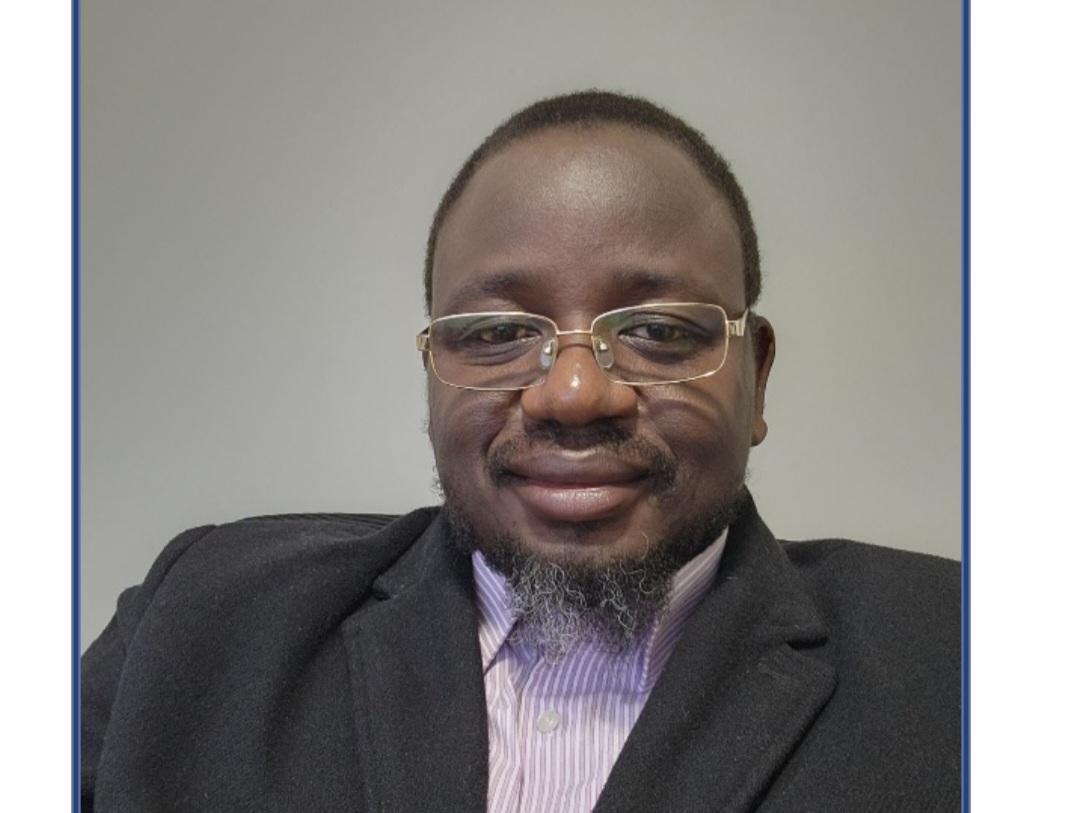
Dr. Samuel B. Ariong is a Lecturer and Scholar, he obtained a PhD at the University of Newcastle and completed a Post-Doctorate at the University of Konstanz.
Do you have a story in your community or an opinion to share with us: Email us at Submit an Article