
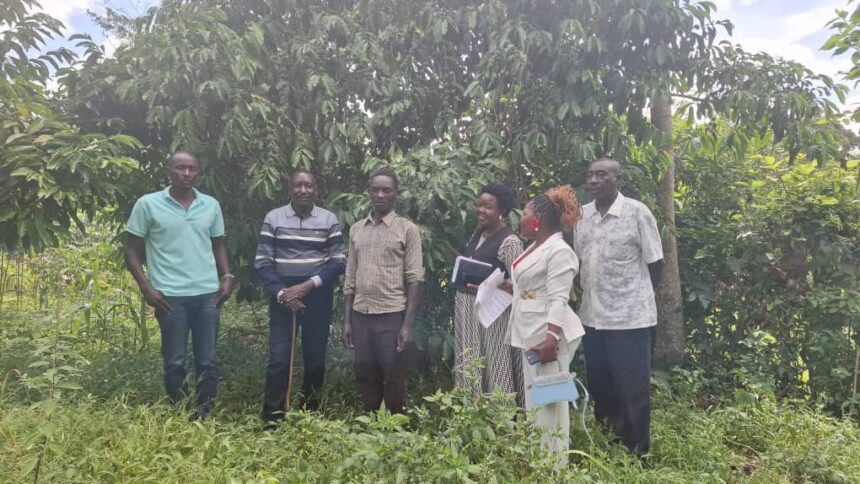
KYENJOJO, June 2, 2026 – The Deputy Resident District Commissioner (RDC) of Kyenjojo, Allan Bamuha, has continued to champion coffee development as a key pathway to improving household incomes and transforming livelihoods across the district.
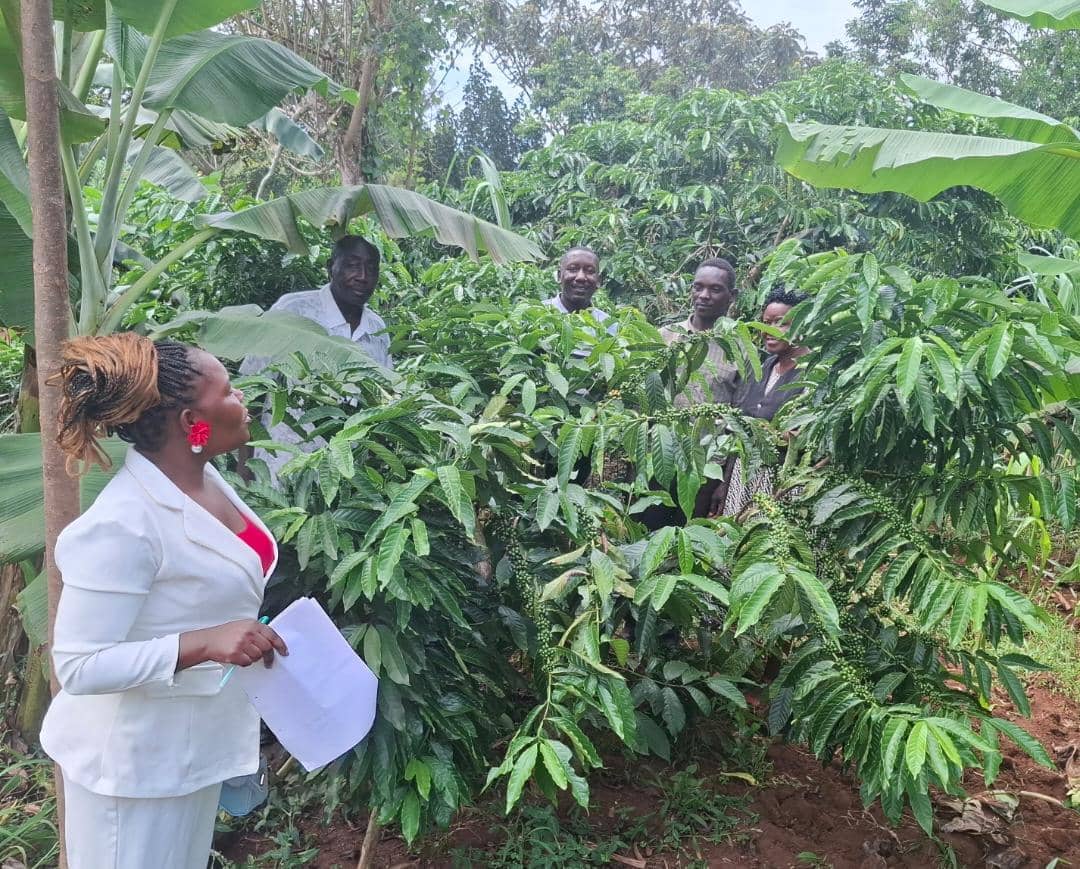
During a joint field engagement conducted on 2nd June 2026 in Katooke Sub-county and Katooke Town Council, Mr. Bamuha, accompanied by the Sub-county Chief, Parish Chiefs, Agricultural Extension Workers, and the LC III Chairperson of Katooke Sub-county, traversed various farming communities to assess coffee production and promote best practices in post-harvest handling.
The engagement focused on encouraging farmers to embrace commercial coffee farming and adopt proper post-harvest management techniques that enhance quality and increase market value. Across the sub-county, the team interacted with numerous smallholder coffee farmers whose dedication to coffee cultivation is steadily contributing to rising household incomes and economic growth within the district.
Speaking during the field visits, Mr. Bamuha emphasized that coffee remains one of Uganda’s most strategic agricultural commodities, contributing significantly to export earnings and supporting millions of households nationwide. He noted that Kyenjojo District is gradually witnessing a shift from subsistence farming to commercial agriculture, with more families embracing coffee production as a reliable source of income.
“Coffee has the potential to transform rural households and create sustainable wealth. We encourage farmers to maintain quality standards, adopt proper post-harvest handling practices, and view farming as a business enterprise,” he said.
The Deputy RDC further encouraged farmers to adopt the government’s 4-Acre Model, which integrates high-value enterprises such as coffee and fruit growing with livestock activities including dairy farming, poultry keeping, and fish farming. The model is designed to maximize land utilization, diversify income sources, and improve food security at the household level.
Mr. Bamuha also echoed the message consistently championed by Yoweri Kaguta Museveni, who has repeatedly called for value addition in Uganda’s coffee sector. The President has often emphasized that while a kilogram of raw coffee may fetch approximately USD 2.50 on the international market, the same quantity can generate between USD 25 and USD 40 when roasted, processed, packaged, and marketed as a finished product.
The engagement further highlighted the importance of coffee under Uganda’s Parish Development Model (PDM), a flagship government initiative aimed at transitioning subsistence households into the money economy. Coffee is among the priority agricultural commodities promoted under the program due to its high income-generating potential.
Agricultural experts noted that a well-managed acre of coffee, accommodating approximately 450 seedlings, can generate more than UGX 9 million annually. Through the revolving PDM funds, beneficiaries can access essential agricultural inputs such as quality seedlings, organic fertilizers, drying tarpaulins, and farm management tools to improve productivity and profitability.
As Kyenjojo continues to strengthen its position as a leading coffee-producing district, local leaders remain optimistic that sustained investment in coffee development, value addition, and farmer training will accelerate household income growth and contribute significantly to Uganda’s broader economic transformation agenda.
Do you have a story in your community or an opinion to share with us: Email us at Submit an Article