By Atwemereireho Alex,
alexatweme@gmail.com
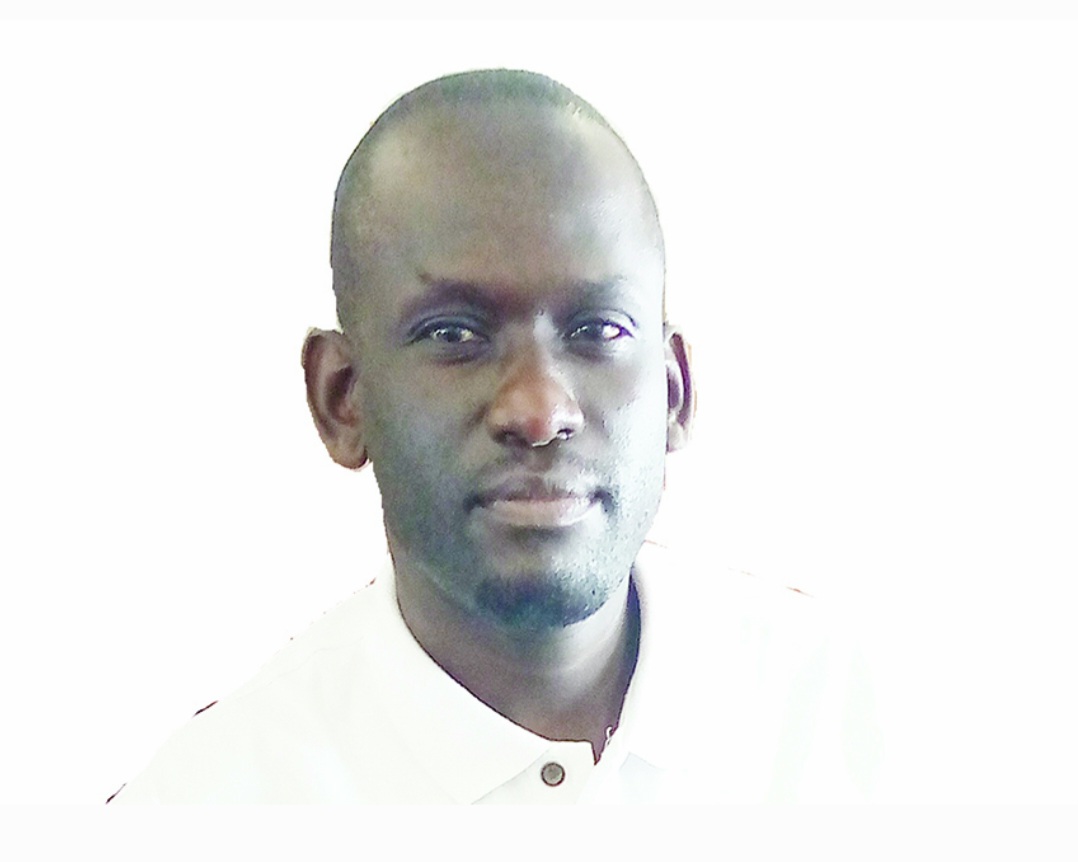
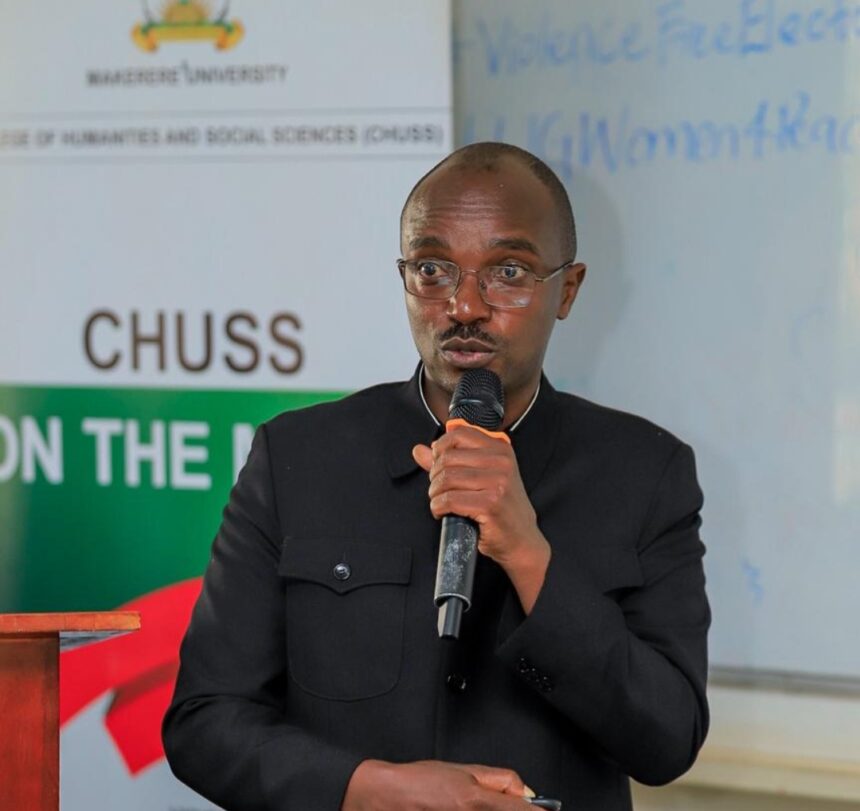
There are lives that submit quietly to history, accepting its rough edges as fate, and there are lives that resist lives that argue back, reshape circumstance, and insist on meaning where deprivation once ruled. Such lives do not move in straight lines. They curve through hardship, controversy, courage, error, reinvention, and, in rare moments, quiet intellectual triumph. The public defense of a Doctor of Philosophy thesis on Friday, 30th January 2026, by Arinaitwe Rugyendo, belongs to this latter category of human achievement. It was not merely an academic exercise. It was a civilizational statement: that lived experience and rigorous scholarship are not rivals, that power can kneel before evidence, and that a Ugandan intellect forged in adversity can still submit humbly to the discipline of ideas.
This doctoral milestone matters precisely because of where the journey began. Born into conditions of severe material deprivation, orphaned of a father at three months, raised by a primary school teacher mother whose modest salary bore the weight of an entire household, his earliest classroom was survival itself. The political violence and ethnic turbulence of the early 1980s were not distant national events but intimate intrusions burned homes, forced displacement, whispered fear, and the quiet resilience of a mother determined to educate her children against all odds. In that crucible, character was not theorized; it was learned. Long before encountering Aristotle’s Nicomachean Ethics (c. 350 BCE) and its insistence that virtue is forged through habit under pressure, he was already living that truth in its rawest form.
The Catholic seminary at Kitabi refined what hardship had already shaped. Silence trained reflection; ritual orderly impulse; study revealed the emancipatory power of thought. His decision to leave priesthood was not an abandonment of faith but an ethical choice rooted in filial duty, an early indication of a mind that weighed responsibility over personal aspiration.
Choosing Makerere University over the cassock was not a retreat from vocation but a redirection toward a broader apostolate: the public square. Political Science and Sociology offered analytical lenses, but journalism soon emerged as the instrument through which theory could confront reality.
His entry into the media coincided with one of Uganda’s most volatile political moments. As a freelance journalist, literally walking stories into The Monitor newsroom, he demonstrated a combination of audacity and instinct that would become a career signature. Securing a candid interview with a serving brigadier on the now-infamous Besigye letter was not simply a scoop; it was an early signal of a refusal to fear proximity to power. The Kanungu tragedy of March 2000, which claimed more than 700 lives, further revealed the moral compass at work. While peers celebrated graduation, he went to the epicentre of grief, translating for international media, earning enough to roof his mother’s house. Journalism, from the outset, was not merely employment; it was social utility.
At twenty-three, when caution would have been understandable, disruption became a deliberate choice. Resigning from a secure editorial position from Daily Monitor, pooling approximately UGX 700,000 with equally daring colleagues, and armed with borrowed computers and unpaid optimism, he co-founded Red Pepper. In doing so, he enacted what Joseph Schumpeter described in Capitalism, Socialism and Democracy (1942) as “creative destruction”, the unsettling but necessary process by which new ideas dismantle stagnant monopolies. Uganda’s media landscape, long dominated by sober, elite-driven orthodoxy, was forced to confront a radically different model. Red Pepper spoke to the personal, the hidden, the uncomfortable. It was tabloid journalism, certainly, but it was also a democratization of attention in a society where public narratives had long been curated from above.
The backlash was immediate and fierce. Arrests, prosecutions, moral crusades, and international scrutiny followed. Yet it was here that a deeper philosophy of press freedom emerged. John Stuart Mill, in On Liberty (1859), warned that silencing opinion robs society of truth, even when that opinion offends. When the paper was dragged to court over allegations of corrupting public morals, the state failed to sustain its case. The prosecutions collapsed. Circulation, however, surged. Within eighteen months, the publication broke even, and by 2005 it had acquired its own printing press without bank loans. In a political economy accustomed to patronage and debt dependency, this was not a minor detail; it was a statement of institutional self-reliance.
This career has not been without error, and it is precisely here that intellectual credibility is reinforced rather than diminished. He has acknowledged, publicly and without evasion, that some stories lacked sufficient contextual sensitivity. Hannah Arendt warned in Truth and Politics (1967) that the most dangerous falsehood is the lie told to oneself. The willingness to interrogate one’s own excesses distinguishes thinkers from propagandists. Equally significant has been his refusal to sanitize malpractice within the tabloid ecosystem itself. By exposing impersonation, extortion rackets, and dismissing culpable journalists, while running daily public warnings, he insisted that freedom without accountability degenerates into abuse.
Beyond media, his work intersects decisively with Uganda’s governance failures. His condemnation of corruption, particularly in the importation of expired drugs and substandard medical supplies, is grounded in documented reality. The World Health Organization estimates that around 10% of medical products in low- and middle-income countries are substandard or falsified, contributing to tens of thousands of preventable deaths annually. Uganda’s Auditor General has repeatedly flagged drug stock-outs, counterfeit supplies, and procurement abuse. These are not rhetorical grievances; they implicate Article 45 of the Constitution of Uganda on the inherent right to life and health, and violate Article 12 of the International Covenant on Economic, Social and Cultural Rights. When he speaks of lives lost in hospitals, he speaks as a citizen confronting evidence, not as a polemicist chasing outrage.
It is against this backdrop that the successful defense of a PhD thesis acquires its full meaning. The study – From Print to Digital: Evolution, Adoption and Contribution of ePapers in the Ugandan Press is not an ornamental credential. It is the culmination of lived inquiry. In an era where scholarship is often dismissed as detached elitism, this work affirms Edward Said’s idea of the “public intellectual” articulated in Representations of the Intellectual (1994): one who speaks truth grounded in evidence, not convenience. The research situates Ugandan media within global technological transitions, interrogating access, sustainability, revenue models, archival permanence, and democratic reach. It confronts uncomfortable truths, that digitalisation alone does not save journalism, that technology without ethics can hollow public discourse, and that sustainability requires institutional imagination.
Conducted under the supervision of Assoc. Prof. William Tayeebwa and Prof. Adolf Mbaine, among Uganda’s most respected scholars in media and communication, the doctorate was earned through the most unforgiving academic rituals: proposal defenses, fieldwork, data analysis, revisions, and public scrutiny. In a country where titles are often accumulated without substance, this submission to peer review stands as an act of intellectual humility.
This scholarly turn is not an isolated episode. Through ResearchFinds Uganda News, which he founded and where he serves as Founder and Editor-in-Chief, he has institutionalized research-driven journalism, policy briefs, report writing, academic symposia, and research training. The platform has contributed to evidence-based political and social analysis in a public sphere often driven by rumor and intuition. In 2016, he founded e2 Young Engineers Uganda, providing STEM education to children aged 4 to 15, an intervention aimed squarely at future competitiveness in a country where over 75% of the population is below 30. As Chairman of the Uganda Premier League Board, he operates at the intersection of sport, governance, and commerce, navigating an industry whose revenues, fan engagement, and regulatory challenges mirror broader questions of institutional management in Uganda.
The legal dimension of this life cannot be ignored. Article 29 of the 1995 Constitution guarantees freedom of expression and of the press, yet this freedom remains under constant strain from regulatory overreach, economic pressure, and political hostility. His career has unfolded at this sharp edge, sometimes at great personal cost. The return to the academy is therefore also strategic: knowledge as armor, research as legitimacy, scholarship as continuity.
Max Weber, in Politics as a Vocation (1919), warned of the danger of separating an “ethic of conviction” from an “ethic of responsibility.” This trajectory, however contested, however imperfect reflects an attempt to hold both. There have been enemies, mistakes, losses, including the devastating passing of his mother before she could occupy the home he built for her. Yet stagnation was never an option. Evolution became the discipline. In intellectual life, evolution is the truest measure of seriousness.
That this doctoral defense took place at Makerere University is symbolically potent. Makerere is not merely an institution; it is an intellectual tradition that produced thinkers such as Ali Mazrui, Dani Nabudere, and Mahmood Mamdani, figures who insisted that ideas must interrogate power, not decorate it. By defending a thesis on media transformation there, he inscribed himself, deliberately or not, into that lineage of engaged, contested public intellectualism.
In an age where slogans replace evidence and power often disdains study, this moment sends a quiet but powerful message: experience without reflection is not wisdom; authority without learning is dangerous; longevity without scholarship is decay. It challenges a political class too often content to invoke nationalism while neglecting national knowledge systems. If one who has built media institutions can still return to the library and submit to peer review, what excuse remains for those entrusted with governing a republic?
This is why the moment inspires. Not because the life is flawless, but because it is demanding. It reminds Uganda that scholarship is not an enemy of power but its conscience; that thinking is patriotic; that loving one’s country sometimes means interrogating it relentlessly. The PhD defense of Friday, 30th January 2026, is therefore more than a personal victory. It is a civic lesson, a proof that words, work, and will can still disturb complacency.
Long after the applause fades, the significance of this journey will endure quietly and stubbornly, especially for a nation that desperately needs more leaders who read, research, reflect, and then act.
The writer is a lawyer, researcher and governance analyst.
Do you have a story in your community or an opinion to share with us: Email us at Submit an Article