

Global credit information and risk management firm Creditinfo has launched a new identity verification, Know Your Customer (KYC), and fraud detection solution in Uganda, aimed at helping financial institutions and businesses strengthen protection against financial crime while supporting the country’s rapidly growing digital economy.
The rollout comes at a time when Uganda’s digital financial ecosystem is expanding quickly, creating new opportunities for economic growth but also exposing organisations to increasingly sophisticated fraud risks.
Uganda has, in recent years, made notable strides in strengthening its anti–money laundering framework, including its removal from increased monitoring by the Financial Action Task Force (FATF). However, experts say the surge in digital payments and online financial services has also created new vulnerabilities that require more advanced risk management tools.
The newly launched platform by Creditinfo is designed to help organisations verify customer identities and detect fraudulent activity by combining data from credit bureaus, government information systems, and other registries.
According to the company, the system integrates identity proofing, digital risk signals, and both international and domestic watchlists to ensure strong KYC compliance and reduce exposure to fraud during customer onboarding and financial transactions.
The Uganda rollout follows a successful deployment of the same solution in Kenya in 2025 and forms part of Creditinfo’s broader global programme aimed at strengthening financial stability, closing anti–money laundering gaps, and promoting secure digital economies.
Officials say the Ugandan version of the platform has been customised to suit the country’s specific risk environment and regulatory landscape.
Since its initial introduction in other markets, Creditinfo has expanded the system’s capabilities to address evolving financial crime threats. Beyond identity verification and onboarding checks, the platform now includes transaction monitoring features that enable institutions to detect suspicious account activity.
These capabilities allow organisations to identify behaviours linked to mule accounts, flag authorised push payment (APP) fraud often associated with scams, and detect unusual transaction patterns within broader anti–money laundering monitoring frameworks.
The system also enhances account security by detecting and preventing account takeover attempts and fraudulent applications. This is achieved through advanced device intelligence and a global identity network built on more than two billion device data points, enabling institutions to identify suspicious digital behaviour and strengthen their fraud prevention systems.
Creditinfo’s Director of Fraud and Identity, Rob Meakin, said the rapid expansion of digital financial services requires stronger safeguards against financial crime.
“The rapid growth of digital financial services creates real opportunities for economic development, but it also increases exposure to sophisticated financial crime,” Meakin said. “By bringing our fraud and identity solution to Uganda, we are helping organisations strengthen their ability to identify risk, maintain compliance and protect their customers, while still enabling secure and seamless access to financial services.”
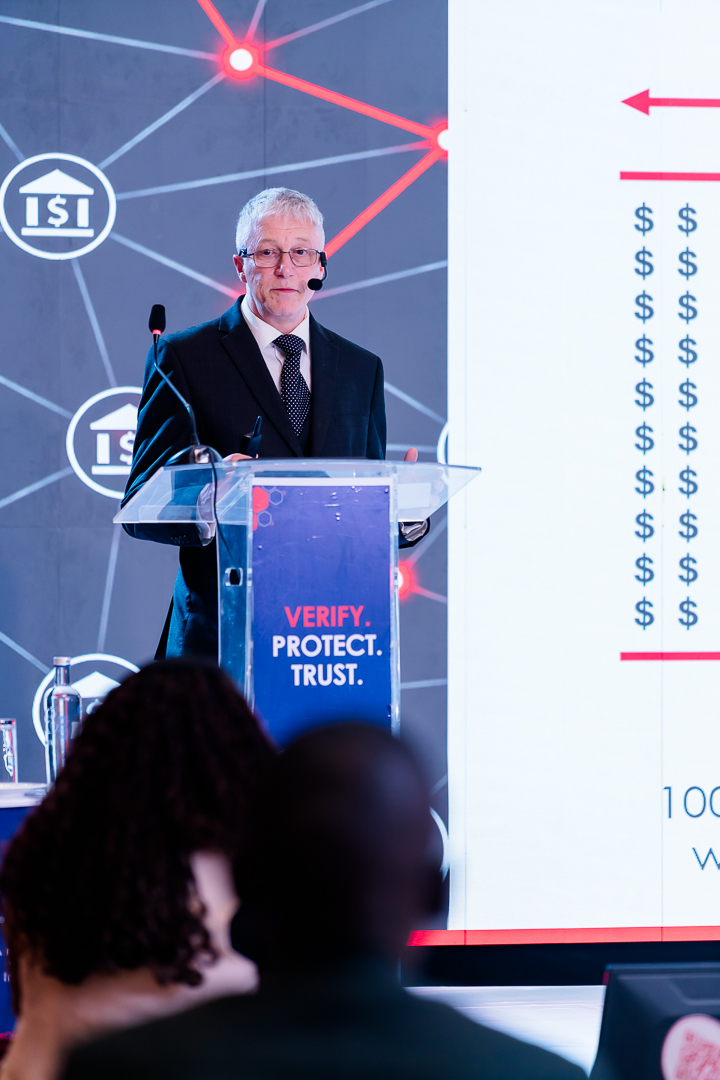
He noted that the company’s broader mission is to support financial ecosystems by improving their resilience against fraud and money laundering.
“Our focus is on helping economies grow, protecting consumers from the rising threat of fraud, and enabling organisations to combat financial crime while mitigating anti–money laundering risk,” he explained.
Meakin added that fraud has increasingly become a collaborative criminal enterprise involving organised networks. “Fraudsters have developed a collaborative ecosystem where money launderers, organised crime groups and fraudsters work together. That collaboration is fueling the exponential rise in fraud and other financial crimes affecting financial institutions,” he said.
He added that Creditinfo works closely with financial institutions by analysing data provided by them and converting it into insights that help institutions manage risk more effectively. “It’s a symbiotic relationship. Organisations provide data, we analyse that data, generate insights, and provide those insights back to financial institutions to help them avoid significant risk,” he said.
Managing Director of Creditinfo Uganda, Mark Mwanje, said the new platform is designed to balance strong fraud protection with customer convenience. “In Uganda’s fast-growing digital economy, businesses need tools that protect them from fraud without making life harder for customers,” Mwanje said. “Our platform helps banks and other institutions cut down on fraud, make it easier for people to open accounts, and promote financial inclusion, while still meeting the strict anti–money laundering requirements in Uganda.”

He explained that the system analyzes multiple digital signals linked to an identity to determine whether a person presenting identification is genuine or potentially suspicious. “When someone presents an ID to open an account or access digital financial services, we don’t only look at the document itself,” Mwanje said. “We check what phone numbers are linked to that ID, what email addresses are connected to it, and even what social media accounts are associated with that identity. By bringing all that information together, we can calculate whether the person is genuine or suspicious.”
Mwanje also stressed that the platform complies with Uganda’s data protection regulations and operates under the oversight of the country’s data protection authorities. “We are fully licensed by the Data Protection Office and meet all the regulatory requirements,” he said. “Where consent is required, we obtain it before conducting checks. Much of the information used in fraud detection is publicly available data, such as public social media activity, which helps increase confidence that a person is genuine.”
Speaking at the launch, which took place at the Sheraton Hotel, Mackay Aomu, representing the central bank, said financial crime prevention remains a key priority for regulators as digital financial services expand. “It is a pleasure to join you at the launch of this very important eKYC and fraud solution, which we see as an innovation designed to strengthen identity assurance and reduce fraud risks across the sector,” Aomu said.
He noted that as Uganda’s financial system becomes increasingly digital, identity-related fraud has become more sophisticated and costly. “We have seen direct financial losses, rising operational costs and even potential regulatory penalties resulting from fraud. These pressures affect institutions and can undermine confidence in the financial system,” he said.
Aomu warned that if fraud is not effectively controlled, it could weaken financial inclusion efforts. “Financial crime prevention remains a priority because fraud can easily undermine the gains we have made in financial inclusion,” he said. “When consumers lose trust, they become reluctant to engage with financial institutions, and banks respond by tightening access or increasing the cost of banking.”
Meanwhile, with the new solution now operational in Uganda, industry players expect stronger cooperation between financial institutions, technology providers, and regulators to improve fraud detection and ensure the continued growth of the country’s digital financial sector.
Do you have a story in your community or an opinion to share with us: Email us at Submit an Article