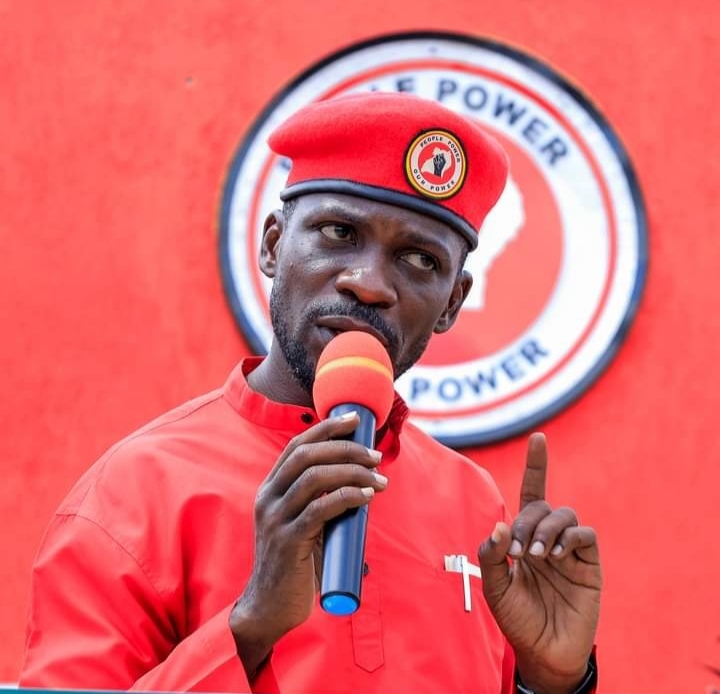
In the quiet suburbs of an American city, far from the dust and drama of Kampala’s political streets, Robert Kyagulanyi Ssentamu—popularly known as Bobi Wine—appears to have executed what insiders describe as a carefully choreographed political retreat.
The musician-turned-politician, once the face of youthful political defiance, quietly slipped out of the country to reunite with his family who had earlier relocated abroad amid post-election tension.
To some observers, it is not a dramatic escape but a calculated pause.
As Uganda settles after the January 15 presidential and parliamentary elections, Kyagulanyi’s departure increasingly looks like a strategic withdrawal—one that allows him to cool off politically while enjoying the comforts of life abroad.
The timing raises eyebrows.
Sources say the opposition leader is expected to reappear just weeks before the anticipated May 2026 swearing-in ceremony of Yoweri Kaguta Museveni. Political analysts say the script is predictable: a dramatic return, renewed allegations of a “stolen election,” and another attempt to capture headlines.
Yet beneath the theatrics lies a difficult political reality.
Kyagulanyi entered the race promising to end Museveni’s decades-long rule. His message to supporters was clear: victory was inevitable. But when the votes were counted, the results told a different story.
Official tallies released by the Electoral Commission of Uganda gave Museveni a commanding lead, consistent with the ruling National Resistance Movement’s electoral dominance since 1986.
Kyagulanyi’s party, the National Unity Platform, secured a notable but far from transformative number of parliamentary seats—hovering around 20 percent of contested constituencies. In several regions, the party even trailed independent candidates.
Independent observers acknowledged improved opposition coordination compared to the 2021 elections. However, the presidential results simply did not match Kyagulanyi’s repeated claims that he had “won the election.”
Despite these assertions, no verifiable evidence—such as polling station returns, parallel tally sheets, or sworn affidavits—has been formally presented to electoral authorities or international monitors.
Numbers, as analysts often say, rarely bend to political narratives.
In the weeks following the polls, Kyagulanyi claimed he was “in hiding” and urged supporters to “demand their votes.” But the response on the streets was muted. No major demonstrations erupted. Kampala remained calm. Even traditional opposition strongholds showed little appetite for confrontation.
For many Ugandans already grappling with economic pressures and political fatigue, the call for mass action simply did not resonate.
The silence spoke volumes.
Meanwhile, internal tensions within the National Unity Platform appear to be deepening. Party insiders speak of growing discontent—ranging from allegations of corruption in the sale of party nomination cards to complaints about financial mismanagement and internal power struggles.
Some disgruntled mobilisers and district coordinators who once powered the “People Power” movement now openly question the party’s internal accountability.
Kyagulanyi’s absence from the country has only amplified the unease.
From his new base abroad, the opposition leader continues to lobby Western governments, particularly in Washington and European capitals, portraying Museveni as a leader whose time has expired and presenting himself as the rightful winner of the election.
But seasoned diplomats say international actors are guided by evidence and institutional processes.
Without verifiable electoral proof, foreign governments are unlikely to challenge a sovereign electoral outcome based solely on political claims.
Critics argue that this strategy risks reinforcing a perception that Kyagulanyi is seeking external leverage rather than building sustained domestic political momentum.
African political history offers many examples of opposition figures who drifted into prolonged exile, slowly losing the grassroots energy that once propelled them.
For Kyagulanyi, the risk is similar.
The youthful movement that electrified Uganda’s political landscape in 2021—and again attempted to rally in 2026—now faces uncertainty about its future direction.
At the heart of the matter lies a difficult contradiction.
The politician who built his reputation on fearless defiance now finds himself far from the front lines of the political struggle he once championed.
As Uganda prepares for another term under President Museveni, the unfolding story may ultimately be less about a stolen victory and more about the challenge of sustaining a political movement beyond moments of excitement and symbolism.
Whether Kyagulanyi returns to confront these realities—or settles into the relative safety of diaspora politics—will determine the fate of the movement he once inspired.
Do you have a story in your community or an opinion to share with us: Email us at Submit an Article