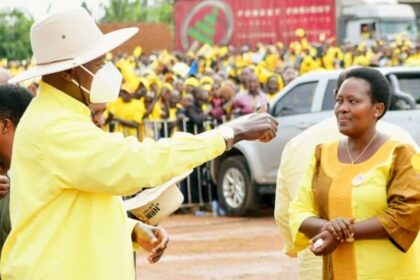
When President Yoweri Kaguta Museveni visited State Lodge in Kizungu, Masaka City, on March 11, 2026, he delivered a message that was both simple and urgent: stop the internal fights and concentrate on serving the people. Unfortunately, events unfolding in Masaka suggest that this advice has yet to be fully embraced.
Barely two months after the January elections, a bitter public disagreement has emerged between Masaka City Woman MP Justine Nameere and the city’s NRM chairman Rogers Bulegeya. What began as a dispute over the Woman MP election results has now evolved into a public political contest that risks undermining the very unity Gen. Museveni called for.
Nameere’s victory followed a court-supervised recount that overturned the initial tally announced by the Electoral Commission. Her closest rival, Rose Nalubowa, later withdrew her petition, effectively confirming Nameere’s position as the duly elected Woman MP for Masaka City. In legal terms, the matter was settled.
Yet politics rarely ends where legal proceedings conclude.
Bulegeya used the presidential platform during Gen. Museveni’s visit to express reservations about the outcome, suggesting that the MP did not enjoy genuine voter support. Nameere, who had organised the gathering attended by the President, firmly defended her victory. The exchange created visible tension, overshadowing what should have been a moment for Masaka’s leaders to present a united front.
This dispute may appear personal, but its consequences are far wider. Masaka City is a growing urban centre facing real challenges—youth unemployment, unresolved land conflicts, struggling traders, and infrastructure gaps. Addressing these issues requires cooperation between political leaders and party structures.
The Woman MP provides the legislative voice and access to national decision-making platforms. The NRM chairman, on the other hand, commands the grassroots mobilisation machinery that connects government programmes to communities. When these two pillars pull in different directions, the result is paralysis rather than progress.
Residents who voted overwhelmingly for President Museveni expect leadership focused on results—not endless political quarrels. Gen. Museveni himself was clear during his address. He criticised leaders who waste time in arguments instead of tackling citizens’ daily problems. He also reminded the gathering that the NRM remains one family, where disagreements should be handled with discipline and responsibility.
Masaka cannot afford a prolonged leadership feud.
Land disputes, for instance, remain a major concern in the region, with leaders raising alarms about land grabbing affecting ordinary residents. At the same time, local entrepreneurs are eager to partner with government in economic revitalisation efforts. Opportunities exist—but they require coordinated leadership.
If the city’s NRM leaders remain divided, progress on road improvements, market modernisation, youth skilling initiatives, and transparent land management will inevitably slow down. Investors and development partners are far more confident when local leadership speaks with one voice.
Both Nameere and Bulegeya have long histories within the ruling party. They mobilised support for the President and have deep political roots in Masaka. Their strengths are complementary: one holds a parliamentary platform while the other commands the party’s organisational network at the grassroots.
That combination could be powerful—if harnessed properly.
Gen. Museveni has already pointed the way forward. He listened carefully to the concerns raised in Masaka and urged leaders to focus on development and accountability. What remains now is for the local leadership to translate that guidance into action.
A simple gesture of reconciliation—a private meeting followed by a public commitment to cooperation—would send a powerful signal to the people of Masaka. Joint community engagements, inclusive consultations with other leaders, and a shared development agenda presented to the President would restore public confidence.
Masaka City does not need rival power centres within the NRM. It needs a leadership team working together to deliver tangible progress.
The President has spoken clearly. Now Masaka’s leaders must prove they were listening.
—
Mike Ssegawa is a journalist, media consultant and deputy RDC Kassanda.
Do you have a story in your community or an opinion to share with us: Email us at Submit an Article