
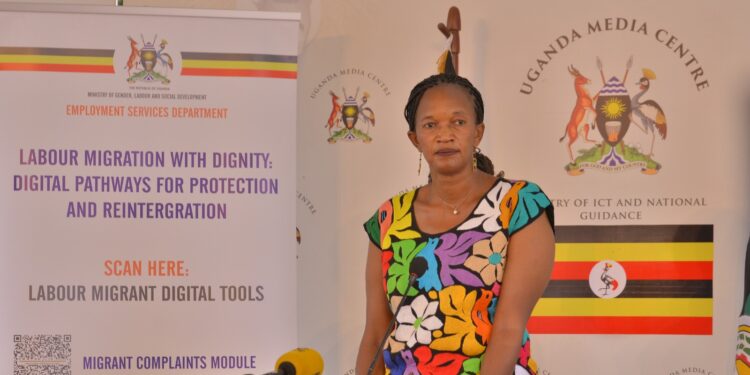
Uganda’s latest reforms governing labour migration to the Middle East mark one of the most comprehensive attempts in East Africa to balance economic opportunity with worker protection. As thousands of young Ugandans continue to seek employment in Gulf countries, the government’s new framework signals a shift from viewing labour externalisation purely as a jobs pipeline to treating it as a regulated, rights-based development strategy.
Launched under the theme “Travel Safe. Stay Safe,” the measures come at a time when overseas employment has become a critical safety valve for Uganda’s labour market. Since 2016, labour externalisation has created more than 280,000 jobs and generated about $1.3 billion in annual remittances, making it one of the country’s most important sources of foreign exchange. However, repeated reports of abuse, contract substitution, and trafficking have exposed the risks of weak oversight—prompting government intervention.
Advantages: Stronger Protection and State Accountability
At the core of the new policy is the four-party employment contract system, which places shared responsibility on the worker, the recruitment company, the foreign employer, and the government. This model significantly raises the cost of non-compliance for recruitment firms, which are now legally accountable for the welfare of workers they place abroad. In policy terms, this shifts labour migration from a private transaction to a state-supervised process.
The introduction of a mandatory 14-day pre-departure orientation for domestic workers is another major gain. These sessions are designed to equip migrants with practical knowledge about contracts, labour laws, cultural norms, and emergency reporting mechanisms. In a region where many workers depart with little understanding of their rights, structured training can reduce vulnerability to exploitation.

Technology is also being used as a regulatory tool. The External Employment Management Information System allows prospective migrants to verify licensed recruiters and approved job orders digitally. This transparency helps curb fraud, a major problem in labour-sending countries across East Africa. Funding the system through recruitment licensing fees—amounting to Shs34.2 billion over four years—also reduces reliance on the national budget.
The establishment of a Migrant Worker Resource Centre, alongside reporting tools such as the Sauti 116 hotline and digital complaints module, strengthens crisis response. These mechanisms create formal channels for intervention, reducing dependence on ad hoc rescues and diplomatic pressure once abuse occurs.
Disadvantages and Risks: Cost, Enforcement, and Informality
Despite its strengths, the framework faces practical challenges. Stricter regulations may increase operational costs for licensed recruitment companies, potentially slowing job placements or pushing some firms out of the market. There is also a risk that higher compliance requirements could unintentionally fuel informal and illegal recruitment, especially through social media—a concern already flagged by the ministry.
Enforcement remains another weak point. While digital systems can improve monitoring, their effectiveness depends on consistent inspections, cross-border cooperation, and capacity within Uganda’s labour attaché offices abroad. Without strong enforcement in destination countries, contracts and safeguards may still be violated with limited consequences.
There is also the question of worker accessibility. Rural and low-income job seekers may struggle to navigate digital verification systems or attend extended pre-departure training, potentially excluding the very groups most in need of protection.
Uganda’s approach mirrors reforms being rolled out across East Africa. Kenya has tightened recruitment licensing, introduced pre-departure training, and expanded labour attaché offices in the Gulf. Ethiopia has restructured its overseas employment regime following high-profile abuse cases, emphasizing government-to-government labour agreements. Rwanda has adopted centralized recruitment models and strong state oversight, limiting private intermediaries.
Across the region, common trends are emerging: mandatory training, digital tracking of recruiters, bilateral labour agreements, and public awareness campaigns. These similarities reflect shared demographic pressures, with youth unemployment pushing governments to view labour migration as a strategic export.
Regional Differences and Uganda’s Distinct Path
What sets Uganda apart is the joint liability model embedded in its four-party contracts and the scale of non-tax revenue reinvested into regulation. While other countries emphasize bilateral agreements, Uganda is placing greater responsibility on domestic recruiters, signaling a tougher stance on accountability.
However, unlike Rwanda, which heavily centralizes recruitment, Uganda still relies on private agencies—making oversight more complex but potentially more flexible.
A Strategic Bet on Safe Migration
With nearly 95 percent of new workforce entrants being youth, Uganda’s policy reflects a broader regional reality: labour migration is no longer optional but structural. The new safeguards aim to ensure that overseas employment becomes a safe, legal, and dignified pathway rather than a source of abuse and national embarrassment.
If effectively enforced, Uganda’s model could become a regional benchmark. If not, the gap between policy and practice may persist, pushing vulnerable workers back into informal channels. For East Africa, the lesson is clear—labour export can drive growth, but without strong protections, its social cost can quickly outweigh its economic gains.
Do you have a story in your community or an opinion to share with us: Email us at Submit an Article