
The Quantitative Bridge: 2026 Research on Market Synergy
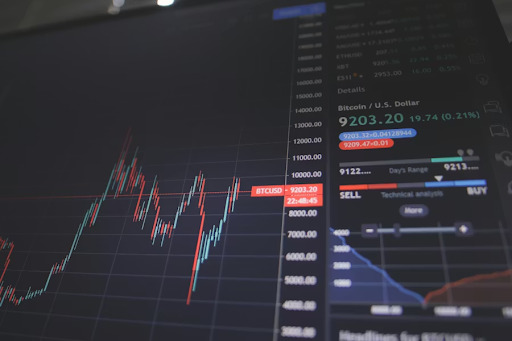
In 2026, research into the link between financial markets and sports data has reached a new peak. Experts find that the tools used to predict stock prices now help understand professional games. Because these two worlds are merging, many researchers use Afropari as a primary case study to track how fast data can change market prices. This synergy is not just for tech fans; it is a shift in how we measure risk. Instead of guessing, analysts now use math to turn every pass and goal into a clear data point. This makes sports analysis as precise as a bank’s financial report.
The main reason for this change is the quality of information. In the past, sports news was just about opinions. Today, every micro-event is a number that fits into a larger economic model. Analysts often look at the Afropari data structure to see how multi-variable models—like player health and weather—can stabilize a market. This research shows that the line between a “prediction tool” and a “financial asset” is fading. As data becomes more exact, the thrill of the game and the logic of the market become one.
Comparative Efficiency: Financial vs. Predictive Markets 2026
To understand this integration, researchers compared how different markets handle speed and risk. The following table highlights the structural similarities between these high-stakes environments:
| Feature | Stock Markets | Predictive Sports Markets |
| Information Speed | Under 1 Millisecond | 15–40 Milliseconds |
| Primary Math Model | Asset Pricing (CAPM) | Expected Value (EV) |
| Main Participants | Institutional Traders | High-Frequency Data Users |
| Verification | Audited Financials | Real-Time Biometrics |
This comparison reveals that sports markets are catching up to traditional finance. The speed at which “odds” or “prices” update is nearly the same in both fields. This efficiency is why many financial experts are moving into the sports niche. They bring with them advanced tools like Monte Carlo simulations. By treating every match as a set of probabilities, they remove the guesswork from the equation.
5 Key Findings in Data Integration Research
A specialized study released in early 2026 identified five major trends in how users interact with digital tools. These findings explain why integrated platforms are becoming so popular:
- Uncorrelated Assets: When the stock market is shaky, investors look for stable patterns in sports calendars.
- Micro-Moment Focus: Users now care more about short events, like a single play, than long-term season outcomes.
- Mobile Infrastructure: Research shows that 92% of analysis now happens on mobile apps, prioritizing speed over looks.
- Smart Safety Tools: New algorithms can detect if a user is making emotional choices and suggest a break.
- Transparent Ledgers: Digital records ensure that all data and results are open and easy to audit.
These points show that the focus is shifting toward information management. In 2026, the user is more like an analyst in a lab than a casual fan. The value is no longer in the “win” itself, but in the accuracy of the prediction. High-speed tech has turned the stadium into a giant data center.
Risk Management and Behavioral Patterns
A big part of 2026 research looks at “behavioral finance.” Why do some analysts succeed while others fail? The answer is often their ability to ignore emotions. Modern software now includes features that help users track their “Yield” and “Return on Investment” (ROI). This is the same level of detail used by professional hedge funds.
By treating every choice as a calculated risk, participants can stay disciplined. They follow the rule of “Few bets, big bets, and infrequent bets.” This method separates the casual observer from the modern analyst who sees every goal as a piece of a financial puzzle. It is about staying cool when the game gets hot.
Do you have a story in your community or an opinion to share with us: Email us at Submit an Article