Sign In
  • UGANDA
  • AFRICA
  • WORLD
watchdog uganda logo
Submit an Article
  • Home
  • News
    • National
    • Politics
    • World News
    • Media Outreach Newswire
    • Africa News
    • Tourism
    • Community News
    • Luganda
    • Sports
      • Football
      • Motorsport
  • Op-Ed
    • #Out2Lunch
    • Conversations with
    • Politics
    • Relationships
  • Business
    • Agriculture
    • CEOs & Entrepreneurs,
    • Companies
    • Finance
    • Products
    • RealEstate
    • Technology
  • Entertainment
    • Lifestyle
  • People
    • Showbiz
      • Salon Mag
  • Special Report
    • Education
    • Voices
  • Reviews
    • Products
    • Events
    • Hotels
    • Restaurants
    • Places
  • Forums
  • Donate
  • China News

Archives

  • February 2026
  • January 2026
  • December 2025
  • November 2025
  • October 2025
  • September 2025
  • August 2025
  • July 2025
  • June 2025
  • May 2025
  • April 2025
  • March 2025
  • February 2025
  • January 2025
  • December 2024
  • November 2024
  • October 2024
  • September 2024
  • August 2024
  • July 2024
  • June 2024
  • May 2024
  • April 2024
  • March 2024
  • February 2024
  • January 2024
  • December 2023
  • November 2023
  • October 2023
  • September 2023
  • August 2023
  • July 2023
  • June 2023
  • May 2023
  • April 2023
  • March 2023
  • February 2023
  • January 2023
  • December 2022
  • November 2022
  • October 2022
  • September 2022
  • August 2022
  • July 2022
  • June 2022
  • May 2022
  • April 2022
  • March 2022
  • February 2022
  • January 2022
  • December 2021
  • November 2021
  • October 2021
  • September 2021
  • August 2021
  • July 2021
  • June 2021
  • May 2021
  • April 2021
  • March 2021
  • February 2021
  • January 2021
  • December 2020
  • November 2020
  • October 2020
  • September 2020
  • August 2020
  • July 2020
  • June 2020
  • May 2020
  • April 2020
  • March 2020
  • February 2020
  • January 2020
  • December 2019
  • November 2019
  • October 2019
  • September 2019
  • August 2019
  • July 2019
  • June 2019
  • May 2019
  • April 2019
  • March 2019
  • February 2019
  • January 2019
  • December 2018
  • November 2018
  • October 2018
  • September 2018
  • August 2018
  • July 2018
  • June 2018
  • May 2018
  • April 2018
  • March 2018
  • February 2018
  • January 2018
  • December 2017
  • November 2017
  • October 2017
  • September 2017
  • August 2017
  • July 2017
  • June 2017
  • May 2017
  • April 2017
  • March 2017
  • February 2017
  • January 2017
  • November 2016
  • October 2016
  • September 2016
  • August 2016
  • July 2016
  • September 2015
  • April 2014
  • June 2013

Categories

  • #Out2Lunch
  • Agriculture
  • Big Brother Naija Dairy
  • Business
  • CEOs & Entrepreneurs,
  • China News
  • Community News
  • Companies
  • Conversations with
  • Court
  • culture
  • Deplomacy
  • Education
  • Education
  • Entertainment
  • Entrepreneurs
  • Events
  • Fashion
  • Finance
  • Football
  • Gadgets
  • Health
  • Hotels
  • Innovation
  • Lifestyle
  • Luganda
  • Motorsport
  • National
  • News
  • Op-Ed
  • Opinion
  • People
  • Photography
  • Photos
  • Places
  • Politicians
  • Politics
  • Politics
  • Products
  • Products
  • RealEstate
  • Relationships
  • religion
  • Reports
  • Restaurants
  • Reviews
  • Salon Magazine
  • Showbiz
  • Special Report
  • Sports
  • Stars
  • Technology
  • Tourism
  • Travel
  • Traveler
  • Trips
  • Video
  • Voices
  • World
  • World News
Reading: ROBERT MUSIITWA: Theatre at 59th Independence and its evolution 
Share
Watchdog UgandaWatchdog Uganda
Font ResizerAa
  • Home
  • News
  • Op-Ed
  • Business
  • Entertainment
  • People
  • Special Report
  • Reviews
  • Forums
  • Donate
  • China News
Search
  • Home
  • News
    • National
    • Politics
    • World News
    • Media Outreach Newswire
    • Africa News
    • Tourism
    • Community News
    • Luganda
    • Sports
  • Op-Ed
    • #Out2Lunch
    • Conversations with
    • Politics
    • Relationships
  • Business
    • Agriculture
    • CEOs & Entrepreneurs,
    • Companies
    • Finance
    • Products
    • RealEstate
    • Technology
  • Entertainment
    • Lifestyle
  • People
    • Showbiz
  • Special Report
    • Education
    • Voices
  • Reviews
    • Products
    • Events
    • Hotels
    • Restaurants
    • Places
  • Forums
  • Donate
  • China News
Have an existing account? Sign In
Follow US
© 2026 Watchdog Uganda. Ruby Design Compan. All Rights Reserved.
Conversations withOp-Ed

ROBERT MUSIITWA: Theatre at 59th Independence and its evolution 

watchdog
Last updated: 9th October 2021 at 07:55 7:55 am
watchdog
Share
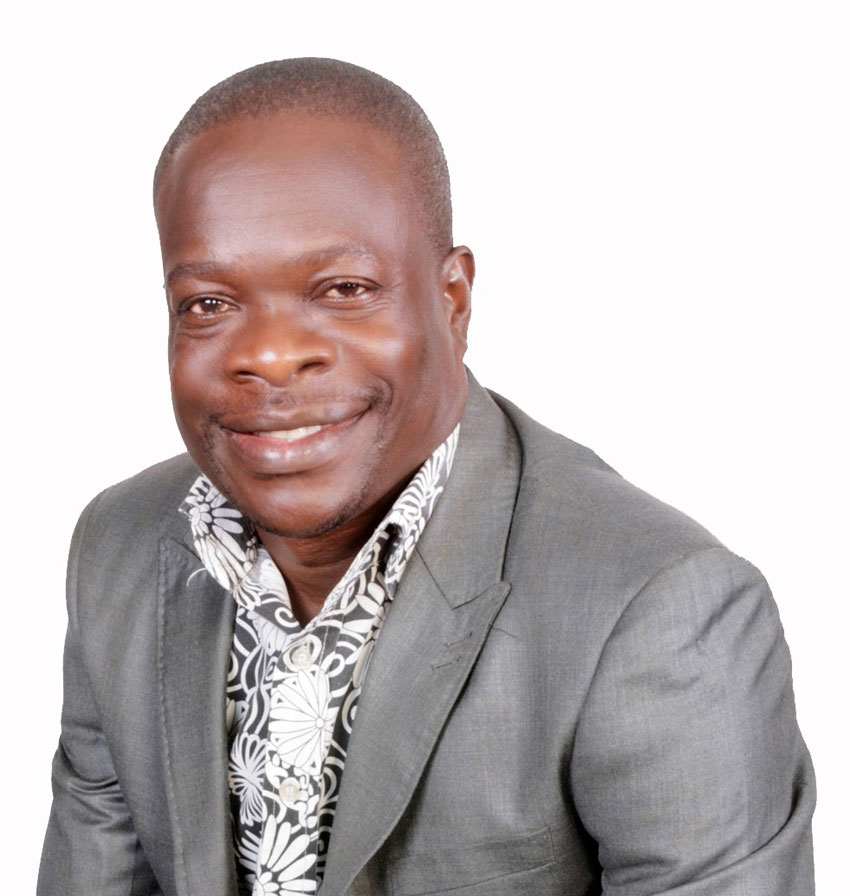
Robert Musiitwa
SHARE

As Ugandans enthusiastically looked forward to gaining independence on 9th October 2021, the National Theatre was also preparing, and as such students from Makerere Student Dramatic Society were warming up for the occasion.

However, a conflict ensued causing the group to abandon the performance. This conflict resulted in the governing body which comprised the colonial administrators to dismiss the Director of the National Theatre.

WHY? The Colonial Administrator accused the Director of trying to Africanize the National Theatre. Therefore on the eve of the Independence when the National Theatre should have been active instead went silent.

The National Theatre was birthed as a result of the outburst of plays that were emerging from the students at Makerere University. Earlier, Namirembe social centre (St. Paul’s Church Namirembe current Namirembe Cathedral) served as a performing space (Theatre facility) for the colonial administrators. It was here that Theatre performances started which was used as an evangelism tool by the church missionaries. The outburst of theatre activities at Makerere caused the need for more performing theatre spaces resulting in the building of the National Theatre which was officially opened in October 1959. There was also a need for a law under which this could operate hence the UNCC Act of 1959 which was later amended in 1965.

Before the colonialist theatre existed in form of epic performances though when colonialists came, there was an impression of theatre not being in existence in Uganda simply because the western world looked at this discipline differently from the way we did. As much as the western world viewed theatre from the point of acts on a proscenium arch stage and formal scripts in which form was introduced and became a standard, Ugandan theatre existed in form of festivals and traditional ceremonies (epic theatre). Through the format of traditional ceremonies and festivals, our predecessors passed on information from one generation to another hence a means to preserve, promote and popularize our culture. Additionally, through this form of theatre, an actor would appear before the king to narrate current affairs as well as entertain him.

Likewise, if the king wanted to communicate to his subjects, the same format was used. Such performances would take place in open spaces in the village centres. It, therefore, means that epic theatre at times involved audiences who played a vital role in in form of chorusing, clapping, and dancing. But on the other hand, it is worth noting though that formal scripted theatre existed in Uganda as early as 1946. One Locito Okechi had written a play entitled “Conversion of a heathen house into a Christian home” which was performed by students of Sir Samuel Baker and this performance is what brought Okot P’Bitek on scene.

With the introduction of drama as a tool for education and evangelism in church, the colonial agenda was put in the fast-forward mode of adopting English as the official language and language instruction in schools. Epic theatre therefore symmetrically faced erasure.

English plays were introduced and performed though mainly before the colonial administrators and few Ugandan elites. Ugandan schools drama and theatre were introduced and the surge resulted in St. Paul’s Church at Namirembe starting the drama festivals in the 140s. At St. Paul’s Church, regular dramatic skits were held after services aimed at reinforcing Christin’s messages. These were synonymously in schools since most of the schools were funded by the same colonial organizations.

Theatre in schools meant first and endorsement of the western theatre among Uganda, secondly it meant superimposition of western theatre onto Ugandans and finally, it meant that Ugandans could no longer be spectators of foreign culture rather it was a MUST for them to participate and promote this foreign culture.

Later in the early 1950s drama shifted from schools to the nation’s highest institution of learning, Makerere University. By end of the 1950s, Makerere had become optimistic about becoming home to drama and theatre besides cementing its role as an intellectual centre in Uganda. Later interhall dram completions were introduced though aimed at encouraging proficiency of English language. Students went ahead to start students’ journal entitled “pinpoint journal” in which they wrote literally works including plays.

It was at this point in time that Shakespeare was introduced and Macbeth produced as a full-length play. University students later started Makerere Free Travelling theatre.

Theatre soon went out of the confines of Makarere leading to emerging private theatre groups including City Players, Kayayu Film players, Kampala Shining Star Association Baganda Dramatic Society among others. It was also at this time that the colonial administrators at the National Theatre founded a drama school at Makerere University aimed at absorbing the public who had an interest in theatre.

After independence and the political changes created another genre of the theatre was introduced. Practitioners found themselves taking on another role of becoming the gatekeepers of the society and the state especially with President Idi Amin’s ascending to power whose leadership was characterized by oppression and dictatorship. Playwrights introduced new theatrical forms which included symbolism and wordless dramas integrated with poetry, song, and dance. This was meant to disguise political messages. Robert Serumaga and his Abafumi Company explored this new form. He wrote and staged “Majangwa” and “Rengamoi” in 1971 and 1972 respectively. Serumaga’s ability to camouflage sensitive political issues in his themes enabled him to stage his productions without Amin’s state agents noticing which he carried on as long as he could. On the other hand Byron Kawadwas use of history as a disguise in “Oluyimba lwa wankoko” was transparent and it did not take long for the State Agents to notice.

His failure to camouflage his themes cost his life. Kawadwa’s death resulted in many theatre artists fleeing into exile and hence theatre regression. Thought playwrights like John Ruganda continued to write while in exile.

The coming to power of the NRM government saw another genre and boost of theatre arising out of the abyss. Theatre was again used as an educational tool for political mobilization and later as a told for development as well dissemination of information and social-political education. Many NGOs and as well as the government adopted theatre in easing the implementation of their programs. Later we see theatre being used to address, create awareness and curb stigma when HIV/AIDs was at its peak. Plays such as “Ndiwulira” by Bakayimbira, Hydra, Gampisi, and Yellow Card among others took centre stage. It is also during this period that we see Alex Mukulu coming to the scene prominently with his “30 years of Banana”. Of recent, comedy had become the in thing and trendy based on improvisation.

With COVID 19 disruption of theatrical activities, we are yet to see another genre of theatre merging. Already with the digital transition, theatre is not spared. Though with theatre, one is expected to see, feel, and experience theatre hence undergoing catharsis which cannot be experienced digitally.

Robert Musiitwa is the Public Relations Officer at UNCC. 


Do you have a story in your community or an opinion to share with us: Email us at Submit an Article
Subscribe to Our Newsletter
Subscribe to our newsletter to get our newest articles instantly!
TAGGED:IndependenceNational TheatreRobert Musiitwauganda
Share This Article
Facebook Whatsapp Whatsapp Email Copy Link
Bywatchdog
Follow:
Watchdog Uganda is a news portal for trending news and commentaries in the areas of politics, security, business, tourism, technology, education, et al.
Previous Article Over the moon Museveni congratulates Uganda Cranes for beating Rwanda
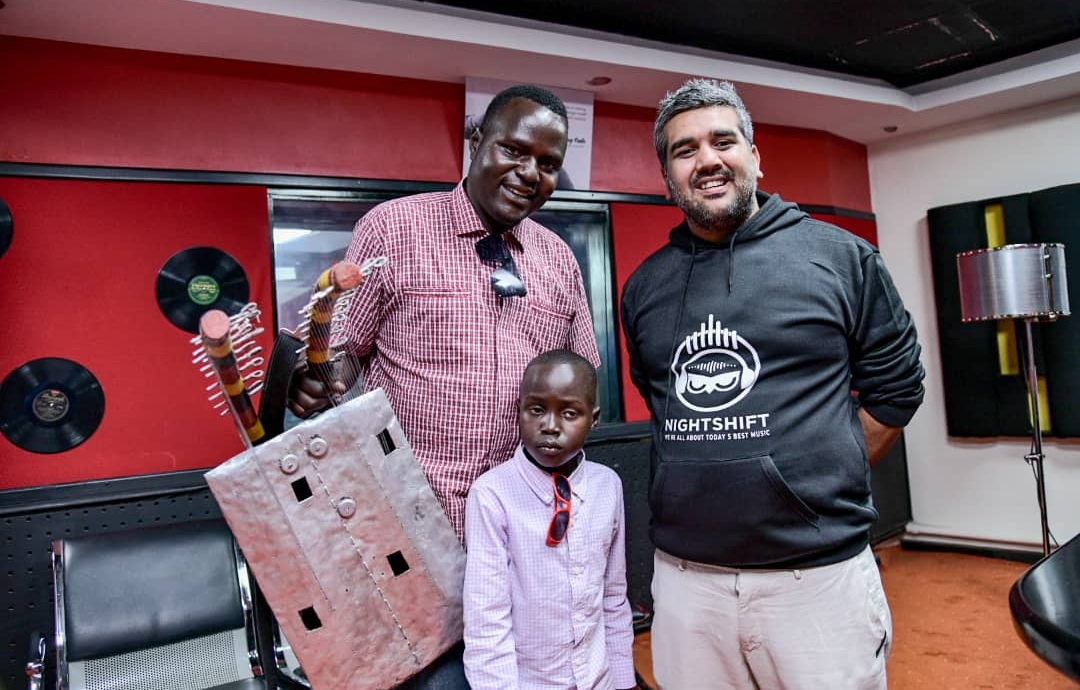
Next Article Rajiv Ventures Into Uganda’s Music Industry With Night Shift Studio

Editor's Pick

NationalNewsPolitics

Lydia Wanyoto Throws Hat in Ring for Parliament Speaker, Vows to Claim Bugisu’s Share of the “National Cake”

Mbale, Uganda – In a bold move highlighting the simmering tensions in…

By
Lawrence Kazooba
4 Min Read
Op-EdPolitics

Dr. Ayub Mukisa: How Political Divides Risk Turning Busoga into a Laughing stock

In this piece, let me begin by stating that political disagreements and…

3 Min Read
CEOs & Entrepreneurs,Community NewsNewsPolitics

Speaker Anita Among welcomes FDC MP Nsibambi to NRM

Speaker Anita Among Welcomes Former FDC’s Yusuf Nsibambi to NRM The Speaker…

4 Min Read

Top Writers

Mike Ssegawa 704 Articles
Two decades of reporting, editing and managing news content. Reach...
Mulema Najib 4340 Articles
News and Media manager since 2017. Specialist in Political and...

Op-ED

MIKE SSEGAWA: Empowering Africa’s Data Sovereignty; Uganda’s Stand on Big Tech Accountability

Uganda’s Personal Data Protection Office (PDPO) has recently taken a…

21st February 2026 at 00:03

BWANIKA JOSEPH: Are Uganda’s Youth the new targets of the Global Organ and Sex trade?

  Uganda’s youthful population is widely…

20th February 2026 at 20:20

Dr. Ayub Mukisa: How Political Divides Risk Turning Busoga into a Laughing stock

In this piece, let me begin…

20th February 2026 at 08:41

From text books to start-ups: Why our students should build businesses before they build CVs

By Michael Jjingo Let’s face it,…

18th February 2026 at 20:07

DR. OPUL JOSEPH: Open letter to Hon. Janet Museveni on Competency-Based Curriculum for Secondary Schools – Has the New Wine Found New Bottles? Or Old Wine in New Bottles?

Hon. Janet Kainembabazi Museveni Kataaha, Minister…

18th February 2026 at 19:17

You Might Also Like

Op-EdPolitics

MILLY BABIRYE BABALANDA: Time for Busoga Leaders to Embrace Humility and Accountability in Leadership

While addressing NRM leaders from Busoga at Iganga Girls’ Secondary School on January 10, 2026, our visionary Chairman and Father…

7 Min Read
Op-EdPolitics

Dr.Ayub Mukisa: Busoga’s Political Crisis: Misunderstandings Have Taken an Ugly Turn — Who Will Resolve Them?

For anyone reflecting on the growing political misunderstandings among NRM politicians in Busoga Sub-region, it is useful to begin with…

3 Min Read
Conversations withOp-Ed

MATHIAS LUTWAMA AFRIKA: A discourse on Museveni’s strategic agenda

In the sphere of credit financing and monetary easing, none has surpassed in world market excellence like HSBC London bank.…

3 Min Read
Op-EdPolitics

Dr. Ayub Mukisa: Busoga Politicians: Why Can’t You Use the NRM to Develop Busoga Instead of Endless Wars?

Busoga Sub-Region has long been recognized as an area of immense potential. With its fertile soils, youthful population, strategic location…

3 Min Read
watchdog uganda logo

About Us

Watchdog Uganda is a portal for solution journalism, trending news plus cutting edge commentaries in the fields of politics, security, business, tourism, entertainment, technology, agriculture, climate change, environment, public health et al. We also give preference to Ugandan community news and topical discussions. The portal also publishes community news and topical discussions.

Quick Links

  • Submit an Article
  • Forums
  • About Us
  • Contact Us
  • Advertise
  • Terms and Conditions

Follow Us

FacebookLike
XFollow
YoutubeSubscribe
TiktokFollow

© 2026 Watchdog Uganda. All Rights Reserved.

Welcome Back!

Sign in to your account

Username or Email Address
Password

Lost your password?