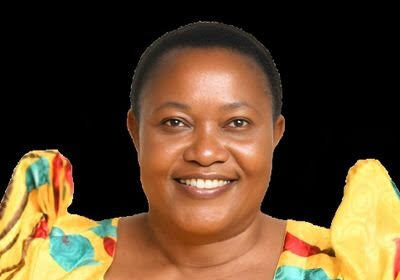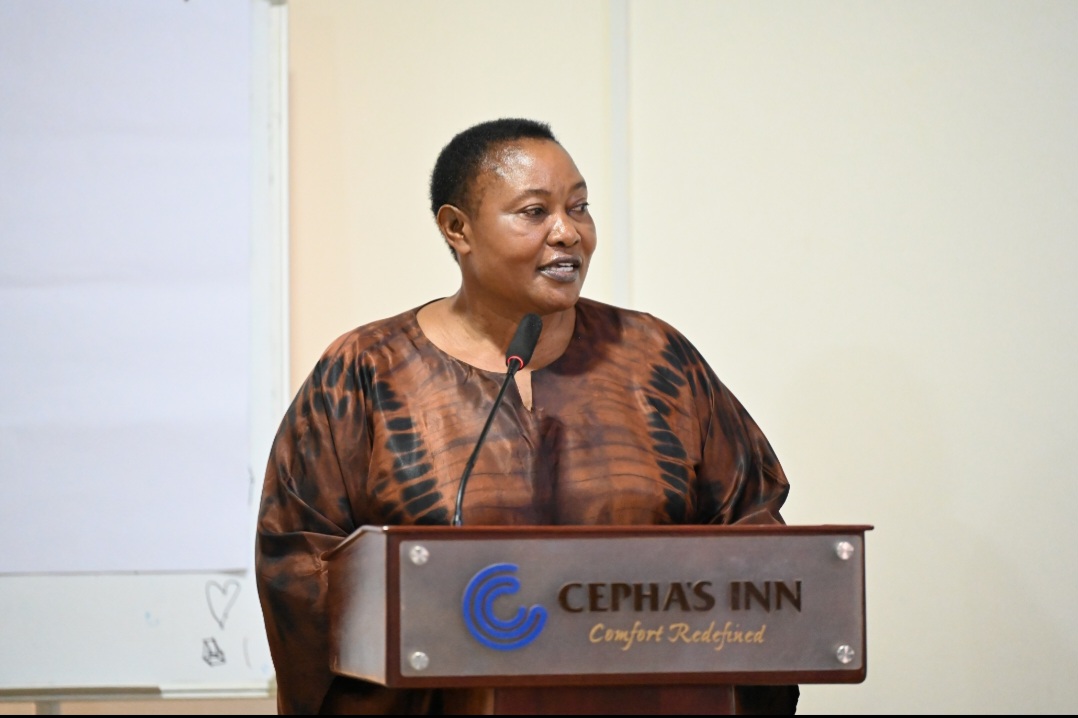
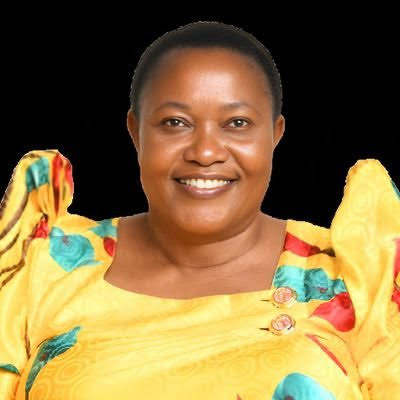
Milly Babirye Babalanda’s story is one of grit, resilience, and an unyielding determination to rise from humble beginnings to the commanding heights of Ugandan politics. Born on December 5, 1970, in Nalinaibi Village, Kamuli District, she grew up in a modest family where opportunities were scarce, but her resolve was abundant. Her early life was marked by the struggles of rural existence—limited access to education, scarce resources, and the constant reminder that only perseverance could carve a path to success. Yet, these challenges became the crucible that forged her character, instilling in her the discipline and humility that would later define her political journey.
In the early 2000s, she made a name as one of the most refined mobilisers for the National Resistance Movement- NRM, mainly drumming up support for the different politicians in the area and for President Yoweri Kaguta Museveni. The exposure from these engagements opened the door to connect with the President through the District Woman Member of Parliament, Rebecca Alitwala Kadaga. To the president, she presented a proposal for the empowerment of the rural women of Busoga which sold her more. She would later get appointed Deputy Resident District Commissioner (RDC) in Busia District before her appointment to the NRM National Chairman’s Office( President Museveni’s political office) to deputise then head, Molly Kamukama. Babalanda was later named to head this particular office in 2016 when Kamukama was appointed Minister.
Her role as a chief Mobilizer for Museveni’s six term reelection won her lots of applause from the President and the country in general. As a result, she was named to the cabinet in June 2021 as the minister for the Presidency, nuch to the surprise of many who doubted she would fit in given the sensitivity of the docket.
In the run up to 2026, Babalanda declared interest to join parliament and easily won the party flag for Budiope West and ultimately git elected to the position in the January 2026 elections.
Her entry into politics was not through privilege or patronage but through sheer hard work and loyalty to the National Resistance Movement (NRM). Before her appointment as Minister for the Presidency in June 2021, she had served as the head of the NRM National Chairman’s Office and as a senior presidential advisor on political matters. In these roles, she became a trusted confidante of President Yoweri Museveni, known for her meticulous attention to detail and her ability to mobilize grassroots support. Museveni himself once described her as “a humble village girl who has risen through the ranks by dedication and loyalty,” a testament to her journey from obscurity to influence.
Her appointment as Minister for the Presidency was both a surprise and a vindication. She replaced Esther Mbayo, inheriting an office that oversees the operations of all Resident District Commissioners (RDCs) across the country. For Babalanda, this was not merely a promotion but a recognition of her years of quiet but impactful service. “I see this appointment as a miracle, though not a surprise,” she remarked in one interview, reflecting both her faith and her confidence in the path she had walked.
As Minister, Babalanda quickly distinguished herself by championing accountability and discipline among RDCs. She emphasized their role as the eyes and ears of the presidency, insisting that they must be proactive in monitoring government programs and ensuring service delivery. Her insistence on integrity often put her at odds with rivals and detractors who sought to undermine her authority. Some accused her of being overly strict, while others attempted to paint her as inexperienced. Yet, she navigated these challenges with a calm firmness, often reminding her critics that “leadership is not about comfort but about responsibility.”
Her resilience was tested further by internal party rivalries. In the NRM, where competition for influence is fierce, Babalanda’s rise was met with skepticism by those who underestimated her. Some rivals attempted to sideline her by questioning her educational background and rural origins, suggesting she lacked the sophistication to manage a high-profile ministry. But she turned these criticisms into fuel, often invoking her journey as proof that competence is not defined by privilege. “I am a daughter of the soil,” she once said, “and it is from the soil that strength and wisdom grow.” Her words resonated with many Ugandans who saw in her a reflection of their own struggles and aspirations.
Her accomplishments as Minister for the Presidency have been notable. She has streamlined the coordination of RDCs, ensuring that they are more responsive to the needs of citizens. Under her watch, the office has become more vigilant in monitoring government projects, curbing corruption, and enhancing accountability. In September 2023, she was recognized internationally when UNAIDS awarded her for her contribution to the fight against HIV/AIDS in Uganda, a milestone that underscored her commitment to public health and social welfare.
President Museveni has repeatedly hailed her work, praising her as one of his most influential ministers. “Milly has shown that loyalty and hard work are the true measures of leadership,” he said during one cabinet meeting. Such endorsements from the president have fortified her position, shielding her from attempts by rivals to discredit her. Her ability to maintain the president’s trust has been central to her staying power, and she has leveraged this trust to push forward reforms that strengthen the presidency’s oversight role.
Her journey has also been marked by moments of personal reflection. She often speaks about her humble beginnings, reminding audiences that she is not detached from the realities of ordinary Ugandans. This humility has become her political armor, making it difficult for rivals to portray her as elitist or disconnected. Instead, she has cultivated an image of accessibility and empathy, qualities that have endeared her to many within the NRM and beyond.
Yet, her path has not been without turbulence. Some critics within the party have accused her of consolidating too much power within the presidency, arguing that her influence over RDCs gives her disproportionate control. Others have whispered about her closeness to the president, suggesting that her rise is more about patronage than merit. But Babalanda has consistently deflected such accusations, emphasizing that her loyalty is to the people and the principles of the NRM. “I serve not for myself but for the movement and for Uganda,” she has declared, a statement that underscores her commitment to collective progress rather than personal gain.
Her ability to withstand these challenges lies in her strategic navigation of political currents. She has mastered the art of balancing firmness with diplomacy, often engaging her critics without descending into hostility. By maintaining a calm demeanor and focusing on results, she has gradually silenced many of her detractors. Her resilience has become a hallmark of her leadership, proving that she is not easily shaken by political storms.
Beyond politics, Babalanda’s life reflects the values of family and faith. Married to Pastor Samuel Babalanda, she often draws strength from her spiritual convictions, attributing her success to divine providence. This faith-based outlook has reinforced her image as a grounded leader, one who sees her role not merely as a political appointment but as a calling. Her rivals, who attempt to undermine her, often find themselves contending with a woman whose resolve is anchored in something deeper than ambition.
In the broader narrative of Ugandan politics, Milly Babalanda represents the archetype of the underdog who defies odds to claim a seat at the table of power. Her journey from a rural village to the corridors of State House is a testament to the transformative power of perseverance. Her accomplishments as Minister for the Presidency—strengthening accountability, championing discipline, and earning international recognition—are milestones that affirm her competence. The attempts to undermine her, whether through rivalry, criticism, or skepticism, have only highlighted her resilience. By navigating these challenges with humility, firmness, and faith, she has not only stayed powerful but has also become a symbol of possibility for many Ugandans.
Her story continues to unfold, but one thing is clear: Milly Babirye Babalanda has carved her place in Uganda’s political history. She embodies the rough road to the top, the triumph of resilience over adversity, and the enduring truth that power, when anchored in loyalty and service, can withstand even the fiercest attempts at sabotage. As President Museveni once remarked, “She is proof that the NRM is a movement where anyone, regardless of background, can rise if they are committed.” And in the words of Babalanda herself, “I am here to serve, and I will serve with all my strength.”
Do you have a story in your community or an opinion to share with us: Email us at Submit an Article