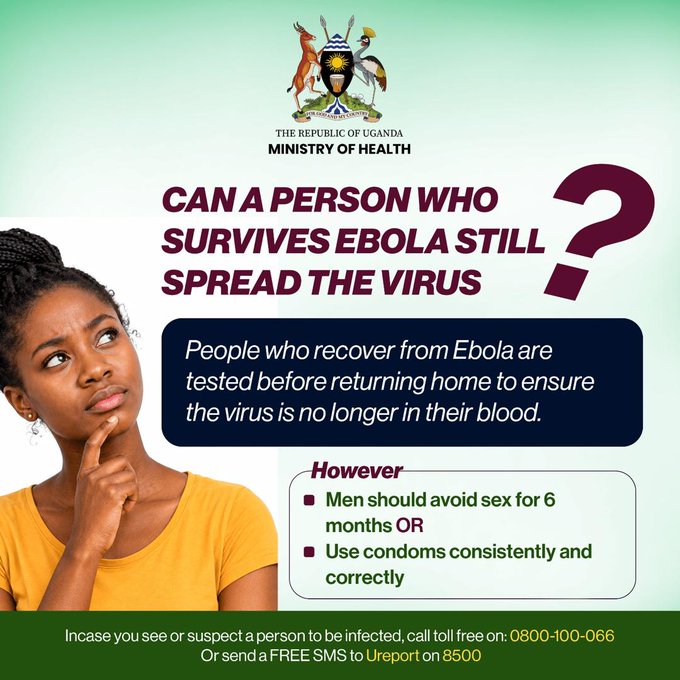
The Ministry of Health has issued a public health advisory urging male Ebola survivors to abstain from sexual activity for at least six months after recovery or to use condoms consistently and correctly if they engage in sexual intercourse.
The advisory comes amid ongoing efforts to contain the spread of Bundibugyo Ebola Virus Disease (BVD), which has been linked to the current outbreak in the Democratic Republic of Congo (DRC).
In a statement shared on its official social media platforms, the Ministry warned that the Ebola virus can remain in semen long after it has disappeared from a survivor’s bloodstream.
“Men who recover from Ebola should avoid sex for at least six months or use condoms consistently and correctly. This is because the virus can stay in semen even after recovery,” the Ministry stated.
The guidance is consistent with international scientific findings from previous Ebola outbreaks. Research has shown that Ebola viral genetic material can remain detectable in semen for several months after recovery, with some survivors testing positive for more than a year. Medical experts explain that the testes provide an “immune-privileged” environment, allowing the virus to persist longer than in most other parts of the body.
The advisory follows concerns over imported cases of Bundibugyo Ebola Virus Disease from the DRC. Uganda has recently confirmed imported infections in Kampala, raising fears of further transmission if preventive measures are not strictly observed.
Health officials emphasize that while Ebola is primarily spread through direct contact with the bodily fluids of symptomatic individuals, sexual transmission from survivors remains a documented risk and can potentially trigger new chains of infection even after an outbreak appears to be under control.
The Ministry is encouraging Ebola survivors to seek support through the National Ebola Survivors’ Programme, which offers counseling, medical follow-up, monitoring, and testing services where available. Partners of survivors are also advised to remain vigilant and seek medical guidance if they have concerns.
The latest advisory forms part of intensified public awareness and risk communication campaigns aimed at preventing cross-border transmission of the disease. Authorities continue to emphasize the importance of hand hygiene, early reporting of symptoms, safe burial practices, and adherence to sexual health precautions among survivors.
The Ministry reiterated that compliance with these recommendations will help protect families, communities, and the nation as a whole while supporting efforts to bring the outbreak under control. It also pledged continued psychosocial and medical support for Ebola survivors as Uganda remains on high alert against the rare but potentially deadly Bundibugyo strain.
Do you have a story in your community or an opinion to share with us: Email us at Submit an Article