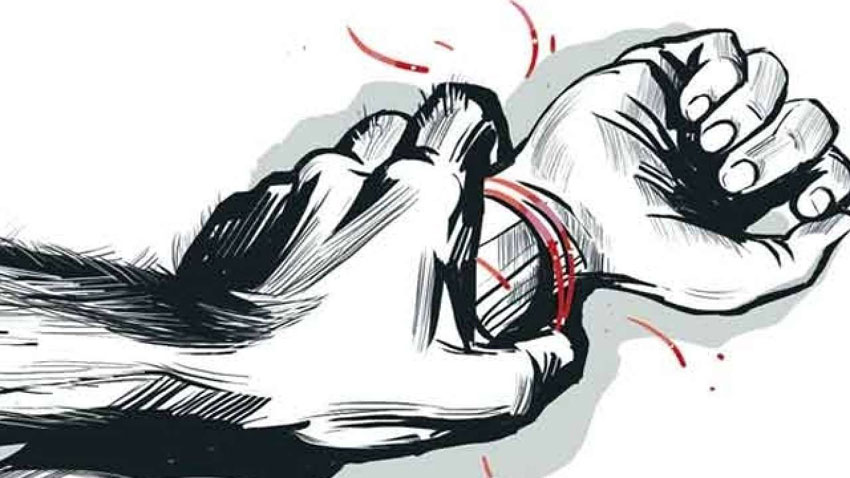
Across Africa, rape is one of the most common crimes. New research reveals how inadequate criminalization of rape, weak legal implementation, rape myths, and victim-blaming are just some of the barriers to justice that survivors face.
These obstacles prevent many cases from reaching court, with even fewer resulting in convictions, allowing the majority of perpetrators to go unpunished. This leaves survivors vulnerable without access to justice and support services they urgently need.
These are some of the stark conclusions in ‘Barriers to Justice: Rape in Africa, Law, Practice and Access to Justice,’ a new report by Equality Now that examines rape laws and their enforcement in 47 African countries, with in-depth analysis of Cameroon, the Democratic Republic of Congo, Madagascar, Rwanda, Senegal, Sierra Leone, South Africa, South Sudan, and Zambia.
Although some African jurisdictions have implemented progressive rape laws, significant legal, procedural, and societal barriers continue to undermine justice for sexual violence survivors. Flaws in legal frameworks and deeply entrenched gender discrimination intertwine to foster a culture of impunity for rape, eroding trust in judicial systems, compounding victims’ distress, and fuelling widespread underreporting of sexual violence.
Human rights lawyer and the report’s lead author, Jean-Paul Murunga, says “After examining rape laws across Africa, it is clear that to end impunity for perpetrators, governments urgently need to carry out comprehensive legal reform of rape laws, strengthen enforcement mechanisms, and improve access to justice and support for survivors.”
Narrow legal definitions for rape
Legal definitions of rape should be based upon an individual’s voluntary, genuine, and willing consent, which can be modified or withdrawn anytime during sexual interaction and must apply to all sexual acts engaged in. According to the report, true consent is impossible in situations of dependency or extreme vulnerability, for example, in educational settings, correctional facilities, or when a victim is incapacitated, such as being intoxicated or infirm.
Legal definitions of rape vary, with some failing to account for a range of non-consensual sexual acts or factors. Within this context, 25 African countries have penal codes that are incomplete or ambiguous and do not meet international standards.
Definitions of rape are based on the use of physical force, threats, or actual use of violence, while rape involving intimidation, coercion, fraud, and unequal power dynamics are not adequately recognized.
Urgent reform is needed to ensure legal definitions of rape encompass all acts of non-consensual sexual penetration, excluding certain methods, body parts, or use of objects. In some instances, particular acts of penetration are misclassified as a lesser offence with lighter penalties, diminishing the violation’s severity.
Laws that create a hierarchy of rape
International standards require rape penalties to be impactful, proportional to the crime’s severity, and strong enough to deter future offences. Some countries allow lenient sentencing that doesn’t reflect the gravity of rape and sends a message that it is not a serious crime.
Murunga explains, “Narrow legal definitions of rape reinforce and widen justice gaps in the prosecution of cases. It enables impunity or relegates some violations to lesser offences with lighter penalties. Creating a hierarchy of rape undermines the principle that all individuals have the right to have control over their own body.
“Burdensome and discriminatory evidence requirements that demand proof of physical injury shift the burden onto survivors to prove they physically resisted assault. This sets an unreasonably high standard for prosecution and conviction and does not focus on the central issue of a victim’s lack of consent.”
Stigma and harmful gender stereotypes
Twenty African countries have consent-based definitions of rape. However, traditional beliefs and societal attitudes towards sex manifest in rape myths and victim-blaming that overshadow the interpretation and enforcement of laws. Officials may opt not to investigate, prosecute, or convict rape cases unless there is physical evidence, especially which indicates a victim fought back.
Legal recognition provides clarity to law enforcement, prosecutors, and judges that marital rape must be treated as a serious crime and prosecuted accordingly
Judicial discretion can reduce charges or define evidence based on gender stereotypes regarding a victim’s behaviour. Many jurisdictions emphasize force, morality, or circumstances and apply gender-discriminatory concepts such as “honour” and “modesty.” This prejudices judgments over victims’ behaviour and “chastity” and whether they are perceived as deserving justice for having been raped.
Rape survivors and their families frequently face stigma, victim-blaming, and threats. This is commonly accompanied by pressure to remain silent, withdraw criminal complaints, and settle cases out-of-court through informal community mediation.
In Equatorial Guinea, out-of-court settlements are legally permitted when a rape victim explicitly or tacitly forgives the perpetrator. This fails to protect the victim, who may have little trust in the justice system, feel compelled by others to agree and fear retaliation if she refuses. Even in countries where settlements are not legally sanctioned, the practice remains commonplace.
Marital rape and child marriage
Rape within marriage is not criminalized in some African countries. Underpinning this is the mistaken belief that marital rape cannot occur because, by agreeing to marry, wives are assumed to have permanently consented to sex with their husbands.
Seven countries expressly exempt spouses from prosecution for marital rape, including Côte d’Ivoire, Ethiopia, and South Sudan. Some countries, such as Lesotho and Eritrea, only criminalize marital rape when spouses are not cohabiting.
In countries where child marriage is permitted and marital rape is not criminalized, child brides are left unprotected. A legal loophole is created for what, without marriage, would be classed as rape, and young wives have minimal recourse against sexual relations within marriage, including sexual violence and exploitation. For example, in Gabon, when an abductor has married an abducted minor, he can only be prosecuted after the marriage is annulled.
Murunga clarifies, “International human rights standards require States to criminalize all forms of rape, irrespective of the relationship between the perpetrator and their victim. Failing to specifically criminalize marital rape ignores how consent must be ongoing and freely given, regardless of marital status. Legal recognition provides clarity to law enforcement, prosecutors, and judges that marital rape must be treated as a serious crime and prosecuted accordingly.”
Flawed systems
There is minimal public awareness about how best to secure justice for rape cases. This dovetails with huge human and resource gaps amongst investigators, prosecutors, expert witnesses, and judicial officials, while large caseloads cause long delays and collapse of cases. Other obstacles include lack of collaboration between state actors, corruption, and ineffective evidence collection and evaluation.
Medical professionals are not always available to examine survivors, collect evidence, or make medical reports. In Côte d’Ivoire and Guinea, rape survivors must present a medical certificate before filing a police complaint – a major challenge where there are so few medical facilities.
Rape increases in conflict and crisis, when the breakdown in the rule of law and shortage of legal, medical, and psychological support services makes it more difficult for survivors to pursue legal remedies. High rates of sexual violence have been identified in conflicts in Ethiopia, Sudan, and the Democratic Republic of Congo, with rape being used as a weapon of war to denigrate, disempower, and demoralize communities.
Aligning rape laws with international human rights standards
Many African countries have ratified key regional and international human rights treaties, such as the Protocol to the African Charter on Human and Peoples’ Rights on the Rights of Women in Africa (Maputo Protocol) and the Convention on the Elimination of All Forms of Discrimination against Women (CEDAW), among others. However, African governments are not meeting their obligations to uphold women’s rights outlined in these frameworks.
To address this, Equality Now recommends that all legal definitions of rape should be comprehensive, survivor-centred, and capable of addressing the full spectrum of non-consensual acts.
For example, Rwanda has taken significant steps to promote a victim-centred approach to investigating and prosecuting sexual violence cases. This includes the creation of gender-based violence recovery centres in numerous districts, providing survivors with witness protection, medical and psychosocial support, and legal aid. Senegal has taken a similar approach by establishing “law shops” offering judicial, legal, and psycho-social services.
Effective legal implementation is equally crucial, requiring robust mechanisms to enforce justice and hold perpetrators accountable. Transparency and accountability are essential to building trust and ensuring fairness in how cases are handled.
Survivors should have access to supportive systems that facilitate healing and enable them to pursue justice if they choose. Laws, referral systems, and mechanisms must be inclusive and sensitive, including for individuals with disabilities. In conflict settings, it is vital to both prevent sexual violence and address its consequences through policies that minimize harm and hold offenders accountable.
Do you have a story in your community or an opinion to share with us: Email us at Submit an Article