
When President Museveni stood before the nation at his swearing‑in and declared that this term would be dedicated to “cleaning his house,” it was not a perfunctory line in a speech. It was a solemn covenant with Ugandans, a promise that the rot gnawing at the foundations of our state would be confronted head‑on. But the President’s broom cannot sweep alone. The fight against corruption is not a spectator sport. It is a war that demands every Ugandan to rise, to watch, to speak, to blow the whistle, and to challenge leaders on accountability.
Uganda bleeds over UGX 9 trillion every year to corruption, according to the Inspectorate of Government’s 2021 report. That is nearly 10% of the national budget lost to inflated contracts, ghost workers, and fraudulent procurements. The Auditor General’s 2024 report revealed that irregular procurements alone accounted for UGX 3.2 trillion, while ghost payrolls drained another UGX 1.4 trillion. These are not abstract numbers—they are stolen classrooms, stolen hospital beds, stolen medicines, stolen livelihoods. They are the reason a mother in Karamoja walks miles to a health center only to find no drugs, why a child in Gulu studies under a leaking roof, why a farmer in Masaka waits for a road that never comes.
The President has lit the torch of this anti‑graft crusade, but it must be carried by all. Citizens must refuse to normalize corruption. They must become whistleblowers, reporting malpractice wherever it festers. Leaders must watch one another, for accountability is not only vertical—from the people to their leaders—but horizontal, among leaders themselves. Public servants must not only desist from graft but act as extensions of the President’s eyes and ears, guardians of integrity in every office, every ministry, every district.
The army has shown the way. Under CDF Gen. Muhoozi Kainerugaba, the UPDF has purged its ranks of officers implicated in fraudulent procurement schemes and misuse of logistics funds. In 2023, senior officers in the Engineering Brigade were arrested for siphoning funds meant for infrastructure projects. Gen. Muhoozi declared that “embezzlement will not be tolerated,” sending a chilling warning to officers who thought the uniform was a shield against scrutiny. This military purge is not symbolic—it is practical proof that even the most powerful institutions are not immune. If generals can be held accountable, so too must ministers, MPs, and civil servants.
The Auditor General’s reports have consistently highlighted how corruption undermines fiscal discipline, delays project implementation, and weakens public confidence. The IGG’s 2022 report estimated that corruption costs Uganda UGX 20 billion every week. Imagine if that money were invested in service delivery: every district could have a modern hospital, every school could be equipped with textbooks, every village could have clean water. A clean system would not only uplift livelihoods but restore dignity to Ugandans who have long been shortchanged.
Elected leaders must remember that they are custodians of the people’s trust. To betray that trust through corruption is to desecrate democracy itself. Accountability must become their daily creed, not a slogan dusted off during campaigns. The President’s war on corruption must be reframed as Uganda’s war on corruption.
There should not be spectators. Citizens must refuse to be silent. Leaders must watch one another. Public servants must act as guardians of integrity. The army has shown the way—now the rest of the nation must follow.
Uganda cannot afford another lost trillion. Uganda cannot afford another stolen future. The President has lit the torch; it is upon every Ugandan to carry it forward until the shadows of corruption are banished from our land.
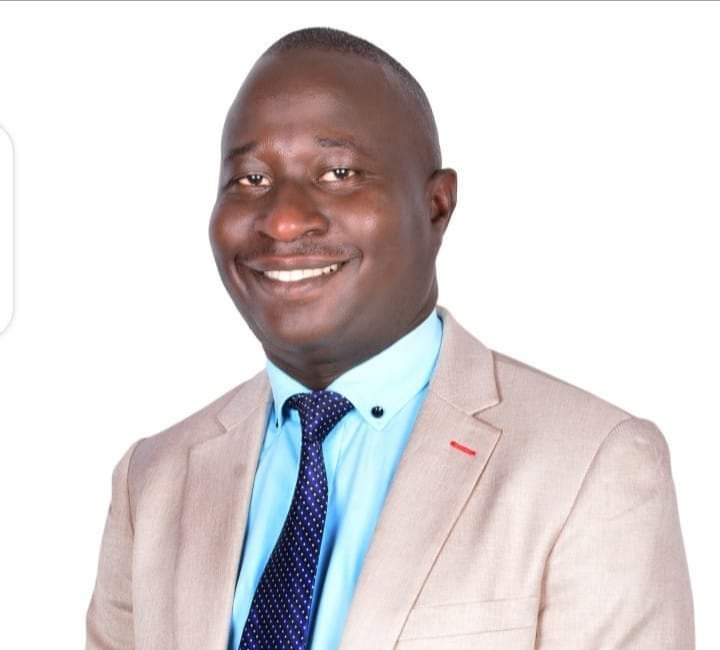
Edrine Benesa is the Deputy Resident City Commissioner for Nakawa Division in Kampala
Do you have a story in your community or an opinion to share with us: Email us at Submit an Article