Menstruation remains one of the most under-discussed yet deeply disruptive challenges facing Ugandan girls. Behind classroom attendance figures and education statistics lies a silent crisis—period poverty—that continues to deny thousands of girls their right to education, health, and dignity.
Period poverty refers to the inability to access affordable and safe menstrual products, adequate sanitation facilities, and accurate information about menstrual health. In Uganda, this challenge disproportionately affects girls from low-income and rural communities, where poverty intersects with stigma and cultural silence.
A Crisis Hidden in Plain Sight
Research consistently paints a grim picture. Studies conducted in rural Uganda show that over 90 percent of schoolgirls do not meet the standards for adequate menstrual hygiene management. Many rely on improvised materials such as old clothes, cotton scraps, or tissue paper, exposing them to infections, discomfort, and embarrassment.
The impact on education is profound. Girls miss an estimated 11 percent of school days annually due to menstruation, with some missing up to three days every month. In certain communities, absenteeism during menstruation is reported to triple, contributing to poor academic performance and, in extreme cases, school dropout. Some studies estimate that nearly one in four girls drops out of school after the onset of menstruation, often linked to lack of access to sanitary products and private sanitation facilities.
Stories Behind the Statistics
For Joannie Nakakawa, growing up orphaned in Kampala meant navigating menstruation alone. Without guidance or resources, she used old t-shirts and cotton scraps during her periods.
“Every month felt like a prison,” she recalls. “The heat, the fear of leaking, the lack of washing facilities, and the shame made school unbearable.”
Irregular cycles led to unexpected leaks and infections, while pit latrines at school offered no privacy. Cultural myths around menstruation further silenced discussion, leaving Joannie isolated. Her experience mirrors that of countless girls across the country.
Suzan, now 14, still remembers the day her first period started unexpectedly in class.
“I stood up to answer a question and everyone laughed,” she says. “I ran out of class in shame and never wanted to return.”
Without preparation, products, or support, humiliation became a barrier to education.
Government Efforts, Lingering Gaps
The government has acknowledged period poverty as a barrier to achieving national education and gender equality goals. The Ministry of Education and Sports introduced menstrual hygiene management (MHM) guidelines in 2015 and integrated MHM into national WASH frameworks in 2017.
However, implementation has been uneven. A situational analysis across 14 districts revealed that many schools still lack basic sanitation facilities, emergency pads, and trained staff to support menstruating girls. Funding constraints continue to limit progress, particularly in rural schools.
NGO assessments echo these findings. Some estimates suggest only about 22 percent of Ugandan girls have consistent access to sanitary pads, while the majority resort to unhygienic alternatives, increasing health risks and absenteeism.
Private Sector Steps In: Softcare Uganda
As public resources struggle to meet demand, private sector actors are increasingly filling critical gaps. One such player is Softcare Uganda, a locally based manufacturer of baby care and feminine hygiene products.
Softcare produces affordable sanitary pads designed for comfort, absorbency, and skin safety. By manufacturing locally, the company reduces costs associated with imports, making pads more accessible to low-income households.
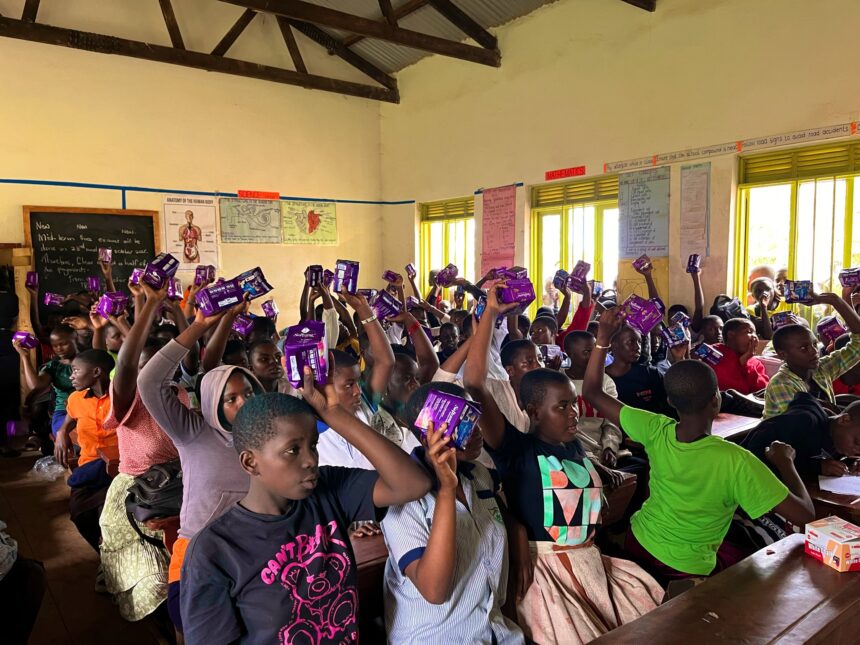
Beyond retail distribution, Softcare has taken an active role in community outreach. The company conducts sanitary pad donation drives targeting vulnerable girls in schools, informal settlements, and refugee-hosting communities. These distributions are often paired with menstrual hygiene education sessions, helping girls understand proper usage, hygiene, and disposal, while also addressing stigma.
In communities such as Namuwongo and other underserved areas, Softcare teams engage directly with students, teachers, and caregivers—providing both products and knowledge. The goal, according to company representatives, is to ensure girls do not miss school simply because they are menstruating.
Health, Dignity, and Attendance
Access to reliable sanitary products has immediate effects. Girls who can manage their periods safely are more likely to attend school, participate in class, and maintain confidence. Softcare’s product range includes options for heavier flow and longer protection, addressing a common challenge cited by schoolgirls.
By reducing dependence on unsafe alternatives, such interventions also help lower the risk of infections and long-term reproductive health issues.
Grassroots Change and the Bigger Picture
Across Uganda, grassroots initiatives—from reusable pad projects to community education groups—are also challenging taboos and empowering girls. These efforts, combined with private sector interventions, are slowly changing attitudes around menstruation.
Yet experts agree that sustainable change requires stronger public investment, including consistent funding for free or subsidized pads in schools, improved sanitation facilities, and comprehensive menstrual health education for both girls and boys.
Breaking the Cycle
Period poverty fuels a vicious cycle: missed school days lead to poor performance, reduced opportunities, and continued poverty. In some cases, girls engage in risky relationships to afford basic menstrual products.
While the crisis persists, targeted interventions show that progress is possible. By providing affordable products and education, companies like Softcare demonstrate how private initiatives can complement public policy—keeping girls in school and restoring dignity.
As Uganda strives toward gender equality and quality education for all, addressing period poverty can no longer remain an afterthought. For thousands of girls, the solution is not abstract—it is as simple, and as powerful, as access to a sanitary pad.
Do you have a story in your community or an opinion to share with us: Email us at Submit an Article