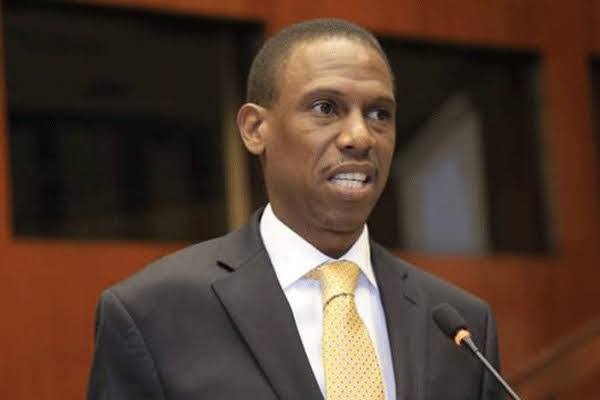

KAMPALA — In a call for grassroots mindset change and structural renewal, the Senior Presidential Advisor on Special Duties, Mr. Odrek Rwabwogo, has identified three core institutions—the garden, the classroom, and the home—as the vital engines capable of driving sustainable nation-building in Uganda.
Taking to his digital platforms, the veteran agricultural exporter and head of the Presidential Advisory Committee on Exports and Industrial Development (PACEID) emphasized that true national development goes beyond high-level policy making. Instead, it relies on the deliberate cultivation of foundational values that must eventually feed into national production, industrialization, and public life.
“There are three places where a country is changed: the garden, the classroom, and the home,” Rwabwogo stated, presenting a conceptual blueprint for civic and economic transformation.
                  [THE TRIPLE FOUNDATION OF NATION BUILDING]
                                      │
         ┌────────────────────────────┼───────────────────────────┐
         ▼                            ▼                           ▼
    [THE HOME]                  [THE GARDEN]               [THE CLASSROOM]
Forms Character, Work Ethic   Teaches Discipline &         Builds Knowledge &
    & Accountability             Resource Respect              Global Skills
         │                            │                           │
         └────────────────────────────┼───────────────────────────┘
                                      ▼
             [RESULT: Production, Value Addition & Stable Markets]
Deconstructing the Three Pillars
Rwabwogo broke down the specific roles each institution plays in shaping a productive citizen:
The Home (Character & Responsibility): According to Rwabwogo, the domestic unit remains the primary incubator for character, personal responsibility, and an innate work ethic. Without a solid cultural foundation of accountability built at the household level, public sector initiatives often struggle with governance and transparency deficits.
The Garden (Discipline & Production): Representing agriculture—the backbone of Uganda’s economy—the “garden” is presented as a classroom for practical discipline and respect for natural resources. In Rwabwogo’s view, an appreciation for primary production is critical for a country aiming to transition from raw material dependency to advanced agro-industrialization.
The Classroom (Knowledge & Skill): The formal education system is tasked with equipping the workforce with modern competencies, technical skill sets, and intellectual agility necessary to compete in regional and global markets.
Connecting Grassroots Values to Global Markets
As the leader of Uganda’s aggressive drive to secure USD 6 billion in non-oil export revenues, Rwabwogo’s commentary bridges the gap between individual behavior and macroeconomic success.
Independent development experts agree that Uganda’s ambitious economic programs, such as the Parish Development Model (PDM) and the Tenfold Growth Strategy, cannot succeed on financial injections alone. They require a corresponding shift in civic attitudes toward cooperative organization, quality consistency, and financial literacy.
“A country grows when its people carry these values into production, industry, markets, and public life,” Rwabwogo argued, suggesting that systemic growth is the natural byproduct of disciplined households and skilled communities.
The Path to Policy Alignment
For Uganda to fully realize the benefits of this ideological framework, civil society leaders point out that national systems must actively mirror these foundational values:
Curriculum Overhaul: Aligning the classroom with contemporary industrial needs, ensuring that schools produce innovators and entrepreneurs rather than job seekers.
Agribusiness Protection: Providing smallholder farmers with stable access to storage, extension services, and price-predictable markets so that the “garden” remains an economically attractive space for the youth.
Community-Led Civic Education: Empowering local government and traditional institutions to strengthen household stability, which directly lowers urban migration and social vulnerabilities.
By intentionally linking domestic character building with large-scale industrial output, the nation can establish a more self-sustaining and resilient economic model.
Watchdog Uganda will continue to feature insights from trade, agricultural, and educational experts on how best to operationalize these socio-economic pillars for local development.
How can we better integrate practical agricultural discipline and strong household work ethics into Uganda’s modern educational curriculum? Share your analytical insights with our editorial team via email: kampalaplanet@gmail.com.
Do you have a story in your community or an opinion to share with us: Email us at Submit an Article