Sign In
  • UGANDA
  • AFRICA
  • WORLD
watchdog uganda logo
Submit an Article
  • Home
  • News
    • National
    • Politics
    • World News
    • Media Outreach Newswire
    • Africa News
    • Tourism
    • Community News
    • Luganda
    • Sports
      • Football
      • Motorsport
  • Op-Ed
    • #Out2Lunch
    • Conversations with
    • Politics
    • Relationships
  • Business
    • Agriculture
    • CEOs & Entrepreneurs,
    • Companies
    • Finance
    • Products
    • RealEstate
    • Technology
  • Entertainment
    • Lifestyle
  • People
    • Showbiz
      • Salon Mag
  • Special Report
    • Education
    • Voices
  • Reviews
    • Products
    • Events
    • Hotels
    • Restaurants
    • Places
  • Forums
  • Donate
  • China News

Archives

  • June 2026
  • May 2026
  • April 2026
  • March 2026
  • February 2026
  • January 2026
  • December 2025
  • November 2025
  • October 2025
  • September 2025
  • August 2025
  • July 2025
  • June 2025
  • May 2025
  • April 2025
  • March 2025
  • February 2025
  • January 2025
  • December 2024
  • November 2024
  • October 2024
  • September 2024
  • August 2024
  • July 2024
  • June 2024
  • May 2024
  • April 2024
  • March 2024
  • February 2024
  • January 2024
  • December 2023
  • November 2023
  • October 2023
  • September 2023
  • August 2023
  • July 2023
  • June 2023
  • May 2023
  • April 2023
  • March 2023
  • February 2023
  • January 2023
  • December 2022
  • November 2022
  • October 2022
  • September 2022
  • August 2022
  • July 2022
  • June 2022
  • May 2022
  • April 2022
  • March 2022
  • February 2022
  • January 2022
  • December 2021
  • November 2021
  • October 2021
  • September 2021
  • August 2021
  • July 2021
  • June 2021
  • May 2021
  • April 2021
  • March 2021
  • February 2021
  • January 2021
  • December 2020
  • November 2020
  • October 2020
  • September 2020
  • August 2020
  • July 2020
  • June 2020
  • May 2020
  • April 2020
  • March 2020
  • February 2020
  • January 2020
  • December 2019
  • November 2019
  • October 2019
  • September 2019
  • August 2019
  • July 2019
  • June 2019
  • May 2019
  • April 2019
  • March 2019
  • February 2019
  • January 2019
  • December 2018
  • November 2018
  • October 2018
  • September 2018
  • August 2018
  • July 2018
  • June 2018
  • May 2018
  • April 2018
  • March 2018
  • February 2018
  • January 2018
  • December 2017
  • November 2017
  • October 2017
  • September 2017
  • August 2017
  • July 2017
  • June 2017
  • May 2017
  • April 2017
  • March 2017
  • February 2017
  • January 2017
  • November 2016
  • October 2016
  • September 2016
  • August 2016
  • July 2016
  • September 2015
  • April 2014
  • June 2013

Categories

  • #Out2Lunch
  • Agriculture
  • Big Brother Naija Dairy
  • Business
  • CEOs & Entrepreneurs,
  • China News
  • Community News
  • Companies
  • Conversations with
  • Court
  • culture
  • Deplomacy
  • Education
  • Education
  • Entertainment
  • Entrepreneurs
  • Events
  • Fashion
  • Finance
  • Football
  • Gadgets
  • Health
  • Hotels
  • Innovation
  • Lifestyle
  • Luganda
  • Motorsport
  • National
  • News
  • Op-Ed
  • Opinion
  • People
  • Photography
  • Photos
  • Places
  • Politicians
  • Politics
  • Politics
  • Products
  • Products
  • RealEstate
  • Relationships
  • religion
  • Reports
  • Restaurants
  • Reviews
  • Roadtrip
  • Salon Magazine
  • Showbiz
  • Special Report
  • Sports
  • Stars
  • Technology
  • Tourism
  • Travel
  • Traveler
  • Trips
  • Video
  • Voices
  • World
  • World News
Reading: EDRINE BENESA: 2026/27 Budget And How Government Plans to Send More Ugandans Into The Money Economy
Share
Watchdog UgandaWatchdog Uganda
Font ResizerAa
  • Home
  • News
  • Op-Ed
  • Business
  • Entertainment
  • People
  • Special Report
  • Reviews
  • Forums
  • Donate
  • China News
Search
  • Home
  • News
    • National
    • Politics
    • World News
    • Media Outreach Newswire
    • Africa News
    • Tourism
    • Community News
    • Luganda
    • Sports
  • Op-Ed
    • #Out2Lunch
    • Conversations with
    • Politics
    • Relationships
  • Business
    • Agriculture
    • CEOs & Entrepreneurs,
    • Companies
    • Finance
    • Products
    • RealEstate
    • Technology
  • Entertainment
    • Lifestyle
  • People
    • Showbiz
  • Special Report
    • Education
    • Voices
  • Reviews
    • Products
    • Events
    • Hotels
    • Restaurants
    • Places
  • Forums
  • Donate
  • China News
Have an existing account? Sign In
Follow US
© 2026 Watchdog Uganda. Ruby Design Compan. All Rights Reserved.
Op-Ed

EDRINE BENESA: 2026/27 Budget And How Government Plans to Send More Ugandans Into The Money Economy

Mike Ssegawa
Mike Ssegawa
Share
SHARE

The 2026/27 national budget is built around one central mission: moving millions of Ugandans from subsistence survival into the money economy. For decades, Uganda’s biggest economic challenge has not been lack of resources, but the fact that too many citizens remain outside formal or commercial activity. They work hard, but their labour does not translate into income, savings, investment, or wealth. This budget attempts to change that by directing money, infrastructure, science, and markets toward the ordinary Ugandan. The government’s message is that Uganda can only grow if its people grow with it, and that the country’s prosperity depends on unlocking the productivity of every household. The theme of the budget—full monetisation of Uganda’s economy—captures this ambition clearly.

The starting point for this push is the recognition that Uganda’s economy is already expanding. According to the budget speech, the economy grew by 6.4% in 2025/26 and is expected to jump to 10.2% in 2026/27 once commercial oil production begins. GDP per capita has risen to USD 1,420, and exports have grown by more than 200% in five years. But government acknowledges that growth alone is not enough. The real test is whether this growth reaches the farmer in Bukedea, the market vendor in Kalerwe, the boda rider in Gulu, the youth in Mbarara, or the small business owner in Arua. The budget therefore focuses on interventions that directly touch households and small enterprises, because that is where the majority of Ugandans live and work.

One of the most important tools for pushing Ugandans into the money economy is the Parish Development Model. Over the last five years, government has sent Shs 4.4 trillion to all 10,589 parishes, reaching more than 4 million beneficiaries. This is the largest direct‑to‑household economic programme in Uganda’s history. The idea is simple: give capital to people who have never had access to it, help them start small enterprises, and support them to grow. The 2026/27 budget strengthens this approach by shifting focus from simply giving money to improving productivity, value addition, and market access. Government plans to ensure that densely populated urban parishes receive more support, and it is preparing a transition toward a self‑sustaining PDM Bank built on repayment discipline and value chain development. The goal is to turn PDM from a cash transfer programme into a permanent financial engine for the poorest Ugandans.

- Advertisement -

Beyond PDM, the budget expands several other wealth‑creation programmes that target different groups. The Emyooga programme has already mobilised 2.48 million members and supported 7,148 SACCOs with Shs 760 billion. In the coming year, it receives an additional Shs 100 billion to help artisans, market vendors, mechanics, tailors, and other specialised groups access affordable capital. The Katale Loan Facility, piloted in major Kampala markets, will be rolled out nationwide to give traders working capital at only 8% interest. The Small Business Fund continues to support SMEs with loans of up to Shs 500 million at 10% interest, helping them recover and expand after the shocks of COVID‑19. These programmes are designed to ensure that whether someone is a farmer, trader, youth, woman, or small business owner, they have a pathway into the money economy.

Agriculture remains the backbone of Uganda’s economy, and the budget invests heavily in transforming it from low‑productivity subsistence farming into commercial agro‑industrial activity. Government is expanding irrigation systems in districts such as Isingiro, Bulambuli, Pakwach, Bukedea, Bududa, and Bukwo to reduce dependence on rainfall. Solar irrigation is being rolled out to smallholder farmers to ensure year‑round production. Mechanisation centres in Kiruhura, Mbale, Kiryandongo, Bunyangabu, Nakaseke, and Katine are providing access to tractors, harvesters, and modern equipment. The anti‑tick vaccine facility in Nakyesasa is now producing 36 million doses annually, protecting 18 million livestock and reducing losses for cattle keepers. Government is also producing foot‑and‑mouth disease vaccines and improving research on disease‑resistant crops. All these interventions aim to increase productivity, reduce losses, and help farmers earn more from the same piece of land.

To ensure that farmers do not only produce but also earn, the budget emphasises value addition and market access. Uganda’s exports have grown to USD 18 billion, driven by coffee, cocoa, fish, steel, sugar, and manufactured goods. Coffee alone earned USD 2.46 billion in the year ending March 2026. Government wants more Ugandans to benefit from this export boom by supporting agro‑processing, storage, and quality improvement. The idea is that instead of selling raw maize, farmers should sell flour; instead of selling raw coffee, they should sell roasted or packaged coffee; instead of selling raw fruits, they should sell juice or dried fruit. Value addition increases earnings, creates jobs, and strengthens Uganda’s competitiveness.

- Advertisement -

The budget also invests in sectors that government calls ATMS—Agro‑industrialisation, Tourism, Minerals (including oil and gas), and Science, Technology and Innovation. These sectors are seen as Uganda’s strongest engines for job creation and export growth. Tourism has already recovered from COVID‑19, earning USD 1.86 billion in 2025. Government plans to invest more in tourism infrastructure, security, and marketing through embassies abroad. The minerals and oil sector is expected to transform Uganda’s economy once production begins later this year. Science, technology, and innovation—including ICT and the creative arts—are being supported to create new industries and opportunities for young people.

Another major way the budget pushes Ugandans into the money economy is by strengthening access to affordable capital. The Uganda Development Bank has been capitalised with Shs 1.6 trillion and has financed over 600 businesses in agriculture, manufacturing, tourism, and services. In 2026/27, it receives an additional Shs 442 billion to support more enterprises. The Agricultural Credit Facility has disbursed Shs 1.35 trillion to farmers and agro‑processors, and it receives more funding this year. Large‑scale farmers cultivating over 50 acres have accessed Shs 169 billion in loans with government paying the interest. Women and youth programmes have supported hundreds of thousands of beneficiaries with soft loans and grants. All these interventions aim to break the biggest barrier to economic participation: lack of capital.

The budget also recognises that jobs are the most powerful way to move people into the money economy. Uganda has created over 2.3 million formal private sector jobs, 503,000 public sector jobs, and more than 10 million informal jobs. But government acknowledges that more must be done. By investing in industrial parks, agro‑processing zones, tourism, ICT, and mineral development, the budget aims to create thousands of new jobs for young people. The shift of workers from agriculture to services and industry is already happening, and the budget seeks to accelerate it.

- Advertisement -

Finally, the budget strengthens the economic environment that supports monetisation. Inflation is low at 3.8%, the shilling is stable, foreign reserves have doubled to USD 6 billion, and domestic revenue is rising. Government collected Shs 35.7 trillion in 2025/26 and expects to collect Shs 45.6 trillion in 2026/27. This means Uganda is increasingly funding its own development, reducing dependence on external loans, and creating a stable environment for businesses to grow.

In simple terms, the 2026/27 budget is a push to ensure that every Ugandan—whether in a village, town, or city—has a chance to earn, save, invest, and prosper. It is a budget that tries to turn economic growth into household income, and national progress into personal opportunity. It is a budget that says Uganda’s future will be built not only by big projects, but by millions of small enterprises, farms, shops, and innovations across the country. And it is a budget that places the ordinary Ugandan at the centre of the country’s economic transformation.

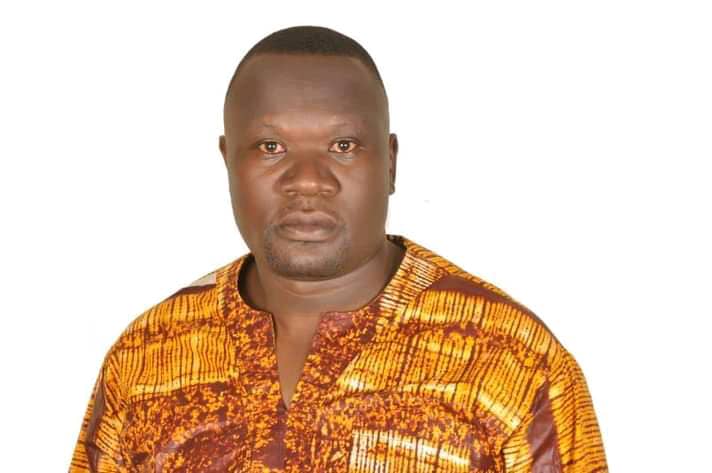
The Author is The Deputy RCC For Nakawa Division in Kampala City


Do you have a story in your community or an opinion to share with us: Email us at Submit an Article

Subscribe to Our Newsletter
Subscribe to our newsletter to get our newest articles instantly!
Share This Article
Facebook Whatsapp Whatsapp Email Copy Link
ByMike Ssegawa
Follow:
Two decades of reporting, editing and managing news content. Reach him via email: kampalaplanet@gmail.com Tiktok/Twitter: @MikeSsegawa
Previous Article ANDREW BABA: The 2026/27 Budget Explained In Plain Language, How it Will Impact Your Pocket

Editor's Pick

Community NewsNationalNewsPolitics

Trade Minister Sanjay Tanna, Other Cabinet Ministers Sworn In as Ex-Officio Members of Parliament

KAMPALA, Uganda – The Minister of State for Trade, Industry and Cooperatives,…

By
Lawrence Kazooba
3 Min Read
#Out2LunchCEOs & Entrepreneurs,NewsOp-EdPolitics

Why Effective Trade Management Is Critical to Uganda’s Economic Transformation

KAMPALA, UGANDA. Trade order is one of the most important rules for…

8 Min Read
NewsOp-EdPoliticsWorld News

Adonia Ayebare’s U.S. Citizenship: A Test of Loyalty, Public Trust and Accountability

Few public offices demand greater loyalty to the Republic of Uganda than…

5 Min Read

Top Writers

Mike Ssegawa 828 Articles
Two decades of reporting, editing and managing news content. Reach...
Mulema Najib 4422 Articles
News and Media manager since 2017. Specialist in Political and...

Op-ED

EDRINE BENESA: 2026/27 Budget And How Government Plans to Send More Ugandans Into The Money Economy

The 2026/27 national budget is built around one central mission:…

11th June 2026 at 18:07

The Tax Risks Every NGO and Charity Should Understand

By Joshua Kato, CA. There is…

10th June 2026 at 21:10

Why Trade Management Is Critical to Uganda’s Economic Transformation By Brian Mugenyi

TRADE ORDER BEFORE PROSPERITY — Why…

10th June 2026 at 10:27

Dr. Ayub Mukisa: Why Balaam and Nameere Can Strengthen Accountability in Local Government

In this piece on Hon. Balaam…

10th June 2026 at 09:45

Why Effective Trade Management Is Critical to Uganda’s Economic Transformation

KAMPALA, UGANDA. Trade order is one…

9th June 2026 at 16:16

You Might Also Like

Op-Ed

Dr. NESTOR BASEMERA: Moving Beyond Survival: The Silent Crisis of Uganda’s Single Mothers

    Globally, family structures are shifting dramatically, but the economic and emotional toll falls heaviest on solo matriarchs. In…

5 Min Read
BusinessCEOs & Entrepreneurs,CompaniesConversations withEducationOp-EdTechnology

BUSINGE CONAN DANIEL: One Line, Many Meanings: Why I Support @kasujja’s Bold Move in Government Communication

Over the last few weeks, Uganda’s new style of one-line press releases from the Uganda Media Centre has triggered fierce…

5 Min Read
Conversations withOp-EdPolitics

Open Letter To Dr Lawrence Muganga: On Truth, Scrutiny, And The Quiet Discipline Of Public Life

KAMPALA, UGANDA — Dr Lawrence Muganga, I have followed the national conversation surrounding your proposed ministerial appointment and the subsequent…

5 Min Read
Conversations with

LG PS Kumumanya’s Anti-Corruption Push: What Every District Public Servant Must Understand

Understanding Corruption Offences in Uganda — Why Public Servants Must Heed President Museveni and PS Ben Kumumanya’s Call for Accountability…

8 Min Read
watchdog uganda logo

About Us

Watchdog Uganda is a portal for solution journalism, trending news plus cutting edge commentaries in the fields of politics, security, business, tourism, entertainment, technology, agriculture, climate change, environment, public health et al. We also give preference to Ugandan community news and topical discussions. The portal also publishes community news and topical discussions.

Quick Links

  • Submit an Article
  • Forums
  • About Us
  • Contact Us
  • Advertise
  • Terms and Conditions

Follow Us

FacebookLike
XFollow
YoutubeSubscribe
TiktokFollow

© 2026 Watchdog Uganda. All Rights Reserved.

Welcome Back!

Sign in to your account

Username or Email Address
Password

Lost your password?