
By Brian Mugenyi
mugenyijj@gmail.com
KAMPALA | MASAKA: Uganda’s rapidly expanding towns and cities are at a critical crossroads, where informal survival trade is colliding head-on with government efforts to impose urban order and structured commerce.
Across Kampala, Masaka, and other growing municipalities, authorities are intensifying enforcement of the Trade Licensing Act Cap 101, targeting street vending, roadside hawking, and unregulated business operations occupying pavements, road reserves, and drainage channels.
While officials argue that the reforms are essential for building modern cities, many traders see them as a threat to their daily survival.
At the centre of the policy push is senior government official Ben Kumumanya, who has repeatedly warned that Uganda’s urban centres are under increasing pressure from uncontrolled informal trade and rapid population growth.
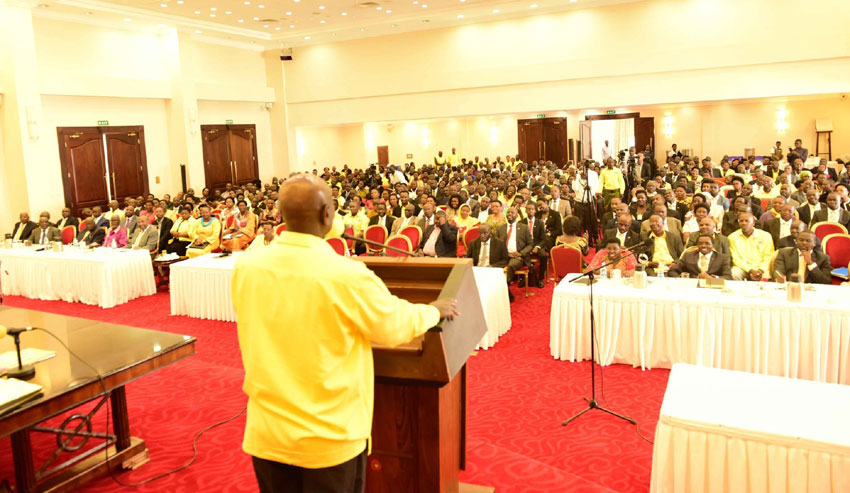
Speaking at a sensitisation meeting in Kampala, Kumumanya emphasized that the law requires all traders to obtain valid licences and operate only in designated and gazetted business areas.
He stressed that the Trade Licensing Act is not merely a revenue tool but a framework for restoring order, improving safety, and ensuring sustainable urban development.
Rising Urban Pressure
Uganda’s cities are growing faster than infrastructure can support. Every day, thousands of people migrate to urban centres in search of income opportunities, bringing with them informal trade activities that have become the backbone of urban survival.
However, Kumumanya warned that this expansion is creating serious challenges.
He noted that unplanned settlements, roadside markets, and illegal vending are increasingly choking city spaces.
“They stay in slums and create unplanned settlements despite enabling legislation on development control,” he said.
In many areas, pavements have turned into open-air markets, forcing pedestrians onto roads, worsening traffic congestion, and blocking emergency access routes.
Waste disposal has become a growing challenge, while formal businesses continue to complain about unfair competition from unregulated traders.
Economic Consequences of Informality
Urban experts say the impact of unregulated trade goes beyond congestion and sanitation. It undermines the broader economy by reducing tax compliance, discouraging investment, and weakening urban planning systems.
Officials argue that structured trade systems help cities improve revenue collection, enhance public health, strengthen security, and create predictable business environments.
Kumumanya insisted that enforcement alone is not enough.
“There must be clean trade spaces, proper lighting, structured relocation, and consistent law enforcement,” he said.
He also called for the clearing of pavements, walkways, verandas, and corridors to restore functionality in urban spaces.
Masaka Leads Enforcement Drive
In Masaka, the debate over urban order has become particularly intense as authorities roll out strict enforcement measures.
City Town Clerk Daniel Christopher Kaweesi has directed street vendors to vacate illegal roadside spaces and relocate to designated markets such as Masaka Central Market, Kabonera, Katwe, Kirimya, and Kitanga trading centres.
He warned that enforcement will be strict.
“We shall arrest people vending sugarcane on streets and those operating without trade licences,” Kaweesi said.
The move has sparked mixed reactions — with some residents welcoming cleaner streets, while others fear loss of income.
Human Reality Behind the Policy
Despite government’s push for order, many traders say the reforms could disrupt their livelihoods.
Street vending remains a key source of income for thousands of families affected by unemployment and rising living costs.
Trader Hamida Nakayaga welcomed the reforms but urged government to provide affordable alternative spaces closer to high-traffic business zones.
Another trader, Wilson Wasswa, supported the policy but called for transitional support to help vulnerable vendors adapt.
Their concerns highlight the social tension at the heart of Uganda’s urban transformation agenda.
Global Lessons in Urban Order
Countries like Singapore offer a powerful example of how disciplined urban planning can transform chaotic cities into global economic hubs.
Once struggling with congestion and informal trade, Singapore invested heavily in structured markets, strict enforcement, and long-term urban planning — eventually becoming one of the world’s most efficient economies.
Urban analysts argue that Uganda could achieve similar progress if enforcement is balanced with planning, relocation, and support for small traders.
A Defining Moment for Uganda’s Cities
As urban populations continue to rise, Uganda faces a defining decision.
One path leads to structured, clean, and investor-friendly cities built on regulation and planning.
The other risks deeper congestion, unregulated expansion, and declining urban efficiency.
For supporters of the Trade Licensing Act, the message is clear: urban order is no longer optional — it is essential for economic survival.
And as enforcement intensifies across Uganda’s cities, one truth is becoming increasingly evident:
A modern economy cannot thrive in disorder.
Do you have a story in your community or an opinion to share with us: Email us at Submit an Article