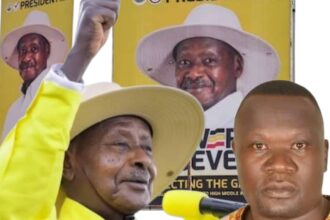

On Tuesday, May 12th, Kololo Ceremonial Grounds will not just host another swearing‑in; it will stage a national moment of destiny. President Yoweri Kaguta Museveni, the man who has steered Uganda for four decades, will take the oath once again—but this time, the air is charged with a different electricity. This inauguration is not routine; it is historic, unusual, and deeply symbolic. It is the culmination of a revolution where Ugandans, from every corner of the country, spoke with one voice and chose continuity, stability, and transformation.
For the first time in Uganda’s political history, the NRM and President Museveni secured victory across all regions of the country. From the North to the East, from the West to the Central heartlands, the people rallied behind one candidate. Even in Buganda, where NRM nearly tied with NUP’s Robert Kyagulanyi (Bobi Wine), the numbers revealed a nation uniformly agreeing on the direction it wants to take. This was not a fragmented mandate—it was a collective revolution of the people. The statistics underscore it: NRM swept the West with over 80%, dominated the North with more than 70%, held the East with 65%, and in Buganda, though contested, still secured nearly half the vote. Such a uniform endorsement is rare in any democracy, and it signals a people united in purpose.
But what is that purpose? It is written in the manifesto that carried Museveni back to State House. Every promise was not just a pledge to win votes—it was a blueprint for Uganda’s next chapter. The President committed to building a $500 billion economy, a figure that may sound ambitious but is grounded in the trajectory of industrialization, regional integration, and modernization. For every Ugandan, this means more opportunities, more jobs, and a stronger shilling in their pocket.
Job creation stands at the heart of this vision. With millions of young Ugandans entering the labor market each year, the promise of expanding industries, ICT hubs, and agricultural value chains is not abstract—it is the difference between despair and dignity for a generation. Linked to this is economic transformation through industrialization: factories rising in Mbale, Gulu, and Mbarara, processing plants turning raw produce into finished goods, and Uganda shifting from an exporter of raw materials to a manufacturer of finished products. This is how nations leap forward.
No promise resonates more deeply than peace and security. For 40 years, Ugandans have lived without the terror of war that once defined their childhoods. The President’s commitment to safeguarding this peace ensures that every farmer can till their land, every trader can move their goods, and every child can walk to school without fear. Peace is the foundation upon which all other promises rest.
The manifesto also speaks of regional integration—Uganda not as an isolated state but as a hub in East Africa, trading freely, moving goods and people across borders, and harnessing the power of a larger market. For the ordinary Ugandan, this means cheaper goods, more buyers for their produce, and opportunities beyond the Nile.
Agriculture, the backbone of Uganda, is promised a new dawn through mechanization. Tractors, irrigation systems, and modern inputs will replace the hand‑hoe, lifting millions out of subsistence farming into commercial agriculture. This is not just about farmers—it is about food security, exports, and national pride.
The mining industry is another frontier. Uganda’s untapped gold, oil, and rare earth minerals are poised to fuel an economic surge. Properly managed, this sector can finance infrastructure, education, and healthcare, touching every Ugandan life. Alongside it, tourism—our mountains, lakes, and wildlife—will be marketed as treasures to the world, bringing in billions and creating jobs from Kampala to Kisoro.
In the digital age, ICT is no longer optional. The manifesto envisions Uganda as a tech hub, with broadband reaching villages, innovation centers sprouting, and young coders writing the future. For the boda rider, this means mobile apps to find customers; for the student, online libraries; for the entrepreneur, access to global markets.
Most interestingly, aware that the current job market struggles to absorb the products from the enhanced education system where hundreds of thousands of young people graduate from the numerous higher institutions of learning, the President, in his rare wisdom, pledged to create a fund for the new graduates to access start up capital to begin enterprises to support themselves and also create jobs for other Ugandans. This way, the President won’t only look to solve unemployment but also help in national development through a wider tax base as a result.
What makes this inauguration extraordinary is that the manifesto frames it not as a political transition but as an economic and strategic transition. Uganda is crossing a threshold—from survival to prosperity, from potential to performance. And it is Museveni, with his unmatched experience, wisdom, and charisma, who will lead this passage. After 40 years, he does not stand as a tired leader but as a seasoned captain, steering the ship with a steady hand through turbulent global waters.
That is why every Ugandan must turn up at Kololo. To witness history, to affirm unity, to celebrate peace, and to embrace the promises of tomorrow. Those who cannot attend physically must follow keenly from wherever they are, for this is a moment that may never come again. It is not just an oath—it is a covenant between leader and people, between past and future. On May 12th, Uganda will not just swear in a President; it will swear in a new era.
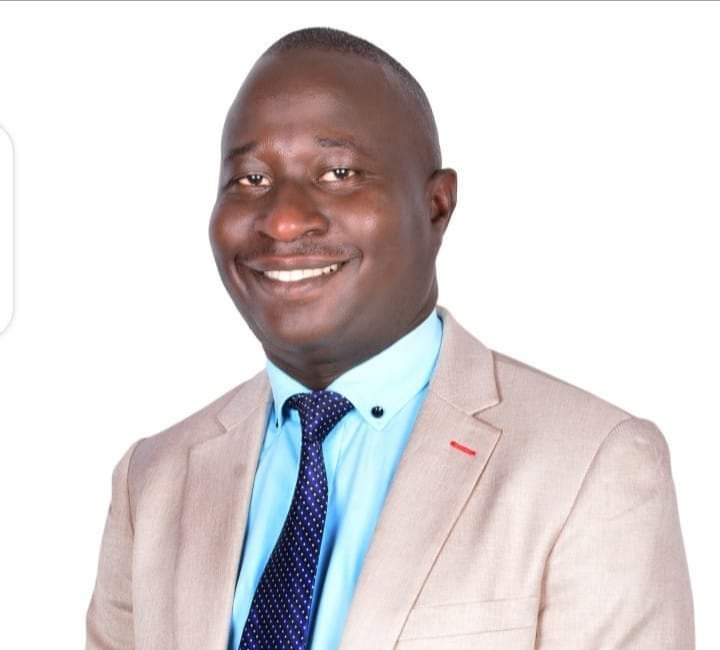
The Writer is The Nakawa Division Deputy Resident City Commissioner
Do you have a story in your community or an opinion to share with us: Email us at Submit an Article