Ugandans have, in recent weeks, expressed strong emotions regarding the ongoing implementation of the trade order, which has seen the government demolish illegal business structures while promoting the formalisation of business operations. From market vendors to boda boda riders and even some places of worship, many have felt the immediate weight of enforcement measures aimed at removing illegal structures and restoring order in our urban spaces.
Given the pain caused by the losses resulting from the implementation of the trade order, many people have labelled the government as insensitive to the struggles and realities of Ugandans, especially the urban poor.
However, during an engagement with various stakeholders, including representatives of traders and leaders of Born-Again churches, among others, last Wednesday, I made it clear that these concerns are not lost on the government.
Together with fellow ministers from the Ministry of Gender, Labour and Social Development; Kampala Capital City Authority; and the Ministries of Works and Transport, and Trade, Industry and Cooperatives, I clearly explained to participants in the harmonisation meeting that the government hears the cries of its people and empathises with those whose livelihoods have been disrupted.
DEVELOPMENT COMES AT A COST
It is important to state, without ambiguity, that the government’s actions are not driven by indifference or hostility. Every step we are taking is anchored in our constitutional duty to secure a more orderly, productive, and sustainable future for all citizens of Uganda.
For years, warnings have been issued about illegal and unregulated trading practices—particularly those that compromise public safety, distort fair competition, and undermine urban planning. Compliance, however, has not been sufficiently forthcoming. The current enforcement, therefore, is not punitive; rather, it is corrective, seeking to restore standards, fairness, and long-term viability in our trading environment.
It is critical, fellow citizens, to understand a broader truth: development is rarely painless. What makes it worthwhile are the results that come at the end of the processes undertaken to achieve it.
To put this into context, let me jog your memory back to the digital migration project. Many of us will recall that when the government announced plans to switch from analogue to digital broadcasting, there was widespread uproar. Some politicians even used the opportunity to gain political mileage by leading demonstrations while carrying television sets in town.
However, today, the benefits of digital transformation are widely appreciated—even by those who once opposed it. Beyond improving picture and sound quality, digital migration has increased channel capacity and freed up spectrum for high-speed mobile broadband services. The country now boasts strengthened national digital infrastructure, including expanded broadband connectivity and public Wi-Fi, extended to the masses through the Ministry of ICT and National Guidance.
This shift alone has significantly boosted the economy, with the ICT sector now growing at 14.8% annually and contributing 9% to GDP. Digital tools have created thousands of jobs for our youth while also saving Ugandans approximately USD 60m monthly (through 90 million digital interactions). Projections indicate that full digitalisation will create 1.79 million jobs and add UGX 14.6 trillion in value to the country by 2030. The irony is that none of this would have been possible if the government had succumbed to the pressure of detractors who wanted us to remain analogue.
To our religious leaders who oppose the trade order, I wish to remind you that our faith itself was shaped through pain and sacrifice. The life of Jesus Christ stands as the ultimate testimony to redemption born out of sacrifice. God offered His only Son for the salvation of mankind, while Christ fasted for forty days, endured suffering, and ultimately bore the pain and humiliation of the cross to grant us salvation and hope.
NATION-BUILDING FOLLOWS A SIMILAR PATH
Our President, H.E. Gen. Yoweri Kaguta Museveni, has often reminded us that Uganda’s liberation was forged through struggle—what he described as passing “through the tanuulu”. That painful journey laid the foundation for the peace, stability, and opportunity we enjoy today. Why, then, should we expect transformation without sacrifice?
The reality is that informality, congestion, and disregard for established regulations cannot coexist with the modern economy we seek to build. The government’s agenda is clear: to expand the tax base fairly, strengthen domestic revenue, and deliver better services—roads, healthcare, education, and social protection—to all Ugandans.
This is not theoretical. It is already being backed by action as we progress towards the tenfold USD 500M economy envisioned under Vision 2040 and the National Development Plan IV.
Across the country, the government has invested heavily in modern markets, upgraded infrastructure, and developed new urban centres to decongest the capital and bring services closer to the people. It is therefore neither necessary nor sustainable for economic activity to remain concentrated in unplanned, unsafe, and illegal spaces.
A CALL TO EMBRACE REALITY
To our brothers and sisters in the trading community, to boda boda operators, and to churches operating in unauthorised areas such as wetlands and road reserves, this is not the end of your livelihoods or missions. It is a necessary transition towards a more structured, equitable, and prosperous future.
We must also acknowledge that the government has listened. In response to public concern, enforcement of the trade order has been temporarily halted for one month to allow for intensified sensitisation and engagement. This is not a reversal of policy direction but a demonstration of responsive leadership aimed at ensuring that every Ugandan understands what is required and how to comply.
However, let there be no doubt: the direction of reform will not change.
The enforcement of the trade order will continue because it is in the long-term interest of our nation. Order must replace chaos. Planning must replace disorder. Sustainability must replace short-term survival.
I therefore call upon all stakeholders—traders, religious leaders, and the general public—to support this vision. Let us work together to align with the law, embrace formalisation, and contribute to building an economy that works for everyone.
Uganda’s future will not be built on convenience but on discipline, sacrifice, and shared responsibility.
And if history and faith are any guide, that sacrifice will not be in vain.
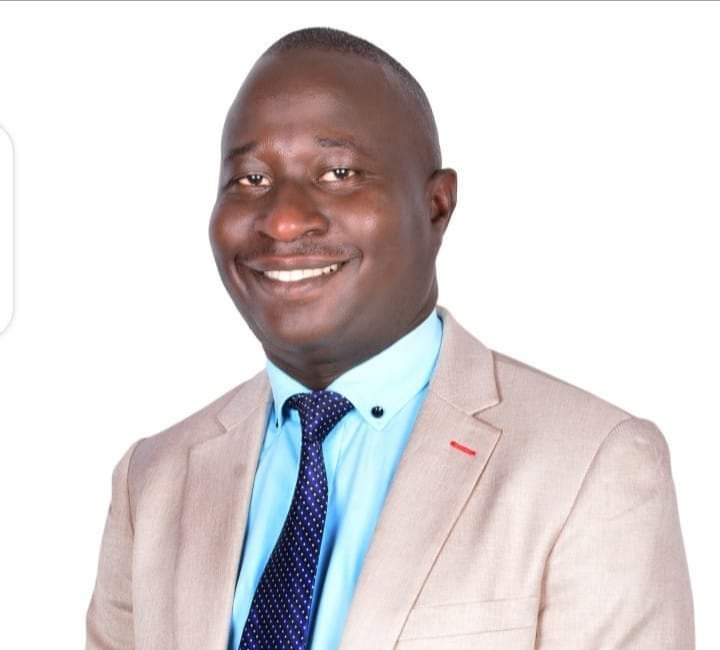
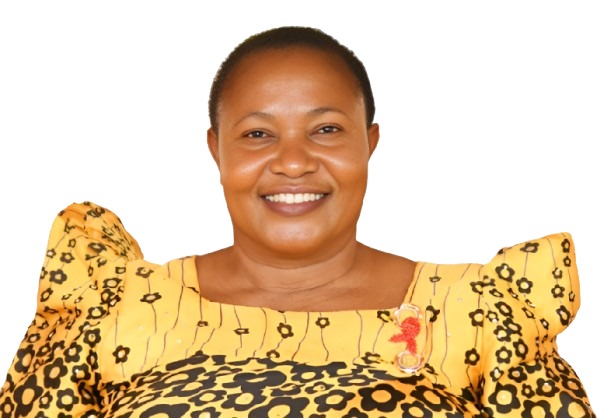
The author is the minister for the presidency and MP-elect for the Budiope West constituency.
Do you have a story in your community or an opinion to share with us: Email us at Submit an Article