
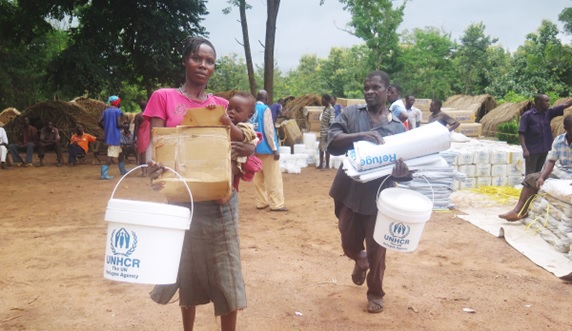
A multitude of entities play essential roles in humanitarian assistance, ranging from United Nations agencies to private sector organizations. At the forefront, the United Nations High Commissioner for Refugees (UNHCR) leads the charge in safeguarding refugees and displaced persons on an international scale. Meanwhile, the United Nations Children’s Fund (UNICEF) focuses on addressing the needs of children and mothers during emergencies, emphasizing health, nutrition, education, and child protection. Notably, the World Food Programme (WFP) steps in to provide crucial food aid to populations in crisis and supports initiatives promoting food security and nutrition. Complementing these efforts, the World Health Organization (WHO) takes charge of health responses in humanitarian crises, managing disease outbreaks, health systems, and providing emergency medical assistance.
In addition to these UN agencies, International Non-Governmental Organizations (INGOs) like Médecins Sans Frontières, International Rescue Committee, Oxfam, and Save the Children extend diverse humanitarian assistance, ranging from medical care to shelter and protection services. Local and national Non-Governmental Organizations (NGOs) also emerge as key players, particularly in areas inaccessible to international bodies. Their nuanced understanding of local contexts enables them to deliver culturally appropriate and context-specific support effectively.
Furthermore, government agencies, both national and donor entities like USAID, ECHO, and DFID, are instrumental in coordinating emergency responses, providing logistical support, and funding humanitarian activities. Local communities and civil society organizations contribute significantly as well.
Crises and disasters do not impact everyone equally. Gender plays a significant role in shaping vulnerabilities and access to resources during emergencies. This blog gives insights into the complex relationship between gender and humanitarian assistance. I will explore how pre-existing gender inequalities are amplified in crisis situations, and how humanitarian efforts can be designed and delivered in a more equitable and effective manner.
There are four core international humanitarian principles that guide the work of humanitarian organizations around the world. These principles are endorsed by the United Nations and are essential for ensuring effective and ethical humanitarian action.
- Humanity: This principle emphasizes the importance of alleviating human suffering wherever it is found. Humanitarian actors are driven by a desire to protect life and health and ensure respect for human dignity. This means prioritizing the most vulnerable individuals and communities in times of crisis.
- Impartiality: Humanitarian assistance should be provided solely on the basis of need, without any discrimination. Race, religion, nationality, political beliefs, or any other factor should not influence who receives aid. The focus is on delivering life-saving assistance to those who need it most urgently.
- Neutrality: Humanitarian organizations should not take sides in political, military, or ideological conflicts. Maintaining neutrality allows them to gain access to all parties involved in a crisis and ensures the safety of their personnel.
- Independence: Humanitarian action should be independent from political, economic, military, or other non-humanitarian objectives. This means that humanitarian organizations should not be influenced by agendas that are not directly related to alleviating human suffering. Maintaining independence allows them to act with impartiality and ensures the credibility of their interventions.
These four principles are often referred to as the “humanitarian imperative” and are considered the foundation of ethical humanitarian action. They are not just theoretical concepts, but practical tools that guide decision-making and program implementation in complex emergencies.
Humanitarian agencies operate in a world with challenges, making their work inherently complex.
The shift from self-reliance to development assistance for refugees in humanitarian action is a shift from short-term, emergency-focused interventions to longer-term strategies aimed at promoting sustainable solutions and enhancing the self-sufficiency and resilience of refugee populations. This acknowledges that protracted displacement situations often require more than just immediate relief efforts and addressing the underlying causes of vulnerability is essential for achieving lasting solutions. Key components of humanitarian assistance for refugees include livelihoods and economic empowerment, education and skills development, healthcare and social services, infrastructure and community development, and peacebuilding and social cohesion. Effective implementation of humanitarian assistance requires collaboration and coordination among governments, humanitarian organizations, development actors, host communities, and refugees themselves. Challenges remain, including funding constraints, political barriers, and complex operational contexts. Ensuring the inclusion and participation of refugees in decision-making processes and tailoring interventions to their specific needs and capacities are critical considerations for successful implementation. The cluster approach, established in 2005 by the Inter-Agency Standing Committee, is a coordination mechanism used by the humanitarian community to improve the effectiveness and efficiency of humanitarian response in complex emergencies.
Coordination among various actors is indeed a challenge in humanitarian responses, as there are multiple UN agencies, NGOs, local organizations, and government bodies involved. Ensuring everyone works together effectively can be complex, but it is crucial to ensure a unified response that addresses the needs of affected populations. To overcome these challenges, regular coordination meetings are essential to bring all stakeholders together and align efforts towards a common goal. Moreover, establishing clear communication channels and defining roles and responsibilities can help avoid duplication of efforts and ensure that resources are used efficiently. However, competing interests can sometimes hinder the humanitarian response/assistance. Political agendas and priorities may take precedence over the needs of affected populations, leading to a delay or insufficient response. In such cases, it is essential to maintain a neutral stance and prioritize the well-being of those affected over political considerations. Meanwhile, security concerns pose an additional challenge in humanitarian responses. The rise of kidnapping, attacks on aid workers, and violence against civilians creates a volatile environment that can make operations difficult. In these situations, it is crucial to prioritize the safety and security of aid workers and affected populations while continuing to provide necessary assistance.
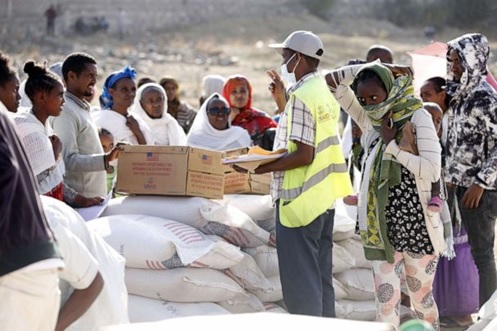
https://disasterphilanthropy.org/disasters/ethiopia-tigray-crisis/
Gender inequality poses a significant challenge in emergencies, particularly affecting women, girls, and marginalized groups, who have unique vulnerabilities that must be addressed by humanitarian agencies. These organizations need to tailor their responses to meet the specific needs of these populations. While humanitarian assistance typically focuses on immediate needs, the importance of long-term recovery and reconstruction efforts cannot be understated. Monitoring and evaluating the impact of interventions in complex environments can be a difficult task, making it crucial for agencies to ensure accountability to beneficiaries, ensuring aid reaches those in need efficiently. To navigate these complexities, humanitarian agencies must be adaptable, responding effectively to rapidly changing situations, collaborate closely with other actors for success, innovate new approaches to tackle evolving challenges, and uphold accountability through transparency and a commitment to ethical principles, fostering trust with both donors and beneficiaries.
The world of humanitarian aid is a multifaceted realm where the noble intentions of delivering essential resources like food, water, and shelter intersect with complex political realities. Within this arena, a significant debate unfolds regarding the role of politics in humanitarian action. Traditionalists, often referred to as Dunantists, advocate for a neutral and independent approach to aid, focusing primarily on alleviating suffering. On the other hand, proponents of a more politically engaged method, known as Wilsonians, argue that interacting with political actors can enhance aid effectiveness and access, especially in intricate situations.
Amidst this landscape, power dynamics and geopolitics play a vital role. Donor countries, driven by political or strategic agendas, can affect the allocation of aid, leading to competition and possibly neglecting certain crises. Additionally, host governments may impose restrictions on access to specific areas or populations and manipulate aid distribution for their own gain. The global “War on Terror” has further complicated matters, blurring the boundaries between humanitarian aid and military intervention, raising concerns about politicization and the safety of aid workers.
These challenges have significant consequences, such as the potential erosion of neutrality and impartiality in aid efforts, posing risks to aid workers’ safety and impeding access to vulnerable populations. Political pressures may also prioritize short-term relief over long-term development and reconstruction, undermining sustainable solutions. Furthermore, there is a risk of aid being instrumentalized as a tool for political gain, either rewarding friendly governments or penalizing unfriendly ones, thereby compromising the humanitarian assistance principles.
The relief to development debate within the context of humanitarian assistance revolves around the tension between short-term emergency relief efforts and long-term development interventions. This debate encompasses discussions about the appropriate balance between providing immediate relief to address acute needs in crisis situations and investing in sustainable development initiatives to address underlying vulnerabilities and build resilience in communities.
The relief phase focuses on meeting the immediate needs of affected populations in the aftermath of a crisis, such as providing food, shelter, medical care, and protection services. Humanitarian organizations prioritize rapid response and delivery of life-saving assistance to save lives, alleviate suffering, and restore basic services. The humanitarian phase involves longer-term efforts to address the root causes of vulnerability and build sustainable solutions to reduce future risks and enhance resilience.
Humanitarian interventions may include initiatives aimed at improving infrastructure, healthcare, education, livelihoods, and governance systems to foster sustainable development outcomes.
One key debate is whether humanitarian assistance and development interventions should be sequenced or integrated. Some argue for a sequential approach, where relief efforts precede development activities, while others advocate for an integrated approach that combines relief and development efforts from the outset.
Balancing investments in risk reduction and preparedness measures with response efforts is another aspect of the debate. While investing in risk reduction and resilience-building can help mitigate the impact of future crises, it may divert resources away from immediate response efforts.
Resource allocation is a critical consideration in navigating the relief to development. Humanitarian organizations and donors must determine how to allocate limited resources effectively between relief and development activities, considering the context-specific needs and priorities of affected populations.
Effective collaboration and coordination among humanitarian, development, and other stakeholders are essential for navigating the relief to development continuum. Partnerships between humanitarian and development actors can facilitate smooth transitions between relief and development phases and ensure a coherent and sustainable response.
Recognizing the complexities of the relief to development, many humanitarian organizations and donors are adopting hybrid approaches that integrate relief, recovery, and development activities. These approaches aim to provide immediate assistance while simultaneously addressing underlying vulnerabilities and promoting sustainable development outcomes.
Critics of prolonged humanitarian assistance argue that it can foster dependency and undermine local self-reliance, perpetuating cycles of aid dependency. They also highlight challenges in their delivery and management, such as fragmentation, duplication, short-term focus, dependency, inadequate funding, security risks, lack of accountability, cultural insensitivity, lack of community engagement, and inadequate safeguarding. These issues can lead to inefficiencies, overlaps, and gaps in service delivery, as well as insufficient funding and resource constraints. Dependency on external aid can also undermine local capacities for self-reliance and resilience.
Inadequate funding and resource constraints can compromise the scale, quality, and sustainability of humanitarian response efforts. Security risks and access constraints can hinder aid delivery and compromise the safety of staff and beneficiaries. Inadequate safeguarding policies can result in serious violations of human rights and dignity.
Addressing these critiques requires concerted efforts from humanitarian organizations, donors, governments, and other stakeholders to improve coordination, enhance accountability, promote local ownership and participation, strengthen safeguarding measures, and ensure responsive, inclusive, and effective humanitarian assistance programs.
Conclusively aid providers face numerous challenges in delivering effective assistance to populations affected by crises. These include access constraints, insecurity and safety risks, resource constraints, logistical challenges, coordination and collaboration, cultural and contextual sensitivity, accountability and transparency, and safeguarding and protection. Access constraints can arise from bureaucratic impediments, security risks, logistical challenges, and restrictions imposed by authorities. Insecurity and safety risks expose staff and beneficiaries to attacks on humanitarian workers, while resource constraints can compromise the scale, quality, and sustainability of humanitarian response efforts. Logistics challenges include transportation delays, infrastructure damage, supply chain disruptions, and limited access to essential resources.
Coordination and collaboration among diverse actors can be challenging, leading to fragmentation and gaps in service delivery. Cultural and contextual sensitivity is crucial for building trust and ensuring the relevance and effectiveness of assistance interventions. Accountability and transparency are essential for building credibility and trust. Prioritizing the safety, dignity, and rights of affected populations is crucial, and addressing these challenges requires concerted efforts from aid providers, donors, governments, and other stakeholders to improve coordination, enhance security measures, mobilize resources, promote accountability, and strengthen partnerships for more effective and sustainable humanitarian assistance.
Do you have a story in your community or an opinion to share with us: Email us at Submit an Article