By Nelly Otto
According to the Universal Declaration of Human Rights (UDHR), all human beings are born free and equal in dignity and rights and it is the duty of every state to protect and promote these rights without any discrimination.
This fundamental principle is especially relevant in the context of Uganda’s fight against HIV, Tuberculosis and malaria which have been a challenge in the country for more than 30 years.
The Government of Ugandan officials have commended the Global Fund for its continuous financial support in the fight against HIV/AIDS, Tuberculosis and Malaria which has been a challenge in the country for more than 30 years.
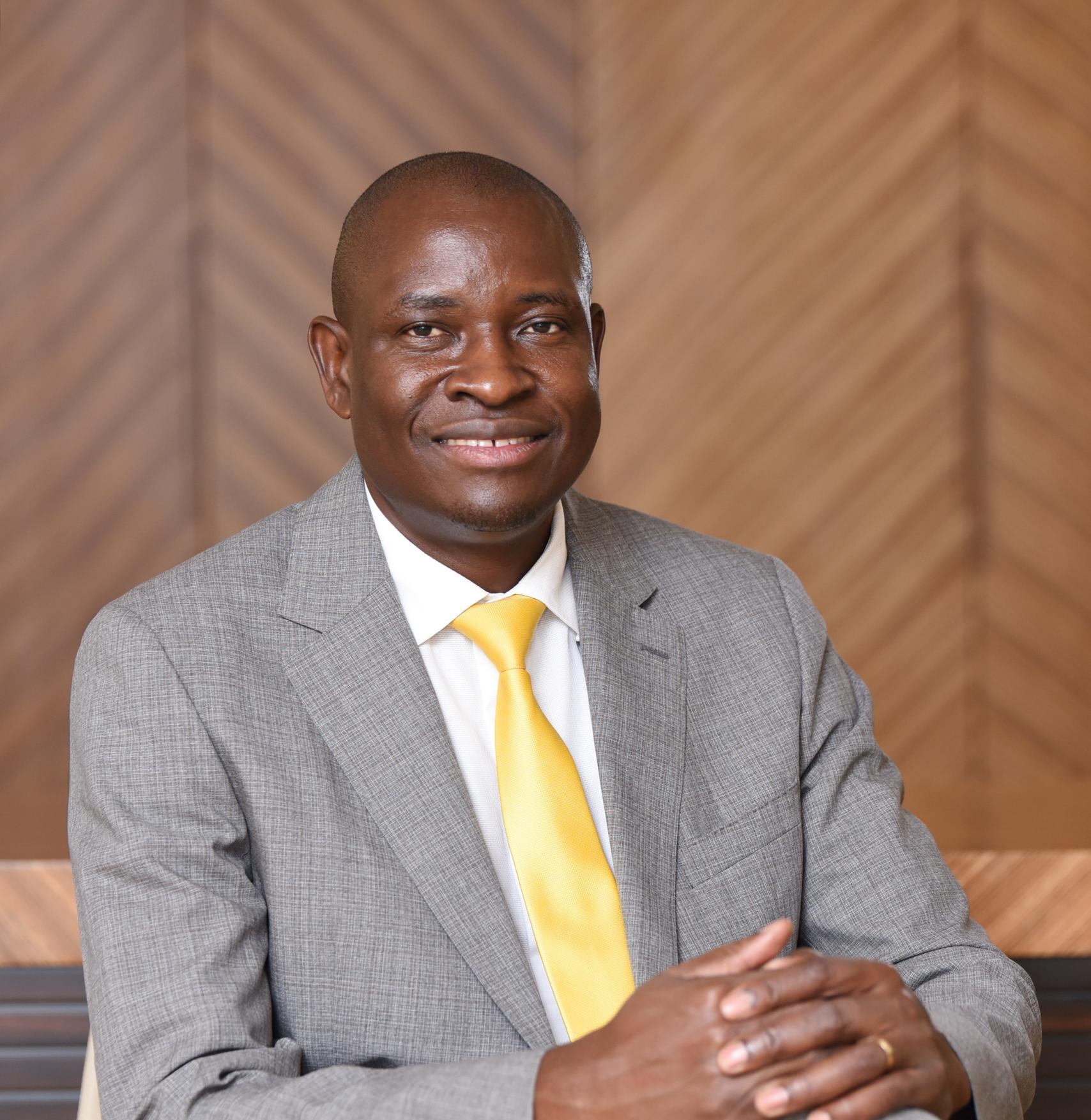
“…let me start by acknowledging the support from the Global Fund to Uganda as a country in the fight against HIV, Tuberculosis and Makaria which have plagued us for decades…” His Worship Festo Nsenga the High Court Deputy Registrar said.
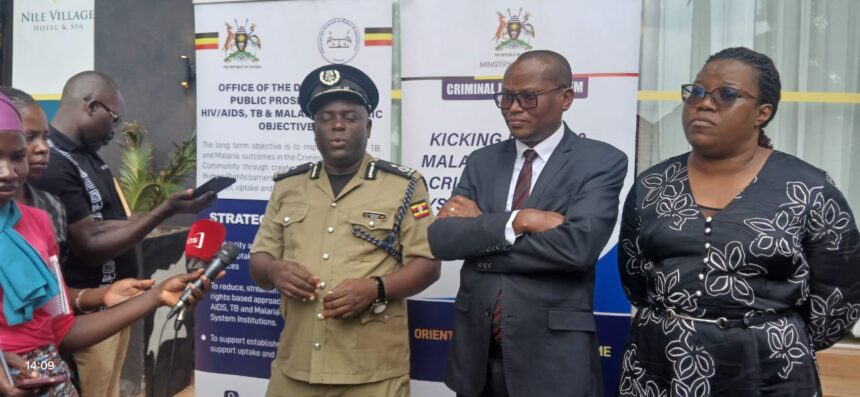
This was during the closing ceremony of a week-long orientation workshop for top officials of the Programme Management Unit (PMU)in the Directorate of Public Prosecutions (DPP) held at the luxurious Nile Village Hotel, a serene gateway with stunning views of the Nile River in Jinja tourism City.
The DPP strategically chose the luxurious Nile Village Hotel for the workshop seeking to provide a distraction-free and productive environment that would foster focus, collaboration and learning among the high-profile participants.
It also reflected a prioritization of security, given the sensitive nature of the matters handled by the participants and the DPP’s office. The hotel’s robust security measures, albeit the costs and secluded location provides an additional layer of protection, making it extremely challenging for unauthorized individuals to gain access.
HW Nsenga, in an address said because of the effects of HIV, TB and malaria on human capital development, the government of Uganda under President Yoweri Museveni who registered another political victory in the January 15 presidential polls, continues to make deliberate efforts to minimize and end their effects by 2030.
“…these efforts are targeting everyone, using a whole of government and multisectoral approach including the Criminal Justice Sector leaving no one behind…”, said HW Senga in his scripted speech.
The Criminal Justice Sector is a complex system that encompasses various institutions and stakeholders responsible for maintaining law and order, investigating crimes and administering justice.
Components include the Uganda Police Force (UPF), which is responsible for law enforcement, investigation and maintaining public order.
Then there is the Directorate of Public Prosecutions (DPP), responsible for prosecuting criminal cases in court. Then there is the Judiciary comprising the Supreme Court, Court of Appeal, High Court and subordinate courts responsible for interpreting the law and administering justice.
The Uganda Prisons Service (UPS) is responsible for the detention, rehabilitation and management of offenders. There is also the Ministry of Justice and Constitutional Affairs which provides policy guidance and oversight to the justice sector.
Other stakeholders include the Probation and Bail Services which is responsible for supervising offenders and providing support services. Uganda Human Rights Commission (UHRC) is there to promote and protect human rights while the Civil Society Organizations (CSOs) are there to advocate for justice, human rights and rule of law.
HW Festo Nsenga says the Ministry of Health has come on board after the realization that while the DPP carries out its constitutional mandate, somehow there was a gap in as far as respect and promotion of people’s rights, specifically, the right to health during their interaction with the criminal justice processes.
“…this gave birth to the ‘Breaking Down Barriers (BDB)initiative, whose overall aim is to be cognizant of and address the barriers curtailing the full realization of people’s rights, particularly key and vulnerable populations including people in police and prison detention…”, he stressed.
His Worship Festo Nsenga explained that the major role as the Programme Management Unit is to ensure that the DBD initiative is successfully implemented and embedded in the Criminal Justice Sector process.
It is against this background that the reason the DPP top managers organized the week-long orientation workshop whose objectives were to share knowledge on the BDB initiative and its impact on the access, uptake and retention of HIV, TB and malaria services in the Criminal Justice Sector.
It was also for the participants to understand and appreciate the roles of the Programme Management Unit in implementing the BDB initiative and to appreciate the workplan and roadmap for the implementation of the BDB Initiative in the Criminal Justice Sector, among others.
The Global Fund Coordinator in the Office of the Directorate of Public Prosecutions (DPP), Madam Barbra Masinde disclosed that Global Fund has so disbursed 5billion shillings to support the Criminal Justice System in Uganda in mitigating the effects of HIV, TB and Malaria.
The soft-spoken and articulate Madam Masinde later told journalists that the office of the DPP started implementing the programme way back in 2018 after what was then referred to as the New Funding Model.
She says the Criminal Justice Sector was brought on board after a baseline survey report which indicated that the CJS was impeding on people’s access to their rights and specifically the right to health.
“…whereas we are responsible for the rights to justice in all our different sectors, it was noted that in dispending our individual mandates we affect people’s rights across the board generally but specifically the rights to access to health and we do this deliberately or inadvertently by ignoring the right to health or by perpetuating the right to health…”, she pointed out.
Madam Babra Masinde acknowledges that some challenges in addressing health issues in correctional facilities are beyond individual institutions, citing inadequate funding amidst competing government priorities.
Additionally, she says structural issues such as small cells at police stations and prisons pose significant hurdles.
However, she says efforts are underway to mitigate these challenges by working to establish isolation rooms for suspected individuals which will help prevent the spread of these diseases and ensure that those who are sick receive care they need.
The intervention of screening is aimed at identifying people who may be suspected of having been infected by either TB or malaria which is done by non-medical personnel in the police, prison or judiciary to simply look at the clinical presentations.
Asked on the current treatment protocols fir HIV, TB and malaria in correctional facilities and how they can be improved, Madam Barbra Masinde said the office of the DPP, is implementing a novel approach to screening for the same.
She says the programme aims to decentralize screening to non-medical personnel in the police, prison and judiciary.
“…We are training non-medical personnel to screen for HIV, TB and malaria following the Standard Operating Procedures (SOPs) signed by the Inspector General of Police (IGP) which will enable us identify potential cases early and refer them to health facilities for further management, thereby improving access, uptake and treatment of these diseases…”, she said.
The initiative is designed to improve healthcare outcomes for inmates and reduce the burden of these diseases in correctional facilities.
Why HIV, TB and Malaria.
HIV, Tuberculosis and Malaria are three major infectious diseases that affect millions of people worldwide. While they are distinct diseases, they can interact with each other in complex ways, making it challenging to control and treat them.
Uganda has set ambitious targets to combat HIV, TB and Malaria by 2030.
The country aims to eliminate HIV as a public health threat by 20230 with targets set by the Joint United Nations Programme on HIV/AIDS known as 95-95-95.
This means that 95% of all people living with HIV should know their HIV status and that 95% of all people diagnosed with HIV should receive sustained Antiretroviral Therapy (ART) and that 95% of all people receiving ART should have viral suppression.
The Global Fund to Fight HIV/AIDS, Tuberculosis and Malaria is an international financing organization that aims to accelerate the end of HIV/AIDS, tuberculosis and malaria as epidemics.
The Criminal Justice System
The Deputy Registrar High Court His Worship Festo Nsenga says because of the devastating effects of HIV, TB, and malaria on human capital development, the government is making deliberate efforts
What You Need to Know:
Global Fund was established in 2002 as a partnership between governments, civil society, the private sector, and affected communities.
The mission of the Global Fund is to attract, leverage, and invest additional resources to end the epidemics of AIDS, TB, and malaria.
It focuses on investing in proven interventions by supporting effective prevention, treatment, and care programmes.
It also looks at strengthening health systems by improving health infrastructure, workforce, and supply chains.
It is also there to the promotion of human rights by ensuring access to health services for marginalized and vulnerable populations.
Conclusion
As the DPP’s office continues to prioritize health issues in correctional facilities in Uganda, it is clear that addressing HV, TB, and malaria is not only a health imperative but also a justice matter
Commentators think and believe that by working together, stakeholders can create a more just and equitable system that promotes the health and dignity of all individuals, regardless of their circumstances.
However, it is equally important for the Criminal Justice Sector, particularly the judiciary and DPP’s office, to demonstrate transparency and accountability in their efforts to curb these diseases. With the prevalence of corruption and misappropriation of public resources, they should know that citizens are watching closely to ensure that funds allocated for this cause are utilized effectively.
The Sector’s commitment to transparency and accountability will be crucial in building trust that resources are used to benefit those who need them most. As the sector moves forward, it is important for the officials involved to remember that the eyes and ears of citizens are on them, and their actions will speak louder than words.
As the fight against these diseases continues, it is also essential to recognize the critical role that the Criminal Justice Sector plays in protecting public health and upholding human rights.
Do you have a story in your community or an opinion to share with us: Email us at Submit an Article