
By Nelly Otto
Can Anything Good Come Out of Karamoja?
The question echoes in our minds, reminiscent of the biblical query, “Can anything good come out of Nazareth?” (John 1:46).
For many, Karamoja is a region plagued by negative stereotypes – a place of insecurity, cattle rustling, drought, hunger, and poor education.
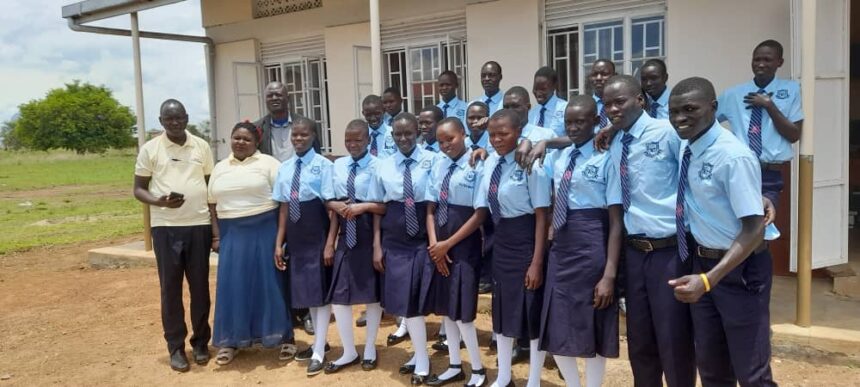
In the semi-arid region, a remarkable success story continues to unfold. Napak Seed School, a government-funded institution, has not only overcome the challenges of its environment but has also become a beacon of hope for the community.
The school’s innovative approach to food production has enabled it to break free from reliance on external aid, and its students are thriving as a result.
Napak Seed School is located in Napak Town Council, Napak district which is one of the 9 districts in the Karamoja sub-region. Other districts are Abim, Amudaat, Kabong, Karenga, Kotido, Moroto, Nabilatuk and Nakapiripirit.
It came into existence in line with the government through the Ministry of Education and Sports to have a secondary school in each sub-county, division or town council.
What Is A Seed School?
A Seed School in Uganda is a government-funded secondary school established to increase access to quality education in underserved areas. The concept was introduced in 2007 when President Yoweri Museveni pledged to build a secondary school in every sub-county as part of the Universal Secondary Education (USE)programme.
The main purpose of Seed Schools
A Shining Example of Self-Sufficiency.
Under the leadership of its visionary headteacher, Daniel Douglas Kaima, Napak Seed School has implemented a sustainable food production model that has ensured food security and contributed to the school’s overall success.
The school’s farm, where students apply innovative farming techniques, including irrigation and weather pattern observation, is a testament to what can be achieved through determination and community engagement.
Breaking Down Barriers.
As Kaima notes, “It was a collective effort that brought about this success. The students, teachers, and the community all played a crucial role in transforming this school into a self-sustaining institution.”
By encouraging students to participate in all activities, including farming and maintenance, Kaima says the school has instilled a sense of responsibility and ownership among its students.
Overcoming Adversity.
Despite the harsh climate, Napak Seed School has thrived, thanks to its innovative approach to farming. “Many people believed that nothing could be done in Karamoja due to the harsh climate,” Kaima recalls.
“…Like they say when life gives you lemons, make lemonade, we saw this as an opportunity to innovate and adapt. Adopting irrigation farming became a game-changer at Napak Seed School…”, the retired long-serving headteacher remarked.
A Model for Success.
As Kaima looks back on his time at Napak Seed School, he is proud of what they’ve achieved. “I believe that our model can be replicated in other schools and communities. We have shown that with the right mindset, determination, and teamwork, anything is possible, even in the most challenging environments.”
A Lasting Legacy.
Kaima’s legacy at Napak Seed School will continue to inspire future generations of students and educators. “I have spent decades in the education sector, and I have seen many schools, but I must say I am overwhelmed with joy and pride knowing that I’ve left behind a powerful legacy,” he says. “To have begun this school from scratch and see it grow into the thriving institution it is today is truly a blessing.”
The Power of Education.
As some great philosophers have always described education as the most powerful weapon which people can use to change the world, Napak Seed School is a shining example of the transformative power of education.
Attributing the Success to Daniel Douglas Kaima.
The success of Napak Seed School can be attributed to the visionary leadership of its former headteacher, Daniel Douglas Kaima. During his tenure, Kaima demonstrated exceptional leadership skills, innovative thinking, and a deep commitment to the school’s mission.
His efforts to sensitise parents, teachers, and students to the importance of self-sufficiency and community engagement paid off, as the school was able to break free from reliance on external food aid and achieve remarkable success.
A Legacy of Excellence.
Under Kaima’s leadership, Napak Seed School became an O and A-level model of excellence in the region, with students excelling in UNEB examinations and extracurricular activities.
The school’s sustainable food production model, which Kayima championed, has been a game-changer, providing students with hands-on experience in farming and food security.
A Well-Deserved Retirement
Now, five months into his retirement, Kayima can look back on his achievements with pride and satisfaction. His dedication to the school and the community has left a lasting legacy, and his contribution to education in Karamoja will be remembered for generations to come.
As he enjoys his well-deserved retirement, Kayima can take comfort in the knowledge that his work has made a real difference in the lives of countless students and the community at large.
The school’s focus on education and community engagement has made a real difference, turning it into a symbol of promise and a driving force for positive change in the region
A Brighter Future
As we reflect on the success of Napak Seed School, we are reminded that even in the most challenging environments, great things can happen.
As a great philosopher, Aristotle, once said, “We are what we repeatedly do. Excellence, then, is not an act, but a habit.” Napak Seed School’s commitment to excellence is a testament to the power of hard work and determination.
As the school continues to thrive, it will remain a shining example of what can be achieved when communities come together to prioritise education and community development.
Kudos to Daniel Douglas Kaima, the visionary headteacher who led the charge, and the entire school community for showing Uganda what’s possible
What You Need To Know:
For context and readers of this article, the question is found in the Bible (John 1:46). The verse is part of a conversation between Philip and Nathanael also known as Bartholomew about Jesus. Philip, who had recently met Jesus tells Nathanael, “We have found the one Moses wrote about in the Law, and about whom the prophets also wrote-Jesus of Nazareth, the son of Joseph”.
Nathanael’s response is “Nazareth! Can anything good come from there?’
In Biblical times, Nazareth was a small, relatively unknown town in Galilee. Many people did not expect anything significant or good to come from Nazareth.
Nathanael’s question reflects the common perception that Nazareth was an unlikely place for someone important or influential to emerge.
Do you have a story in your community or an opinion to share with us: Email us at Submit an Article