By Brian Mugenyi
mugenyijj@gmail.com
MASAKA, UGANDA — Conserving the environment in Africa is a source of generating tourism potential from tourists and it adds to the National Growth Development (GDP).
And this blends well with an African proverb that says, “We do not inherit the earth from our ancestors; we borrow it from our children.”
Few Ugandans embody that wisdom better than Florence Nabalema, a passionate environmental conservationist whose life mission has become protecting nature while empowering communities to embrace cleaner and healthier living.
From the heart of Masaka City, Nabalema since June 2022 has been championing environmental conservation through community mobilisation, sanitation campaigns, youth empowerment initiatives, and practical solutions aimed at addressing growing environmental challenges.
As the founder of Upcountry Outreach for Development (UOD), a community-based organisation dedicated to environmental protection and social transformation in Masaka City, Nabalema has emerged as one of the most determined voices advocating for sustainable development at the grassroots level.
Today, her latest campaign is attracting growing attention across communities: the promotion of reusable baby diapers as a solution to the increasing problem of indiscriminate disposal of disposable diapers in towns, villages, wetlands, drainage channels, rivers, and lakes.
A Growing Environmental Concern
Across Uganda, environmental experts such as Masaka City environmental officer Ms Pauline Nabadda continue to raise concerns about poor waste management practices, particularly the disposal of non-biodegradable products.
Used baby diapers have increasingly become a common sight in public places, drainage systems, and water bodies, posing serious threats to public health and environmental sustainability.
According to Nabalema, the continued dumping of diapers in rivers, lakes, roadsides, and wetlands contributes to pollution, environmental degradation, and the spread of diseases.
“When diapers are carelessly disposed of, they contaminate the environment, block drainage channels, pollute water sources, and create breeding grounds for harmful bacteria,” Nabalema explains.
She believes that promoting reusable diapers can significantly reduce waste while improving household sanitation and hygiene standards.
Empowering Mothers Through Knowledge
One of the foundation’s key interventions has been conducting community sensitisation programmes targeting mothers and caregivers.
During these outreach activities, women are trained on proper use, washing, maintenance, and storage of reusable baby diapers.
The initiative not only promotes environmental conservation but also helps families reduce household expenses associated with purchasing disposable diapers.
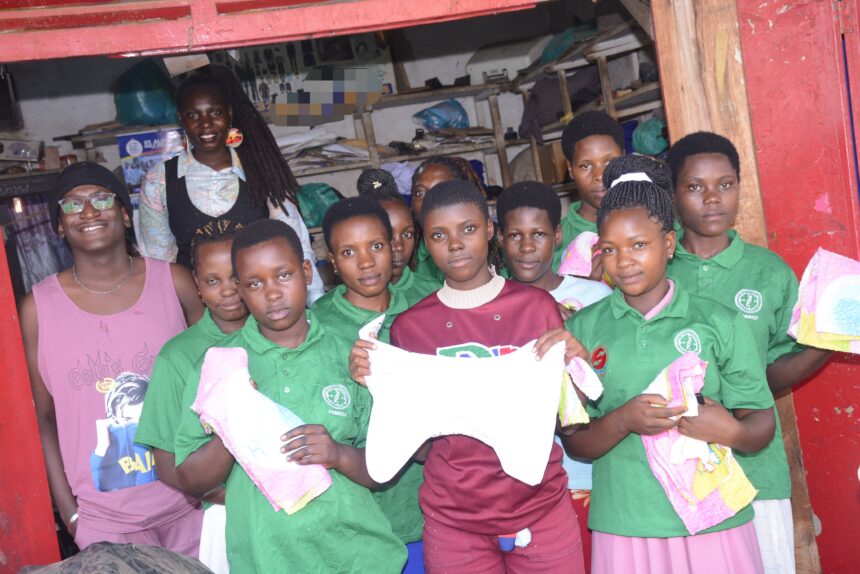
During recent training sessions, mothers gathered to learn practical hygiene practices while sharing experiences on child care and sanitation courtesy of Upcountry outreach for development initiatives.
The sight of smiling mothers carrying healthy babies dressed in reusable diapers has become one of the campaign’s most powerful symbols.
“Happy mothers carrying their babies while using reusable diapers show that communities are beginning to appreciate environmentally friendly solutions,” Nabalema says.
More Than Environmental Conservation
While environmental protection remains at the core of UOFD’s mission, the organisation’s work extends far beyond sanitation campaigns.
For years, Nabalema has actively supported youth empowerment initiatives aimed at helping unemployed young people acquire practical skills for self-employment and economic independence.
Through vocational training programmes, young people are equipped with skills in tailoring, hairdressing, entrepreneurship, and other income-generating activities.
The organisation currently works with a dedicated team of more than twenty young volunteers who support community development activities throughout the region.
Nabalema says many graduates leave school without meaningful employment opportunities, making skills development increasingly important.
“Our goal is not only to protect the environment but also to empower young people to create sustainable livelihoods and contribute positively to their communities,” she notes.
Supporting Vulnerable Mothers
Beyond training and environmental awareness campaigns, UOFD has also undertaken charitable activities aimed at supporting vulnerable mothers and newborn babies.
The organisation has reached out to mothers at Masaka Regional Referral Hospital by providing reusable diapers and hygiene support materials.
These interventions are helping improve maternal and child welfare while promoting responsible waste management practices from the earliest stages of parenthood.
A Call for Greater Support
Nabalema is now calling upon government institutions, development partners, and private sector actors to support community-driven environmental initiatives.
She has specifically appealed to the Ministry of Gender, Labour and Social Development and the Ministry of Local Government to strengthen partnerships with organisations working in environmental conservation and youth empowerment.
According to her, sustainable development can only be achieved when communities are empowered with knowledge, resources, and opportunities.
Building a Cleaner Uganda
As Uganda continues to confront challenges associated with urbanisation, waste management, and environmental degradation, grassroots initiatives such as those spearheaded by Florence Nabalema are becoming increasingly important.
Her work demonstrates that environmental conservation does not always require billion-shilling projects. Sometimes, it begins with changing attitudes, educating communities, and encouraging simple behavioural changes that create lasting impact.
From promoting reusable diapers to mentoring youth and supporting vulnerable mothers, Florence Nabalema is quietly building a movement that places environmental responsibility at the centre of community development.
For many residents in Masaka and beyond, her message is clear: a cleaner Uganda begins with responsible citizens, empowered communities, and leaders willing to protect the environment for future generations.
And as her campaign continues to gain momentum, one thing is certain — Florence Nabalema’s green revolution is giving fresh hope to Uganda’s environmental conservation journey.
According to the Environmental Act and Article 39, every Ugandan has the right to live in a clean, safer and healthy environment.
Under the National objectives directive principles of state policy, environment preservation is more paramount and Ms Nabalema is to be accredited for the initiative
Additionally, it is a general citizen duties, to have protection and preservation of environment as observed in article 245 which instructs the parliament led by Speaker Jacob Oboth Oboth to enact laws for environment and manage it’s suitability from degradation
The state led by President Museveni under his seventh term has the mandate to ensure sustainable development of environment and a call for Ms Nabalema to get support from President Museveni and local government support to spur the environment.
Do you have a story in your community or an opinion to share with us: Email us at Submit an Article