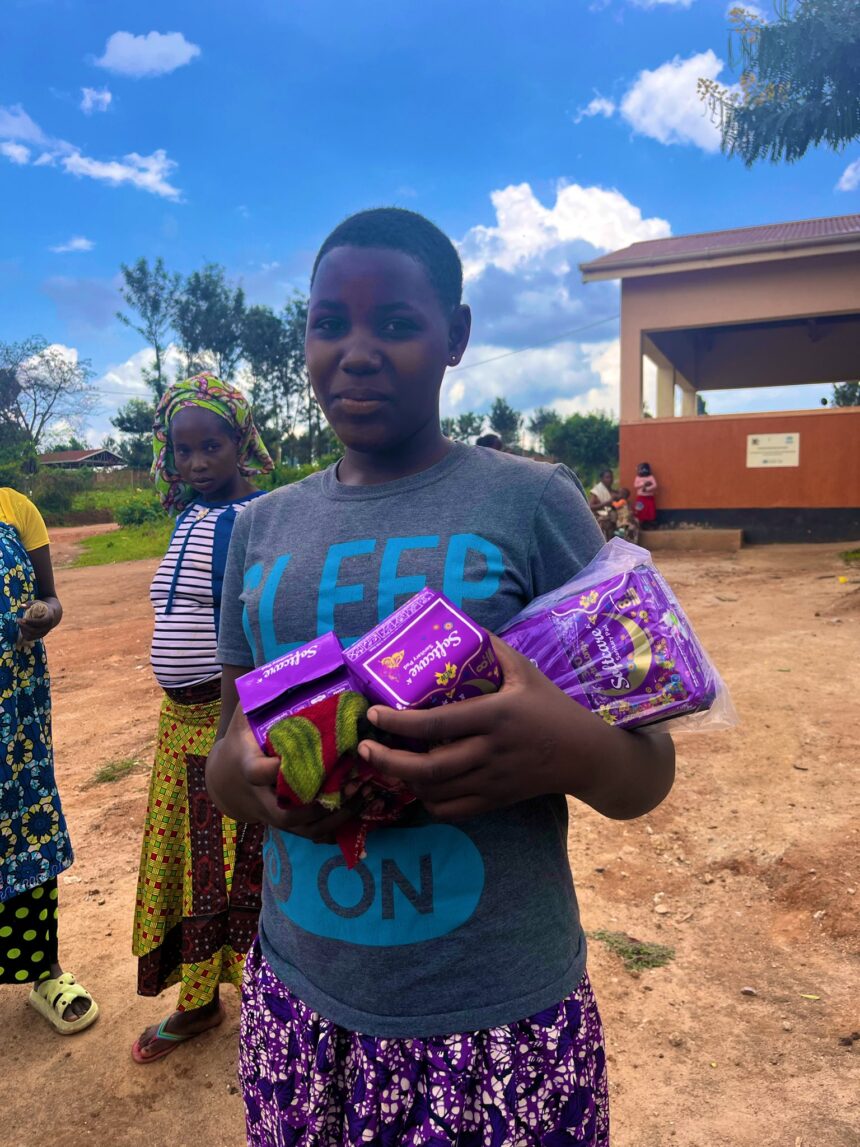
In a crowded classroom in Bukuya, Kassanda District, 14-year-old Suzan felt a sudden warmth between her legs. Her first period had arrived without warning. With no sanitary pad and no private space to manage it, blood stained her uniform as classmates snickered. Humiliated, she ran home — and stayed away from school for weeks.
Suzan’s story mirrors the experience of thousands of Ugandan girls. Across rural and peri-urban communities, menstruation remains a silent but powerful barrier to education.
The Scale of the Problem
Recent research underscores the urgency. A 2025 prospective study involving more than 3,300 secondary school girls in Wakiso and Kalungu districts found that nearly 10–11% miss at least one day of school each month due to menstruation. Earlier Ministry of Education data suggests the situation may be more severe in some communities, with up to 77% of girls missing 2–3 days per cycle — equivalent to roughly 11% of the academic year.
Absenteeism during menstruation can triple overall school absence rates — rising from 7% to 28% in certain areas. Critically, nearly one in four girls aged 12–18 drops out after menarche. Nationally, more than half of pupils who enrol in Primary One do not reach Primary Leaving Examinations, and menstrual-related absenteeism is a significant contributing factor for girls.
Behind these numbers are difficult realities. Many girls resort to improvised materials such as old cloth, tissue, or other unsafe alternatives, increasing the risk of infections and discomfort. Schools often lack private changing facilities, reliable water supply, or safe disposal systems. Teasing from boys and persistent cultural stigma deepen the humiliation.
The result is predictable: falling performance, loss of confidence, and eventual withdrawal from school — reinforcing cycles of poverty and early marriage.
From Recognition to Results
Government has long acknowledged the challenge. The Ministry of Education introduced Menstrual Hygiene Management (MHM) guidelines in 2015, later integrating them into national WASH (Water, Sanitation and Hygiene) frameworks. In 2016, President Museveni pledged free sanitary pads for schoolgirls, raising national expectations.
Civil society initiatives such as the Uganda Red Cross “Keep a Girl in School” programme and partnerships with reusable pad innovators have shown that targeted interventions can reduce absenteeism and restore dignity.
However, implementation has been uneven. Budget constraints, procurement delays, and limited rural reach have left many districts — including areas like Kassanda — without consistent support.
The Pad Promise: A Scalable Solution
Softcare Uganda, one of the country’s leading manufacturers of sanitary pads and hygiene products, offers a practical pathway to bridge the gap.
By producing pads locally — including facilities that support regional distribution — Softcare reduces reliance on costly imports while creating Ugandan jobs. The company has conducted school outreach programmes, distributing reusable pads and providing menstrual hygiene education sessions that address stigma and safe usage.
A structured public-private partnership — provisionally termed “The Pad Promise” — could scale these efforts nationally.
Under such a framework:
Government would procure sanitary pads in bulk from local manufacturers like Softcare at negotiated, subsidised rates.
Every government and low-cost private school would receive menstrual hygiene kits, including pads, underwear, soap, and basic pain relief.
Emergency stocks would be maintained in schools to prevent crisis absenteeism.
Teachers would receive formal MHM training, and menstrual education would be integrated into curricula for both girls and boys to reduce stigma.
Infrastructure improvements — private changing spaces, water access, handwashing stations, and safe disposal systems — would be prioritised in school budgets.
This model aligns with Uganda’s Buy Uganda Build Uganda (BUBU) policy, strengthens domestic manufacturing, and addresses education equity simultaneously.
The Economic and Social Return
Investing in menstrual hygiene is not merely a welfare intervention — it is a development strategy.
Keeping girls in school longer leads to higher lifetime earnings, delayed marriage, improved maternal health outcomes, and increased national productivity. Reducing even two missed days per month significantly improves academic performance and retention rates.
For manufacturers like Softcare, a partnership would expand stable demand while fulfilling corporate social responsibility goals. For government, it would translate policy commitments into measurable impact.
Ensuring Accountability
To succeed, “The Pad Promise” must be accompanied by transparency and monitoring mechanisms. Distribution tracking systems, school-level reporting, and periodic impact assessments should be embedded from the outset. District education officers and school management committees can provide oversight to ensure supplies reach intended beneficiaries.
Community sensitisation campaigns — involving parents, religious leaders, and local media — are equally vital to dismantle stigma and normalise menstruation as a health issue rather than a source of shame.
Turning Promise into Policy
Uganda has the policy frameworks. It has local manufacturing capacity. It has growing evidence of what works.
What remains is coordination and sustained political will.
In places like Bukuya, Kassanda District, empty desks during certain days of the month represent more than absenteeism — they reflect preventable inequality.
A smart alliance between government and local innovators such as Softcare offers a dignified, scalable solution. No girl should have to choose between her education and her biology.
The tools exist. The partnerships are possible.
It is time to turn the Pad Promise into lasting policy — and ensure that girls in Kassanda, and across Uganda, stay in school every day of the month.
Do you have a story in your community or an opinion to share with us: Email us at Submit an Article