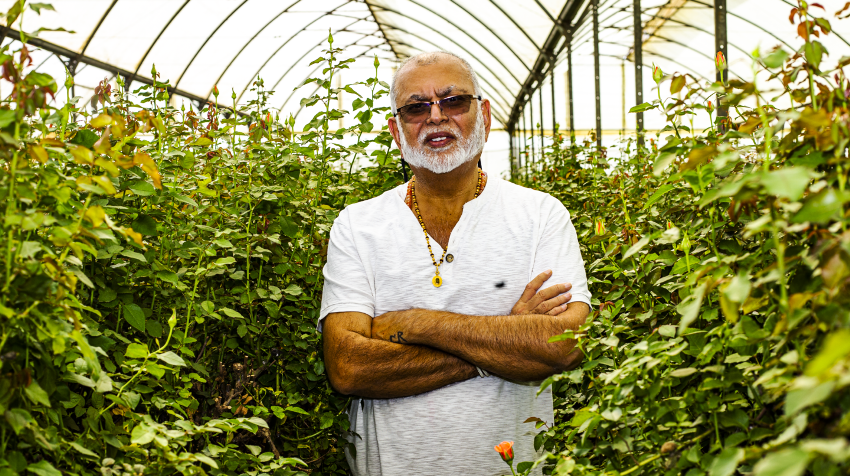
KAMPALA — Recent market reports placing Sudhir Ruparelia among the top individual investors on the Uganda Securities Exchange have reignited debate about the scale — and strategy — of his growing financial footprint. Already synonymous with prime real estate, hospitality, education, and insurance, the development underscores a familiar pattern: when others consolidate, Sudhir compounds.
From downtown arcades to upmarket offices and luxury residences, he has earned a fitting title — Kampala’s Premier Landlord.
But the story behind the label is less about noise and more about philosophy.
Build. Hold. Rarely Sell.
Unlike flashy new-age billionaires who chase valuations, media trends, and rapid exits, Sudhir’s method is rooted in asset permanence. Over three decades, he has steadily acquired prime land, developed it into high-value properties, and retained ownership.
Crane Chambers. Speke Resort Munyonyo. Pearl Business Park. Kingdom Kampala. Kabira Country Club. Speke Apartments. These are not speculative flips. They are long-term holdings designed to generate recurring cashflow.
His strategy reflects a core belief often attributed to him in business circles:
“In a country with unstable systems, land is the safest currency.”
In Uganda’s shifting economic and regulatory landscape, tangible assets offer insulation. Prime real estate in strategic corridors — central business district blocks, diplomatic zones, lakeside hospitality hubs — appreciates steadily while generating rental income.
It is wealth anchored in titles, not hype.
Owning the Address That Matters
Walk through Kampala’s commercial districts and Sudhir’s footprint becomes visible. From the bustling heart of downtown to the polished glass towers hosting multinational offices, his properties define some of the city’s most valuable addresses.
Diplomatic missions lease from his residential portfolio. Corporate tenants occupy his office spaces. International conferences convene at his resorts.
By owning the buildings that house commerce, hospitality, and education, Sudhir controls not just structures, but ecosystems. Rent flows internally across his network of companies. Hotels feed conference facilities. Office blocks support corporate partnerships. Schools generate predictable annual revenue streams.
It is vertical integration without theatrics.
Doubling Down — Even Now
What makes his recent stock market climb significant is timing. At a stage when many tycoons pivot toward preservation, Sudhir appears to be expanding.
Reports that his equity investments have risen to rank among the largest individual portfolios on the Uganda Securities Exchange signal strategic diversification — but with the same long-term lens. Rather than speculative trading, insiders say his approach mirrors his real estate philosophy: accumulate strong counters, hold patiently, harvest dividends.
He does not slow down. He reinvests.
Following high-profile corporate battles in previous years, some analysts predicted a retreat. Instead, expansions continued. Hospitality upgrades progressed. Education campuses grew. Commercial towers advanced. Now, equity stakes are rising.
The pattern is unmistakable: profits are recycled into assets.
The Anti-Hype Billionaire
In an era dominated by tech founders announcing funding rounds and social media-savvy entrepreneurs cultivating personal brands, Sudhir’s style stands apart.
He is, paradoxically, both highly visible and strategically restrained.
His businesses are among the most talked about in Uganda’s media space. His charisma and philanthropy make him a sought-after figure at public events. Yet in day-to-day operations, he is known for controlled messaging and private deal-making. Expansion often begins quietly. Acquisitions surface in filings before headlines.
Where startup billionaires measure success in quarterly growth metrics, Sudhir measures it in decades.
Hunger as Strategy
Observers close to Uganda’s property market note that much of his prime land was secured during periods when others hesitated — in earlier decades when commercial districts were undervalued. That long-view mindset continues to define his moves.
As oil-sector anticipation, infrastructure expansion, and urban population growth reshape Uganda’s economic landscape, land and strong equity positions may become even more decisive.
Sudhir’s response appears consistent: secure strategic positions early, develop deliberately, hold for the long term.
There are risks to any concentrated asset model — liquidity constraints, regulatory exposure, market cycles. But history suggests resilience. Prime land rarely depreciates permanently. Blue-chip equities reward patience. Rental income cushions volatility.
In a business climate that rewards noise and short-term wins, Sudhir Ruparelia’s empire reflects a different doctrine — discipline over drama.
From downtown Kampala’s busy trading arcades to upmarket offices and luxury residences overlooking Lake Victoria, Kampala’s Premier Landlord has built more than structures. He has built permanence.
And as new disclosures highlight his growing stock market position, one conclusion becomes harder to ignore:
While others trend, he compounds.
While others exit, he holds.
While others celebrate headlines, he secures assets.
In Uganda’s evolving economy, staying hungry — and staying invested — may be the ultimate advantage.
Do you have a story in your community or an opinion to share with us: Email us at Submit an Article