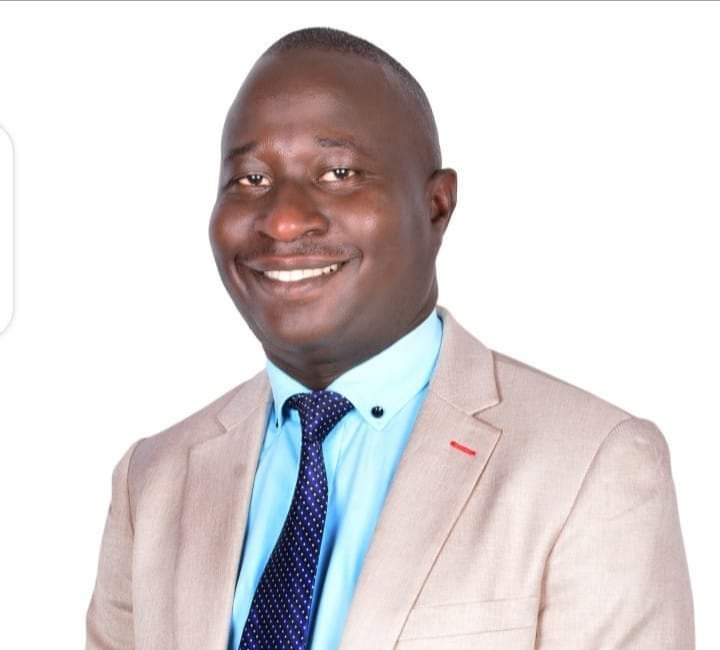
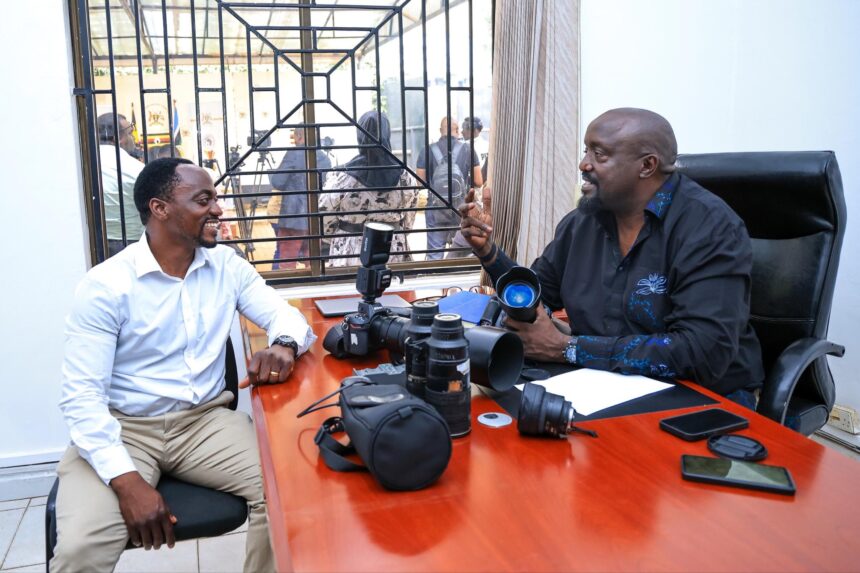
Kampala, Uganda – April 16, 2026: In what could mark a turning point in government communication, Allan Kasujja, the newly appointed Executive Director of the Uganda Media Centre (UMC), has rolled out an ambitious blueprint to redefine how Uganda tells its story to the world.
A seasoned journalist and former BBC broadcaster with over 30 years’ experience, Kasujja assumed office earlier this year following his January 2026 appointment by Yoweri Museveni. He replaces Ofwono Opondo at a time when Uganda is pushing toward its Vision 2040 target of a $500 billion economy.
But Kasujja is not settling into the role quietly. He is, instead, sounding a clear warning: Uganda’s biggest communication failure has been its silence.
“Uganda doesn’t do well when it comes to talking about itself,” Kasujja said in a widely circulated interview that has since stirred debate across media and policy circles. “For a long time, leadership believed the work should speak for itself. But we are saying now — we cannot win in silence.”
From Reactive PR to Strategic Storytelling
Kasujja’s central argument is simple but disruptive: in today’s global information economy, silence is not humility — it is invisibility.
He is pushing for a shift from defensive, reactionary communication to a proactive, structured, and professional storytelling model that deliberately markets Uganda’s achievements.
“This is not public relations,” he stressed during his inauguration. “This is nation-building — and there is a difference.”
Insiders at the Media Centre say the new leadership is already driving a quiet transformation — prioritising credibility, speed, and clarity in government messaging, while embracing digital platforms to expand Uganda’s global reach.
The COVID-19 Lesson Uganda Never Told
To illustrate his point, Kasujja points to Uganda’s handling of COVID-19 — a story he believes the country failed to sell.
While many wealthy nations recorded devastating death tolls despite advanced healthcare systems, Uganda navigated the crisis with comparatively fewer fatalities, relying on pragmatic leadership and hard-earned experience from past public health and crisis management systems.
“That wasn’t luck,” Kasujja argued in his inaugural opinion piece. “It was a considered, experience-driven response.”
He even revealed that during the pandemic, he unsuccessfully pushed for a high-profile BBC interview with President Museveni — a missed opportunity, in his view, to showcase Africa as a source of solutions rather than problems.
Rebranding Uganda, Rebuilding Trust
Under Kasujja, the Uganda Media Centre is undergoing a strategic overhaul aimed at restoring its credibility and repositioning it as a professional communications hub rather than a defensive government mouthpiece.
The focus areas include:
- Strengthening engagement with both local and international media
- Enhancing digital communication and real-time information dissemination
- Building capacity among government spokespersons
- Promoting consistent, fact-based messaging
Observers say his newsroom background could be key in reshaping the Centre’s tone — moving away from combative messaging to a more confident, evidence-driven narrative.
Communication as a Development Tool
Kasujja is also tying communication directly to Uganda’s economic ambitions.
With the country targeting middle-income status and aggressive growth under Vision 2040, he argues that effective storytelling is no longer optional — it is strategic.
From attracting foreign direct investment and boosting tourism to strengthening diplomatic ties, perception now plays a decisive role.
“The western world doesn’t owe us anything,” Kasujja noted. “We must tell our own story.”
It is a message that is already resonating among sections of the public and policy watchers, many of whom see his approach as a long-overdue shift.
A New Chapter for the Media Centre
If successfully implemented, Kasujja’s vision could transform the Uganda Media Centre from a traditional government communication unit into a modern engine of national branding — one that not only responds to criticism but actively shapes Uganda’s global image.
For now, the rhetoric is bold. The expectations are even higher.
Watchdog Uganda will be watching closely to see whether this new communication doctrine translates into measurable impact — or remains another well-articulated vision in Uganda’s long list of reforms.
Do you have a story in your community or an opinion to share with us: Email us at Submit an Article