Inside Bukakata Seed School: A 3.5 Billion Government Project Thriving Amid Neglect, Vandalism and Power Crisis
WRITES BRIAN MUGENYI
mugenyijj@gmail.com
In the rural stretches of Masaka District, along the dusty Lambu landing site road, stands Bukakata Seed Secondary School—a government-funded institution once hailed as a flagship intervention to expand access to secondary education. Built under the directive of Yoweri Kaguta Museveni and supervised by the Ministry of Education and Sports Uganda led by Janet Kataha Museveni, the school reportedly consumed Shs 3.5 billion in taxpayer funds.
More than a decade since its establishment in 2012, an on-ground assessment paints a mixed picture—one of progress in enrollment and access, but also troubling gaps in infrastructure, security, and basic utilities that raise accountability questions.
Growth Against the Odds
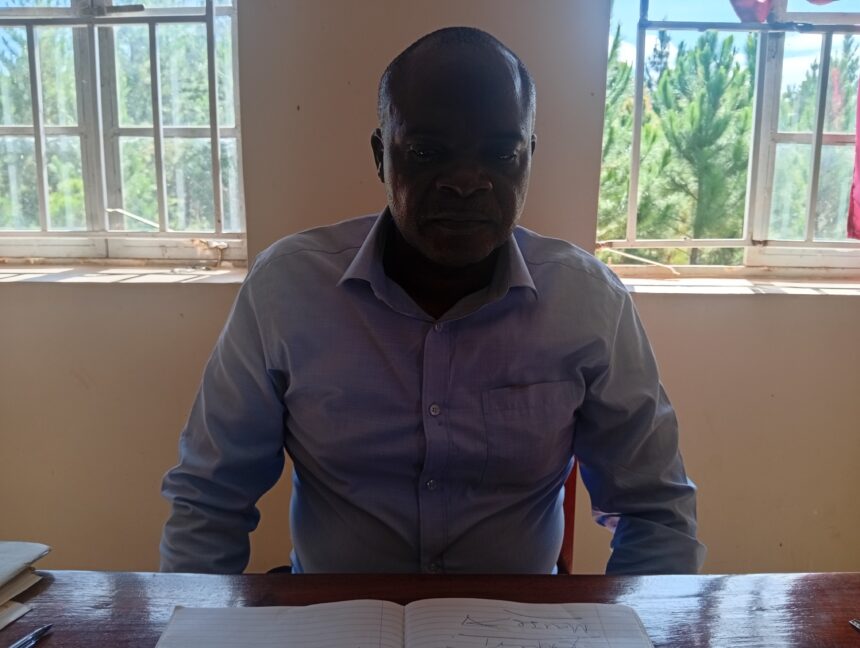
From a modest intake of just 12 students at inception, the school now accommodates over 450 learners drawn from surrounding areas, including island communities like Kalangala District. According to Head Teacher Emmy Kasule, the institution has become a critical education hub, particularly for low-income families who only contribute about Shs 30,000 towards feeding.
This growth suggests the seed school policy is achieving its core objective—bringing affordable education closer to underserved communities. However, the expansion appears to have outpaced investment in essential services.
Electricity Missing in a Modern School
Despite the billions invested, Bukakata Seed School remains without a stable electricity connection—a fundamental requirement for any modern learning environment.
Students reportedly struggle to attend night study sessions, commonly known as “preps,” due to darkness. Teachers, too, face difficult living conditions, often sharing limited housing facilities.
The absence of electricity raises serious concerns about planning and implementation. How does a government-funded secondary school operate for over a decade without power? Who bears responsibility for this oversight?
Security Breaches and Vandalism
Even more alarming are reports of repeated security breaches. The school, lacking a perimeter fence and security personnel, has become vulnerable to criminal activity.
In a recent incident, unknown individuals reportedly broke into the school and vandalized computer equipment—cutting keyboards and damaging processing units. The attack not only disrupted learning but also exposed deeper governance and safety gaps.
Kasule attributes the incident partly to internal conflicts and external hostility, suggesting possible targeted sabotage. However, without formal investigations or police reports made public, these claims remain difficult to independently verify.
Infrastructure Questions Emerge
Further scrutiny reveals structural concerns. Some classroom doors, constructed using plywood, are already deteriorating—raising questions about the quality of work done by contractors.
Additionally, the school faces seasonal water shortages and waterlogging during rainy periods, indicating poor site planning and drainage systems.
Given the initial investment of Shs 3.5 billion, these shortcomings prompt critical questions:
- Were construction standards compromised?
- Was there adequate supervision during implementation?
- Has there been any audit of the project since completion?
Staffing and Policy Gaps
The school currently employs 25 teachers, with 18 on government payroll. While science subjects appear well-staffed, Kasule points to disparities in remuneration, noting that arts teachers remain underpaid and undervalued.
This imbalance reflects broader national policy trends but also affects morale and teaching quality at the school level.
Political Promises vs Reality
During a recent visit on April 8, 2026, Oscar Mutebi—a personal assistant to former Vice President Edward Kiwanuka Ssekandi—pledged to address the school’s pressing challenges, including electricity and fencing.
While such commitments are common during public engagements, residents and school administrators remain cautiously optimistic, having witnessed years of unmet needs.
A Symbol of Promise—and Gaps
Bukakata Seed School embodies both the success and shortcomings of Uganda’s seed school initiative. On one hand, it has expanded access to education and attracted hundreds of learners. On the other, it exposes systemic weaknesses in infrastructure delivery, maintenance, and oversight.
As government continues to roll out similar projects across the country, Bukakata raises an uncomfortable but necessary question:
Is the focus on building more schools overshadowing the need to sustain and secure the ones already in place?
Until electricity is restored, security improved, and infrastructure upgraded, the full promise of this Shs 3.5 billion investment remains only partially fulfilled.
Do you have a story in your community or an opinion to share with us: Email us at Submit an Article