By Andrew M. Mwenda
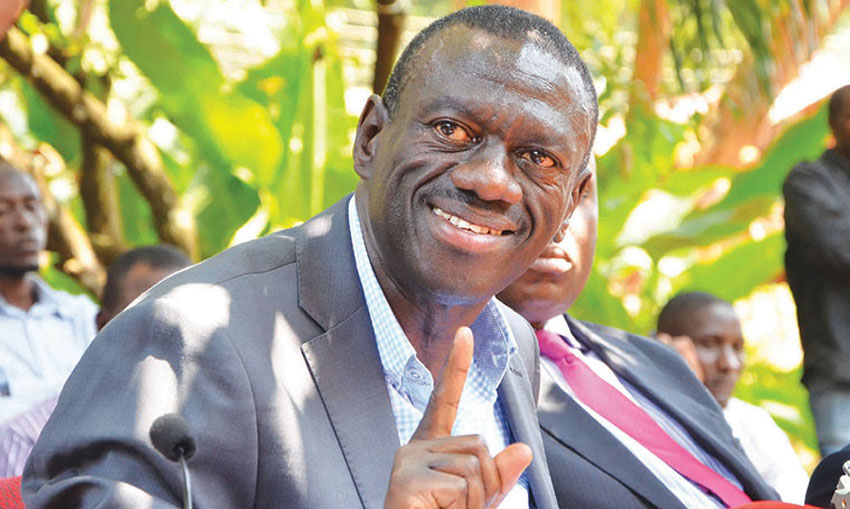
Leading opposition figure, Dr. Kizza Besigye, has said he will not participate in the coming presidential elections because they will not be free and fair – never mind the previous ones were not different. Besigye believes he has won the last four presidential elections against President Yoweri Museveni. In 2001 and 2006 the Supreme Court ruled that there were significant irregularities in the electoral process but they were not sufficient to alter the final outcome. So his claims are valid.
There is a lot of evidence that elections in Uganda are not free and fair. Museveni enjoys all the advantages of incumbency using the state to limit the space within which his opponents can campaign. Long before official campaigns commence, he uses the police to block opposition rallies while at the same time using the resources of the state to campaign under the guise of fighting poverty. He dominates the mass media both state and private. By the time of official campaigns, he has a big head start over his rivals.
The opposition have always faced a tough dilemma: should they participate in a clearly rigged electoral process and thereby legitimize it? Or should they [on principle] boycott the elections and therefore stifle their own voice? Remember elections are the only time the opposition are offered some degree of freedom to articulate their grievances to the electorate. They have always made a trade-off by choosing the freedom to articulate their grievances to the public knowing that doing so legitimizes a rigged electoral process.
Yet many incumbents in Africa have used all tricks Museveni uses and lost. It follows therefore that there is a chance for success. The opposition have to strategize to win an election that is neither free nor fair and where all the decks are stacked against them. They have to turn their apparent weaknesses into strength by look for opportunities for victory in spite of all the roadblocks that are thrown in their way. Because they cannot alter the behaviour of Museveni, they can only improve their performance by addressing their internal weaknesses. That is the only place where they have options.
Yet the idea that Museveni steals their votes and that is why they loose is so deeply entrenched in the mind of leading opposition figures that it has blinded them to the strategic weaknesses in their camp, which make efforts at even minor improvements elusive. For instance, after the 2016 elections, a leading opposition activist wrote a long explanation of how there were many polling stations where voter turnout was 100%. He showed that in all of them Museveni got 90% of the votes and more. This, he concluded, was evidence of rigging – and I agree.
However, if you cannot count what is important, you make what you count important. While 100% voter turnout is clearly evidence of electoral malpractice, it does not necessarily mean that it is such rigging that made Museveni victorious. It could only have added to his vote count. In fact 100% voter turnout at particular polling stations is evidence of overwhelming support for a given candidate, a factor that shows that even without rigging turnout would have been high and the candidate gotten a huge majority.
But let us loot at what is statistically important. There were 28,010 polling stations in the 2016 presidential elections. Of these, 127 reported 100% voter turnout. Total votes cast on these polling stations were 42,627. Museveni got 5,971,872 votes against Besigye who got 3,508,687. Even if we cancelled all votes in these polling stations it would make no significant statistical difference to the outcome.
The real weakness of the opposition can be seen in the number of candidates they field for MPs, LC5, LC3 chairpersons and other local councillors during elections. In 2016, out of 289 directly elected MP slots, FDC fielded only 201. Out of 112 district women MP, FDC fielded only 61. Out of 112 LCV chairpersons, FDC fielded 43. Out of nearly 1,400 directly elected city and district councillors, FDC fielded only 520. Out of 950 city and district female councillors, FDC fielded only 269. Out of 7,000 sub country, municipal and town councillors, FDC fielded only 1,123.
Thus the lower you go on the local councils the less is the presence of opposition candidates. The inability to find leaders at the lowest levels of local government reveals a strategic weakness of the opposition. They are too thin on the ground and therefore cannot rally supporters to turnout and vote. Neither can they have agents at polling stations to stop NRM stuffing ballot boxes. To ignore this fundamental weakness and instead focus on electoral malpractices by the NRM, both real and imagined, as the critical factor causing electoral defeat is to miss opportunities for improvement.
In fact evidence shows that the electoral, especially the polling, process in Uganda has been improving albeit slowly. In 2001, Uganda had 17,269 polling stations. Of these 155 (or 0.8%) had 100% turnout, 90%-plus voter turnout were 2,731 (15.8%). In 2006, we had 19,786 polling stations. Polling stations reporting 100% voter turnout were 128 (or 0.6%), 90%-plus voter turnout were 713 (3.6%). In 2011, Uganda had 23,968 polling stations. Those with 100% voter turnout were 123 (0.5%) and 559 polling stations (2.3%) reported 90%-plus voter turnout. In 2016 Uganda had 28,010 polling stations, 127 (0.4%) reported 100% voter turnout. Only 540 (1.9%) polling stations had 90% voter turnout.
More still, in 2001, 100% voter turnout was in 52 counties, with Nyabushozi and Kazo counties (both in Museveni’s home district of Kiruhura) contributing 18%. In 2006, it was in 42 counties, Kiruhura contributed 33%. In 2011, it was in 31 counties with Kiruhura contributing 37%. In 2016, polling stations reporting 100% voter turnout were in only 22 counties with Kiruhura making 47%. These figures show that Museveni’s ability to rig is shrinking to a narrow area of his Bahima ethnic kin in his district plus Nakaseke, which is a part of the cattle corridor. Meanwhile Besigye’s votes have become more generalized across the whole country, after he lost his base in northern Uganda.
Besigye’s (and the opposition’s) biggest loss was an ethnic base in northern Uganda. The war in northern Uganda had made people there, especially the Acholi, hostile to Museveni/NRM. In 2001, for example, there were 1,596 polling stations where voter turnout was over 80% and Besigye got over 90% of the vote at each one of them. Those with over 90% voter turnout were 1,024 and Besigye got over 95% of the vote on each one of them. All of these polling stations were in northern Uganda. Clearly, the opposition were rigging Museveni in these areas because of their overwhelming strength, a factor the president told me several times and I dismissed until I did this statistical study.
Indeed, one can see the effects of the aforementioned loss of the northern base on the number of polling stations having 80% or even 90% voter turnout in subsequent elections. In 2011, polling stations with over 80% voter turnout where Besigye got over 90% of the vote were only 134 – down from 1,596 in 2001 and 1,509 on 2006. Thus, without a strong ethnic-block base, Besigye (and the opposition’s) ability to rig against Museveni was significantly diminished. However Besigye’s support has grown but in a manner that does not allow for good electoral performance.
Again when you look at polling statistics and opinion polls, the opposition (especially Besigye) have their highest support in urban areas. These people’s support is based on economic grievances as opposed to ethnic or religious sentiment. As a result they are not very loyal. This is because their grievances being based on survival can be addressed by working with, instead of working against, the state. And worse still, they do not turnout in large numbers to vote – hence perennially low voter turnout in urban areas.
The lesson from the foregoing is that rigging favours the strong. The opposition is thin on the ground because it is weak, so it cannot rally its actual and potential support to turnout and vote. To make a bad situation worse, this thinness on the ground also allows NRM to stuff ballot boxes where it is strong. However, it also means NRM would win even without rigging. Worse still, the opposition’s base has no strong sentiment (religious or ethnic) for their cause, so their turnout is low (40% and below), not enough to compensate for high turnout in Museveni’s rural base. And they can easily be bribed by the state to change sides or remain home.
Do you have a story in your community or an opinion to share with us: Email us at Submit an Article