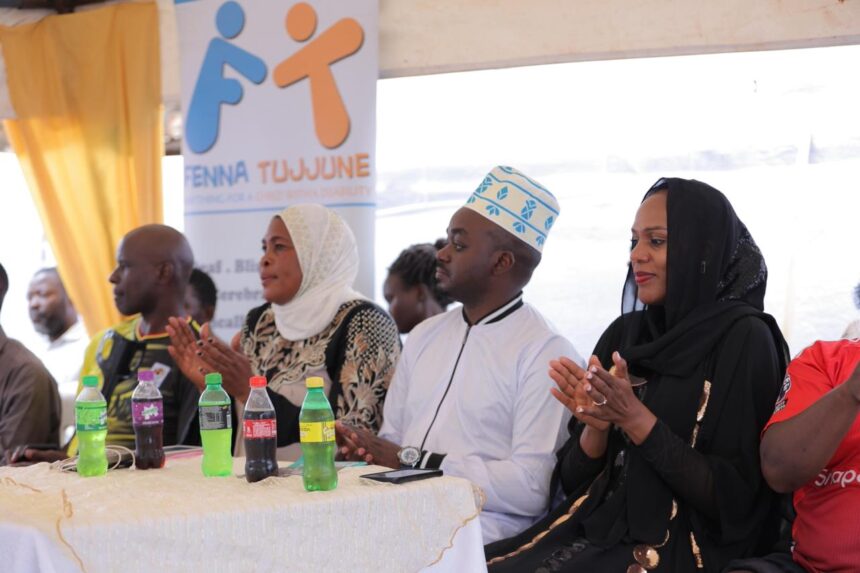
Persons with disabilities in Nansana marked Eid al-Fitr with renewed calls for inclusion and economic empowerment, as Fenna Tujjune, an organisation supporting vulnerable communities, highlighted both progress and persistent challenges facing the group.
Speaking during Eid celebrations in Nansana East Zone 2A, the Founder and Chief Executive Officer of Fenna Tujjune, Ramonah Sarah Olunda, said the organisation has shifted from advocacy to practical interventions aimed at improving livelihoods for persons with disabilities.
“We started with advocacy, but now we are acting,” Olunda said. “We are acting on what we advocated for, social inclusion. We want to see a generation of persons with disabilities who are self-sufficient, able to meet their basic needs like food, medication, and shelter, instead of relying on handouts.”
Fenna Tujjune runs several income-generating projects designed to equip persons with disabilities with practical skills and employment opportunities. Among these is the production of hot boxes, made exclusively by mothers with disabilities, which are then sold to generate income.
For men, the organisation has introduced the assembly of panda cookers—clean energy stoves used in schools—providing another avenue for sustainable earnings.
Olunda noted that these initiatives are aimed at demonstrating the capabilities of persons with disabilities, who are often underestimated despite their talents.
“People here are very talented, but they are often seen as charity cases. Given a chance, they can earn their own living and contribute meaningfully to society,” she said.
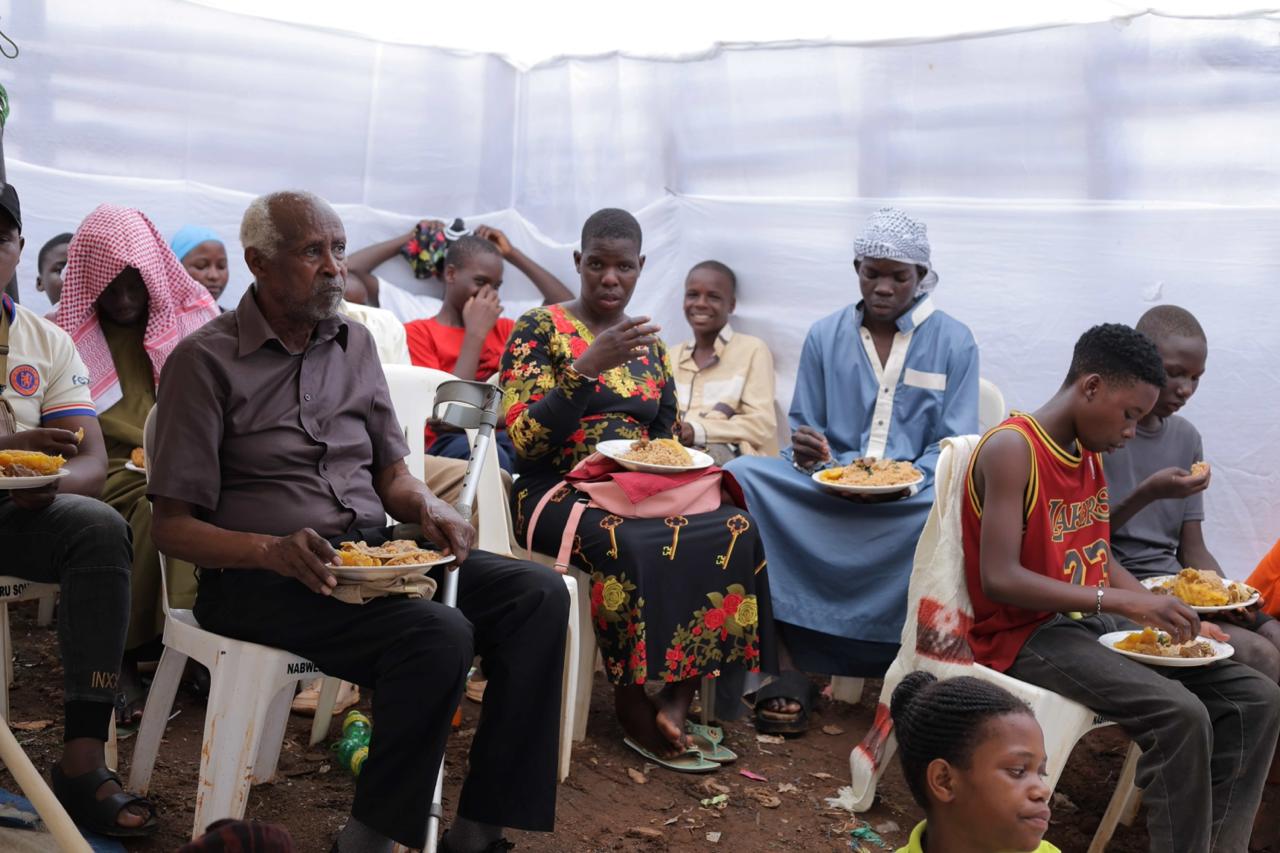
The Eid celebrations, which brought together Muslims with disabilities from the area, marked the culmination of a month-long engagement during Ramadan. According to Olunda, the organisation managed to mobilise resources to feed at least 130 people.
“We have been with them from the beginning of Ramadan to the end. God has been with us, and we were able to raise funds to support them,” she said, expressing hope that future events will reach even more beneficiaries across areas such as Katanga and Kalerwe.
However, she pointed out that limited funding continues to constrain the organisation’s outreach, calling on the Muslim community, government, and the Ministry of Gender to provide support.
A major concern raised during the event was the issue of accessibility. Olunda highlighted that many persons with disabilities in slum areas struggle to access essential services, including places of worship, schools, and healthcare facilities.
“Even leaving their homes to reach the main road is a challenge. Some move on the ground because they lack wheelchairs,” she said. “Not all hospitals are accessible, and those who use sign language often cannot get interpreters.”
She also decried the high cost of mobility aids, noting that wheelchairs can cost between Shs800,000 and Shs1 million, largely due to taxes.
“We import wheelchairs and still pay taxes, even as an NGO. This makes it difficult to provide them freely or at affordable prices,” she said, urging government intervention to reduce costs and improve access to assistive devices.
Olunda also encouraged persons with disabilities to actively seek inclusion and assert their capabilities.
“Let’s go out and claim our space. Some people are willing to include us, but they don’t know what we can do. We need to show them,” she said, adding that begging should not be seen as the only option.
The event was attended by Robert Sewagudde, the National Member of Parliament representing persons with disabilities, who commended Fenna Tujjune for its efforts.
“I thank Fenna Tujjune for this recommendable work of inclusion, ensuring that persons with disabilities can also smile on such a day,” Sewagudde said.
He emphasised that many persons with disabilities, particularly within the Muslim community, continue to face significant barriers, including limited access to education and employment opportunities.
“Some children with disabilities are denied education due to poverty or negative attitudes from parents who see them as a misfortune,” he noted.
Sewagudde further challenged employers to embrace inclusivity, stressing that disability does not equate to inability.
“If given equal opportunities in education and employment, persons with disabilities can become productive members of society and contribute to national development,” he said.
He added that modern communication tools have made it easier to integrate individuals with certain disabilities into the workforce, citing examples such as deaf persons effectively using digital platforms like email.
As celebrations concluded, stakeholders reiterated the need for collective action to address systemic barriers and ensure that persons with disabilities are not left behind in Uganda’s development agenda.
Do you have a story in your community or an opinion to share with us: Email us at Submit an Article