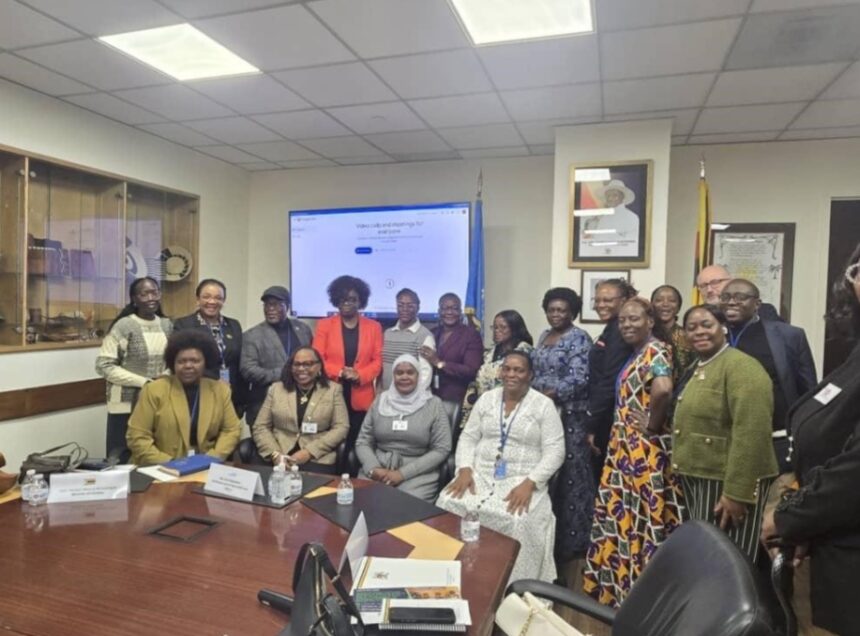
Uganda government officials, development partners, Justice Sector leaders and Civil Society Organizations have explored practical solutions for ensuring that justice systems are responsive, inclusive and survivor-centred.
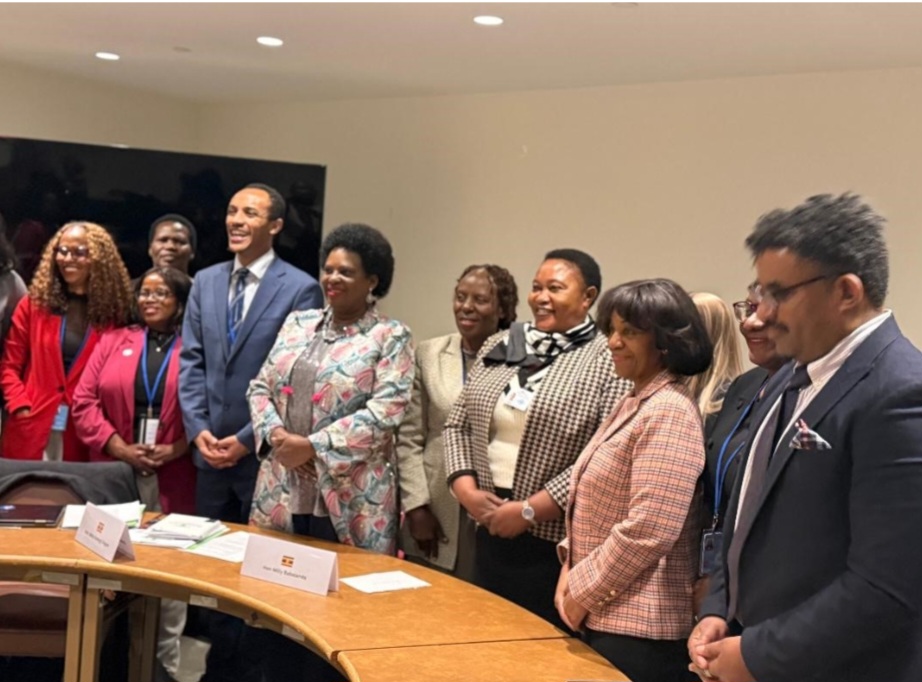
This was during a high-level sideline meeting at the 70th session of the Commission on the Status of Women (CSW70) in New York, USA. The meeting which ran under the theme: “Justice Without Delay: Transforming Justice Systems for Survivors of Gender-Based Violence in Uganda”, was convened at the Permanent Mission of Uganda to the United Nations in New York City on 12th March, 2026.
Discussions were anchored in the CSW70 priority theme of strengthening equitable legal systems and removing structural barriers that prevent women and girls from accessing justice.
The Ugandan delegation was led by the Rt. Hon. Rukia Isanga Nakadama- Third Deputy Prime Minister and Minister without Portfolio, and included Hon. Babirye Milly Babalanda, Minister for the Presidency; Hon. Peace Mutuuzo, Minister of State for Gender, Labour and Social Development; Ms. Zaminah Malole, Secretary of the Presidential Awards Committee; Hon. Sarah Opendi and Hon. Flavia Kabahenda. The delegation also included senior government officials such as Ms. Catherine Nassuna, Under Secretary at the Ministry of Water and Environment and Ms. Angela Nakafeero, Commissioner at the Ministry of Gender, Labour and Social Development, alongside other senior officials and representatives from civil society organizations.
The session was moderated by Ms. Nakafeero and key speakers included Wakooli Samali from the Office of the Director of Public Prosecutions in Uganda, Najjemba Lydia Wasula, Principal Probation Officer at the Ministry of Gender, Labour and Social Development, Irene Ekonga representing FIDA Uganda, and Vimbai Nyemba, Permanent Secretary in the Ministry of Justice, Legal and Parliamentary Affairs of Zimbabwe. Representatives from UN Women and United Nations Population Fund (UNFPA) also participated, reflecting the strong partnership between governments, the United Nations and civil society in advancing gender-responsive justice systems.
Uganda’s justice sector shared lessons from its sector-wide approach to addressing GBV cases, which emphasizes coordination across institutions and a shared reporting framework.
By establishing minimum standards for institutions in handling GBV cases, the system seeks to ensure that survivors can report incidents safely and that cases are processed efficiently minimizing delays.
Speakers emphasized that justice institutions from the Police to prosecutors and the judiciary must work in a coordinated manner to strengthen the entire justice chain and improve outcomes for survivors.
An essential part of this approach is the role played by Probation and Social Welfare Officers, who provide vital social support within the justice process. These officers conduct Community Impact Assessments and Victim Impact Assessments, helping courts understand the broader consequences of violence on individuals and communities. They also provide one-on-one psychosocial support, particularly to children who may not have trusted individuals to confide in. This survivor-centred support helps ensure that victims are not only heard within the justice system but also supported emotionally and socially during the legal process.
Panelists also highlighted the continued need to strengthen collaboration between government institutions and civil society.
Insights from FIDA Uganda underscored that while progress has been made, there remains significant work in improving coordination, strengthening institutional mandates and expanding legal aid and survivor support services.
Comparative reflections from Zimbabwe emphasized the importance of legal frameworks such as the country’s Legal Aid law, as well as the need for rehabilitation programs for perpetrators and proper reintegration support for survivors after resettlement.
In her closing remarks, Rt. Hon. Nakadama, Rt. Hon, reaffirmed the government’s commitment to strengthening justice systems that protect women and girls. She emphasized that justice must be timely, accessible, and centred on survivors, noting that delayed justice often denies victims the protection and dignity they deserve.
The Deputy Prime Minister called for sustained political will, stronger partnerships between governments and development partners and increased investment in initiatives that improve access to justice.
Her remarks concluded with a powerful reminder to participants: “No victim should suffer in silence, and collective action is essential to ensure that every woman and girl can seek and obtain justice without delay.”
Do you have a story in your community or an opinion to share with us: Email us at Submit an Article