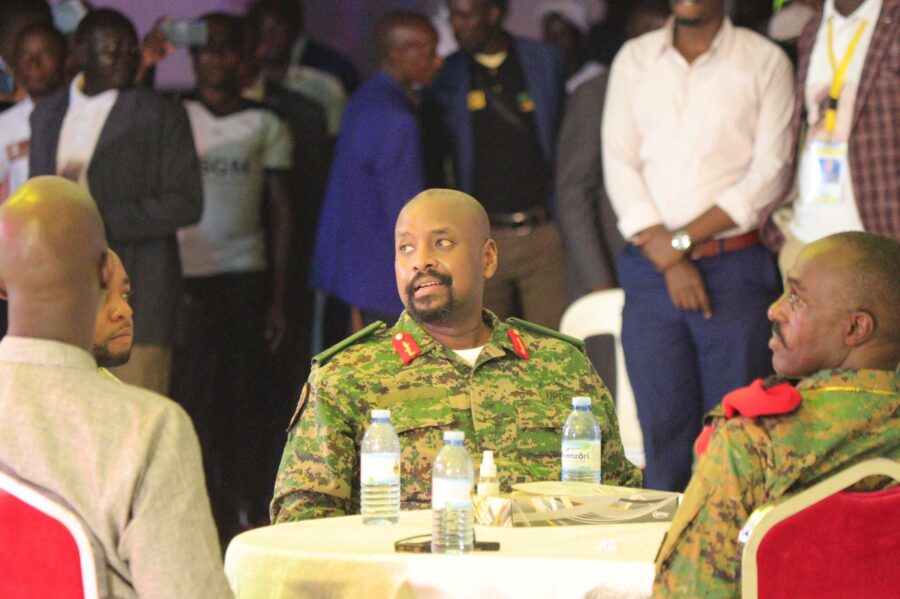
Uganda’s Chief of Defence Forces (CDF), Muhoozi Kainerugaba, has urged the public to treat his social media posts “with a pinch of salt,” in remarks widely interpreted as an attempt to tone down escalating political debate surrounding succession and his perceived presidential ambitions.
Posting on X (formerly Twitter) on Sunday, Gen Muhoozi appeared to respond to recent criticism from Internal Affairs Minister Kahinda Otafiire, who publicly distanced himself from the idea of a Muhoozi presidency.
“Someone said he doesn’t want me to be President after my father. First of all, I would advise everyone to take my tweets with a pinch of salt. I said I would stand in 2026, where was I on the ballot? And if anyone uses my unserious tweets against me it will become a very serious problem for them,” the CDF wrote.
The statement quickly sparked intense debate online, drawing reactions from supporters and critics alike, and reigniting long-standing discussions about Uganda’s political transition and the role of the First Family in national politics.
Otafiire’s Remarks
Gen Muhoozi’s clarification follows comments made days earlier by Minister Otafiire. A historical member of the ruling National Resistance Movement (NRM) and veteran of the bush war, Otafiire was categorical in separating personal relations from political principle.
“People say I hate Muhoozi, the president’s son. No, I hate a Muhoozi presidency,” Otafiire reportedly told supporters, arguing that leadership should not be inherited by virtue of family lineage. He added that any Ugandan seeking the presidency should subject themselves to open democratic contestation rather than rely on perceived dynastic entitlement.
Otafiire’s comments were widely circulated across local media platforms and social networks, triggering a wave of reactions from supporters Gen Muhoozi popularly known as “MK Movement” or “PLU”, a political pressure group associated with Gen Muhoozi’s mobilization efforts in recent years.
A History of Provocative Posts
Gen Muhoozi’s social media activity has long attracted both domestic and international attention. Over the past few years, some of his posts have touched on sensitive geopolitical matters, military affairs, and presidential ambitions — occasionally prompting clarification from government officials.
In 2023, he declared on social media that he would contest the 2026 presidential elections. However, when the country went to the polls earlier this year, his name did not appear on the ballot. By referencing this in his latest post, the CDF appears to suggest that not all his online statements should be interpreted as official policy positions or binding political commitments.
Political observers say the latest remarks may represent an effort to recalibrate public perception of his digital persona.
“By calling his own tweets ‘unserious,’ he is reframing the narrative,” noted a Kampala-based analyst who preferred anonymity due to the sensitivity of the matter. “It creates ambiguity — reducing immediate political pressure while leaving future possibilities open.”
Supporters Rally, Critics Question Consistency
Among his supporters, the response was swift and enthusiastic. Allies within mobilization structures linked to the Patriotic League of Uganda (PLU) reiterated their confidence in Gen Muhoozi’s future political prospects, with some projecting a potential run in 2031 instead.
Others framed Otafiire’s comments as reflective of internal ideological differences within the NRM rather than outright hostility.
Critics, however, questioned the consistency of describing statements as “unserious” after years of bold and sometimes controversial declarations. Some social media users argued that public figures — particularly those holding high military office — bear responsibility for the national and international implications of their words, whether intended as banter or not.
Broader Succession Conversation
The exchange underscores broader conversations within Uganda’s political landscape regarding succession planning and institutional stability.
President Yoweri Museveni, now in his fourth decade at the helm following his re-election in January 2026, has faced recurring questions about transition and legacy. While the President has consistently emphasized constitutional processes and electoral legitimacy, speculation about potential successors — including his son — has persisted in public discourse.
Within the NRM, opinions appear to vary. Some members stress continuity and stability, while others advocate for clearer separation between family ties and state leadership to strengthen democratic credentials.
For Gen Muhoozi, the balancing act between military leadership and perceived political ambition remains delicate. As CDF, he occupies one of the most powerful security positions in the country. At the same time, his public profile, mobilization networks, and outspoken online presence have kept him central to conversations about Uganda’s political future.
What Next?
Whether Gen Muhoozi’s latest clarification will cool tensions or merely add another layer to an already complex succession debate remains to be seen. What is clear is that social media continues to play a significant role in shaping national political narratives — sometimes blurring the lines between personal expression, strategic messaging, and statecraft.
As Uganda navigates the post-2026 electoral environment, the intersection of loyalty, ambition, and constitutional order remains a defining feature of the national conversation.
Watchdog Uganda will continue to follow developments surrounding this story and the evolving dynamics within the ruling party and the broader political arena.
Do you have a story in your community or an opinion to share with us: Email us at Submit an Article