Sign In
  • UGANDA
  • AFRICA
  • WORLD
watchdog uganda logo
Submit an Article
  • Home
  • News
    • National
    • Politics
    • World News
    • Media Outreach Newswire
    • Africa News
    • Tourism
    • Community News
    • Luganda
    • Sports
      • Football
      • Motorsport
  • Op-Ed
    • #Out2Lunch
    • Conversations with
    • Politics
    • Relationships
  • Business
    • Agriculture
    • CEOs & Entrepreneurs,
    • Companies
    • Finance
    • Products
    • RealEstate
    • Technology
  • Entertainment
    • Lifestyle
  • People
    • Showbiz
      • Salon Mag
  • Special Report
    • Education
    • Voices
  • Reviews
    • Products
    • Events
    • Hotels
    • Restaurants
    • Places
  • Forums
  • Donate
  • China News

Archives

  • March 2026
  • February 2026
  • January 2026
  • December 2025
  • November 2025
  • October 2025
  • September 2025
  • August 2025
  • July 2025
  • June 2025
  • May 2025
  • April 2025
  • March 2025
  • February 2025
  • January 2025
  • December 2024
  • November 2024
  • October 2024
  • September 2024
  • August 2024
  • July 2024
  • June 2024
  • May 2024
  • April 2024
  • March 2024
  • February 2024
  • January 2024
  • December 2023
  • November 2023
  • October 2023
  • September 2023
  • August 2023
  • July 2023
  • June 2023
  • May 2023
  • April 2023
  • March 2023
  • February 2023
  • January 2023
  • December 2022
  • November 2022
  • October 2022
  • September 2022
  • August 2022
  • July 2022
  • June 2022
  • May 2022
  • April 2022
  • March 2022
  • February 2022
  • January 2022
  • December 2021
  • November 2021
  • October 2021
  • September 2021
  • August 2021
  • July 2021
  • June 2021
  • May 2021
  • April 2021
  • March 2021
  • February 2021
  • January 2021
  • December 2020
  • November 2020
  • October 2020
  • September 2020
  • August 2020
  • July 2020
  • June 2020
  • May 2020
  • April 2020
  • March 2020
  • February 2020
  • January 2020
  • December 2019
  • November 2019
  • October 2019
  • September 2019
  • August 2019
  • July 2019
  • June 2019
  • May 2019
  • April 2019
  • March 2019
  • February 2019
  • January 2019
  • December 2018
  • November 2018
  • October 2018
  • September 2018
  • August 2018
  • July 2018
  • June 2018
  • May 2018
  • April 2018
  • March 2018
  • February 2018
  • January 2018
  • December 2017
  • November 2017
  • October 2017
  • September 2017
  • August 2017
  • July 2017
  • June 2017
  • May 2017
  • April 2017
  • March 2017
  • February 2017
  • January 2017
  • November 2016
  • October 2016
  • September 2016
  • August 2016
  • July 2016
  • September 2015
  • April 2014
  • June 2013

Categories

  • #Out2Lunch
  • Agriculture
  • Big Brother Naija Dairy
  • Business
  • CEOs & Entrepreneurs,
  • China News
  • Community News
  • Companies
  • Conversations with
  • Court
  • culture
  • Deplomacy
  • Education
  • Education
  • Entertainment
  • Entrepreneurs
  • Events
  • Fashion
  • Finance
  • Football
  • Gadgets
  • Health
  • Hotels
  • Innovation
  • Lifestyle
  • Luganda
  • Motorsport
  • National
  • News
  • Op-Ed
  • Opinion
  • People
  • Photography
  • Photos
  • Places
  • Politicians
  • Politics
  • Politics
  • Products
  • Products
  • RealEstate
  • Relationships
  • religion
  • Reports
  • Restaurants
  • Reviews
  • Salon Magazine
  • Showbiz
  • Special Report
  • Sports
  • Stars
  • Technology
  • Tourism
  • Travel
  • Traveler
  • Trips
  • Video
  • Voices
  • World
  • World News
Reading: Parliamentary walkouts: The origin of MPs’ form of protest 
Share
Watchdog UgandaWatchdog Uganda
Font ResizerAa
  • Home
  • News
  • Op-Ed
  • Business
  • Entertainment
  • People
  • Special Report
  • Reviews
  • Forums
  • Donate
  • China News
Search
  • Home
  • News
    • National
    • Politics
    • World News
    • Media Outreach Newswire
    • Africa News
    • Tourism
    • Community News
    • Luganda
    • Sports
  • Op-Ed
    • #Out2Lunch
    • Conversations with
    • Politics
    • Relationships
  • Business
    • Agriculture
    • CEOs & Entrepreneurs,
    • Companies
    • Finance
    • Products
    • RealEstate
    • Technology
  • Entertainment
    • Lifestyle
  • People
    • Showbiz
  • Special Report
    • Education
    • Voices
  • Reviews
    • Products
    • Events
    • Hotels
    • Restaurants
    • Places
  • Forums
  • Donate
  • China News
Have an existing account? Sign In
Follow US
© 2026 Watchdog Uganda. Ruby Design Compan. All Rights Reserved.
NewsPolitics

Parliamentary walkouts: The origin of MPs’ form of protest 

Stephen Kalema
Stephen Kalema
Share
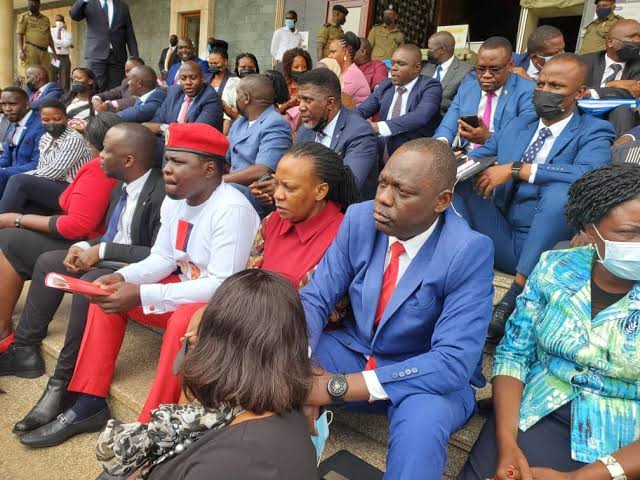
Opposition MPs walked out of Parliament in protest in 2023
SHARE

Over the past two weeks, Uganda’s Parliament has resembled a battleground, with lawmakers from both the ruling party and the opposition engaged in fierce clashes. The climax of this confrontation led the opposition members in Parliament to take a bold step – a boycott of plenary sittings.

According to their leader, Mathias Mpuuga, this protest action will continue until the government provides a conclusive and satisfactory statement regarding the abductions and killing of Ugandans allegedly by state security agents.

In response to the opposition’s boycott, some members of the ruling regime, including Prime Minister Robinah Nabbanja and Minister of ICT and National Guidance Dr Chris Baryomunsi, have labelled the walkout as a typical opposition tactic to overthrow the government or a daily performance aimed at capturing public attention.

However, it’s essential to recognize that walking out of Parliament as a form of protest has a long history that spans centuries. It is a political tradition for expressing dissatisfaction with prevailing matters and a means of drawing attention, rather than a mere comedy skit as some members of the ruling regime have termed it.

The practice of parliamentary walkouts in Uganda dates back to the country’s post-independence era. The first recorded instance occurred on August 24, 1964, when Members of the National Assembly from the Kabaka Yekka party staged a walkout. They left the August House in protest against the inclusion of the first reading of a referendum on Bunyoro’s lost counties on the order paper because the then Executive Prime Minister Apollo Milton Obote wanted to use it to weaken Buganda and the then President Sir Edward Muteesa II.

The second notable occurrence took place when the legislators from the Uganda People’s Congress proposed an extension of the state of emergency in Buganda. This decision was made following the Nankulabye Massacre on November 10, 1964, and the tragic killing of 12 Kisubi St. Mary students by an army truck on November 14 of the same year.

The incidents had incited a wave of protest in Buganda, prompting calls for the central government to declare a state of emergency. The state of emergency, however, continued to be extended until 1966, sparking further walkouts. Since Obote had started using it as a weapon to weaken Buganda.

Since then, Uganda has witnessed a consistent pattern of parliamentary walkouts, particularly by opposition members of Parliament. This political culture has persisted under the leadership of President Yoweri Kaguta Museveni, who has presided over a dynamic political landscape where parliamentary walkouts serve as a vital means of expressing dissent and seeking attention to pressing national issues.

However, where did it come from?

The act of walking out of a parliamentary session as a form of protest has been a potent and symbolic means of expressing dissent by lawmakers for centuries.

Throughout history, this practice has left an indelible mark on political landscapes, signifying pivotal moments of defiance, resistance, and societal transformation.

In this article, we will delve into the intriguing origins of parliamentary walkouts, dissecting the historical context and motivations that have underpinned this method of protest. From its roots in ancient assemblies to its resonance in contemporary seats of power, the narrative of walking out of Parliament weaves a vivid tapestry of political activism.

The Historical Roots of Parliamentary Walkouts

The roots of parliamentary walkouts can be traced back to ancient times when assemblies and councils were the crucibles of early democracy. In the 400AD the Roman Republic, for instance, Senators would express their dissent by walking out of the Senate chamber to halt proceedings—a move known as “ex-cedendo” (literally, “to depart”). Their absences often had the power to disrupt legislative decisions and draw attention to contentious issues.

As parliamentary systems evolved over the centuries, specifically in 1188, so did the practice of walking out. During the English Civil War in the 17th century, for instance, Members of Parliament (MPs) who opposed the Crown would physically leave the chamber to protest against royal decrees or acts of tyranny. These walkouts were often part of broader political movements that aimed to safeguard individual liberties and challenge monarchical authority.

In the early days of the United States, the Continental Congress saw walkouts by representatives from various states who couldn’t reach a consensus on issues such as taxation and representation. These divisions ultimately led to the American Revolution and the birth of a new nation.

The United Kingdom has a long history of parliamentary walkouts, often as a means for members of Parliament (MPs) to express their dissent or opposition to government policies. Notable examples include:

Suffragette Movement: In the early 20th century, suffragettes, who were advocating for women’s right to vote, engaged in disruptive tactics, including walking out of Parliament and chaining themselves to railings to draw attention to their cause.

Miners’ Strikes: During the 1984-85 miners’ strike, many Labour MPs walked out in protest against the government’s handling of the situation.

India is also another country whose politicians have been using this kind of protest. Since its independence in 1947, the Indian Parliament has witnessed numerous walkouts. These are often initiated by opposition parties to voice their disagreement with government policies or actions. Walkouts are common during contentious debates and legislative sessions.

South Africa’s Parliament also has a history of walkouts, particularly during the apartheid era. Opposition parties and activists frequently walked out to protest against apartheid policies and to draw international attention to the injustices in the country.

African and Asian Independence Movements also sparked walkouts, especially during the mid-20th century, parliamentary walkouts were a common tactic in many African and Asian countries seeking independence from colonial rule. Political leaders used walkouts to express their grievances and press for self-determination.

We must also note that Parliamentary walkouts are not limited to national legislatures. They have occurred in international forums, such as the United Nations. Representatives from various countries have walked out during sessions or speeches to protest against particular issues or actions.

For Example, in recent years, parliamentary walkouts have been used globally to address issues such as climate change, gender equality, human rights, and more. Legislators often use walkouts as a way to attract media attention and create public awareness of their causes.

Therefore, today the tradition of walking out of Parliament as a form of protest has transcended borders. It has become a globally recognized method for lawmakers to express dissent, protect human rights, and champion various social and political causes.

Whether it’s a political or environmental campaigner in contemporary legislatures, the act of walking out continues to be a compelling means of challenging the status quo and asserting the power of protest within democratic systems.


Do you have a story in your community or an opinion to share with us: Email us at Submit an Article

Subscribe to Our Newsletter
Subscribe to our newsletter to get our newest articles instantly!
TAGGED:oppositionParliamentary walkoutsuganda
Share This Article
Facebook Whatsapp Whatsapp Email Copy Link
ByStephen Kalema
Follow:
Stephen Kalema is a reporter at watchdog Uganda, passionate at writing about politics, crimes, health issues, tourism and business. You can reach Stephen on Email skstephenacts759@gmail.com, Tel.+256706644951, twitter:@stephenkalema6, Facebook: Kalema Stephen.
Previous Article Kabale Teacher Remanded over Defilement of 17-Year-Old Pupil
Next Article RDC refuses to commission maternity ward

Editor's Pick

Op-EdPoliticsPolitics

DR. SAMUEL B. ARIONG: Beyond the Fishermen: Lessons from Uganda’s 2021–2026 Cabinet

At the inaugural address of the new cabinet in 2021, President Yoweri…

By
Our Correspondent
9 Min Read
NewsPoliticsVoices

Rakai RDC Sarah Kiyimba Takes on Land Grabbers, Eyes Bigger Role in Yoweri Kaguta Museveni’s Next Government

Meet Sarah Kiyimba: Rakai RDC Taking on Land Grabbers, Eyeing Bigger Role…

6 Min Read
Op-EdPolitics

PHILLIP R. ONGADIA: Can Anita Among and Thomas Tayebwa Win Back the Hearts of Ugandans in the 12th Parliament?

Since Uganda Independence in 1962, Uganda’s political journey has been marked by…

7 Min Read

Top Writers

Mike Ssegawa 743 Articles
Two decades of reporting, editing and managing news content. Reach...
Mulema Najib 4357 Articles
News and Media manager since 2017. Specialist in Political and...

Op-ED

HABIBU SSERUWAGI: Thank You President Museveni For Nyakisharara Airport-A Runway of Hope For Uganda

  In the rolling hills of Ankole, where cattle graze…

13th March 2026 at 18:21

DR. SAMUEL B. ARIONG: Beyond the Fishermen: Lessons from Uganda’s 2021–2026 Cabinet

At the inaugural address of the…

13th March 2026 at 07:40

Rakai RDC Sarah Kiyimba Takes on Land Grabbers, Eyes Bigger Role in Yoweri Kaguta Museveni’s Next Government

Meet Sarah Kiyimba: Rakai RDC Taking…

12th March 2026 at 14:29

PHILLIP R. ONGADIA: Can Anita Among and Thomas Tayebwa Win Back the Hearts of Ugandans in the 12th Parliament?

Since Uganda Independence in 1962, Uganda’s…

12th March 2026 at 14:18

INSIDE Museveni Meet With Masaka Leaders, Told Nameere Didn’t Win MP Election

Museveni Meets NRM Leaders in Masaka,…

12th March 2026 at 10:04

You Might Also Like

Experimenta las Emociones de Sahara Riches Cash Collect Max: Una Aventura de Slot Temática del Desierto

El juego de slot Sahara Riches Cash Collect Max es una experiencia cautivadora en casino en línea que combina la…

8 Min Read

Gates of Olympus 1000: The Ultimate Slot Online Casino Games for Real Money Experience

Introduction to the World of Gates of Olympus 1000The world of online casinos is a vast and exciting place, with…

7 Min Read

Verkennen van Oude Wonderen: Book of Dead Game Ervaring

De Book of Dead game is al lange tijd een vaste waarde in de wereld van online slots, en boeit…

5 Min Read

Unleashing the Riches of Ancient Egypt: A Deep Dive into the Book of Dead Online Slot

Exploring the World of Rich WildeThe Book of Dead online slot is a classic high-volatility game that takes players on…

6 Min Read
watchdog uganda logo

About Us

Watchdog Uganda is a portal for solution journalism, trending news plus cutting edge commentaries in the fields of politics, security, business, tourism, entertainment, technology, agriculture, climate change, environment, public health et al. We also give preference to Ugandan community news and topical discussions. The portal also publishes community news and topical discussions.

Quick Links

  • Submit an Article
  • Forums
  • About Us
  • Contact Us
  • Advertise
  • Terms and Conditions

Follow Us

FacebookLike
XFollow
YoutubeSubscribe
TiktokFollow

© 2026 Watchdog Uganda. All Rights Reserved.

Welcome Back!

Sign in to your account

Username or Email Address
Password

Lost your password?