The election of Yoweri Kaguta Museveni on March 7, 2026 as Chairperson of the East African Community (EAC) is not merely another diplomatic milestone in the calendar of regional politics; it is a moment layered with historical resonance, intellectual continuity, and a profound continental expectation that refuses to be silenced by the passage of time. For those of us who have meticulously watched the ideological evolution of East Africa and the persistent, often agonizing quest for African unity, this moment carries a significance that stretches far beyond the cold dry protocols of ceremonial succession. It is, in every sense, the convergence of history and conviction-the entrusting of a regional project to a statesman who has consistently, for over five decades, argued that Africa’s liberation will ultimately depend on unity, productive integration, and strategic sovereignty. Permit me, as the National Vice Chairperson of the National Resistance Movement (NRM) for the Western Region, to convey my heartfelt, spirit-filled congratulations to His Excellency President Museveni upon assuming this weight of responsibility. This moment is not only a triumph for our beloved Uganda but a clarion call for the entire East African region, whose destiny increasingly lies in the strength of cooperation rather than the brittle nature of fragmentation. It is deeply personal for many of us who have grown intellectually and politically under the ideological shade of the NRM revolution, which has consistently anchored its pillars in patriotism, Pan-Africanism, socio-economic transformation, and democracy.
At a juncture where the global order is being aggressively reshaped by powerful regional blocs most notably the European Union (EU), the Association of Southeast Asian Nations (ASEAN, established in 1967), and the Southern Common Market (MERCOSUR, the Mercado Común del Sur, established by the Treaty of Asunción in 1991); the East African Community stands as Africa’s most ambitious experiment in sovereignty-sharing. The legal and institutional foundation of our Community rests upon the Treaty for the Establishment of the East African Community, signed in 1999 and entering into force on July 7, 2000.
Article 5 of that Treaty is the North Star of our integration; it articulates the central objective as the development of policies and programs aimed at widening and deepening cooperation among Partner States. It envisages a logical, irreversible progression: a Customs Union, a Common Market, a Monetary Union, and ultimately, a Political Federation. Article 7 further demands “political will” and “mutual trust” as operational principles. Yet, as the President often reminds us with his characteristic sagacity, laws without an ideological “soul” are but dry parchment. In Uganda, our commitment is domesticated under Article 123 of the 1995 Constitution and the subsequent Objective No. XXVIII of the National Objectives and Directive Principles of State Policy, which commands the State to promote regional and pan-African cooperation. President Museveni has not just “conducted” foreign policy; he has breathed the fire of life into these statutes, transforming a legal mandate into a civilizational mission for the Black Man.
Few leaders on the continent have reflected as deeply or as consistently on the structural bottlenecks of Africa as President Museveni. Long before the 1999 rebirth of the EAC, he had already laid the intellectual bedrock for integration in his seminal works. In Sowing the Mustard Seed (1997), he chronicles the intellectual journey of a liberation struggle that realized early on that “independence” without economic muscle is a facade. He argues with surgical precision that colonialism deliberately balkanized Africa into dozens of small, economically unviable territories. These artificial divisions, he notes, condemned African economies to the “heresy” of exporting raw materials while importing finished goods effectively exporting jobs and wealth. In his philosophical treatise, What is Africa’s Problem? (1992), he challenges the simplistic Western narrative that Africa’s failure is merely a matter of bad “management.” Instead, he situates the struggle within a broader structural context: historical fragmentation and the absence of a large internal market capable of sustaining industrial production. He writes extensively on the EAC, viewing it not just as a trade club, but as a “strategic security” necessity. For Museveni, integration is the antidote to the “marginalization of the African people.” This reflects the haunting warning of Frantz Fanon in The Wretched of the Earth (1961), who noted that “Each generation must, out of relative obscurity, discover its mission, fulfill it, or betray it.” President Museveni has discovered his mission in the architectural design of a unified African powerhouse.
This intellectual framework places East Africa in a strategic position that is almost divine in its potential. Museveni emphasizes that we possess historical commercial linkages, common transport corridors, and the linguistic glue of Kiswahili. Under his leadership, the EAC has expanded from the original three members to a powerhouse of eight, including the Democratic Republic of Congo (DRC) and Somalia. This creates a market of over 300 million people a demographic dividend that, if harnessed, rivals the major economic blocs of the world. The numbers speak for themselves: intra-regional trade has surged from $2.7 billion in 2005 to over $10 billion today. Uganda, under the President’s guidance, pushed for the Common External Tariff (CET) under Article 75 of the Treaty, which was refined in 2022 to a four-tier structure to protect local manufacturing. This is the “gravity model” of economics in practice where proximity and reduced barriers create a self-sustaining cycle of wealth. We are moving from a collection of “beggar nations” to a formidable economic space that can finally negotiate as a peer within the African Continental Free Trade Area (AfCFTA), established by the Kigali Agreement in 2018. Museveni views the AfCFTA not as a replacement for the EAC, but as a broader canvas where a unified East Africa can project its industrial strength. By leveraging the AfCFTA’s elimination of tariffs on 90% of goods, a Museveni-led EAC can transform from a regional player into a global industrial hub, utilizing the “Rules of Origin” provisions to ensure that African products not just transshipped foreign goods dominate our shelves.
However, markets cannot flourish where the soil is soaked in blood. President Museveni’s most significant contribution to the region is his role as a guarantor of stability; the “invisible infrastructure” of trade. He understands the “security-development nexus” better than any contemporary scholar. When the world looked away, the Uganda People’s Defence Forces (UPDF), acting on his Pan-African conviction, ventured into Somalia under AMISOM (now ATMIS) to battle the darkness of Al-Shabaab. In South Sudan, Uganda’s intervention prevented a potential genocide and stabilized a neighbour whose collapse would have derailed the entire Northern Corridor. Most recently, the UPDF’s entry into the DRC, not just for Operation Shujaa against the ADF, but to intellectually and physically construct over 1,200 kilometers of roads is a masterstroke of integration. These roads are the arteries of the Common Market. They facilitate the movement of goods from Mpondwe to Beni and Butembo, proving that the UPDF is an army of construction as much as it is an army of liberation. This reflects the spirit of Article 124 of the EAC Treaty, which calls for regional peace and security as a prerequisite for social and economic development. This is the “strategic depth” Museveni discusses in his lectures; the ability to secure the neighbourhood is the only way to secure the household.
The President’s leadership echoes the deep-seated wisdom of Pan-African giants. It resonates with Kwame Nkrumah’s 1963 plea in Africa Must Unite, where he warned that “if we do not unite, we shall be sold to our former colonial master’s piece by piece.” It aligns with the “Dependency Theory” of scholars like Samir Amin in Unequal Development (1973) who argued that the periphery must delink (or “disconnect”) from the global capitalist center, rather than integrate further into it. Museveni has moved these theories from the mahogany tables of academia to the dusty roads of the border posts. Under his stewardship, the East African Crude Oil Pipeline (EACOP) and the Standard Gauge Railway (SGR) are being pursued not as national trophies, but as regional utilities. He is the bridge between the radical Pan-Africanism of the 1960s and the pragmatic, market-driven integration of the 21st century. He is the man who looks at a map of Africa and sees not borders, but potential industrial hubs and shared power grids. He understands that the African continent, as noted in the Lagos Plan of Action (1980), can only survive through self-reliance and the creation of regional economic communities (RECs).
As he takes the chair, the weight of the “Ultimate Pillar”-the Political Federation looms large. The 2013 Monetary Union Protocol (EAMU) requires us to harmonize fiscal and monetary policies, targeting a single currency. This requires a leader with the “strategic patience” Museveni described in his writings. We face challenges: non-tariff barriers (NTBs), infrastructure gaps, and the “principle of subsidiarity” sometimes being misused to slow progress.
But with the Helmsman of History at the wheel, we have a leader who does not panic in a storm. He understands that integration is a marathon, not a sprint. He has shown that a unified East Africa can command respect from the EU, China, and the USA. He is currently championing the EAC Vision 2050, which aims to transform the region into an upper-middle-income bloc. In congratulating him, we are reaffirming our belief that Africa’s destiny is not written in the capitals of the West, but in the heart of the Great Lakes.
This mandate is a call to solve the “paradox of plenty” where East Africa is rich in resources but poor in pocket. By implementing the EAC Industrialization Strategy (2012-2032), the President is steering us toward a future where we process our own minerals from the gold of Tanzania and DRC to the oil of Uganda and the gas of Mozambique (our neighbours in the SADC bloc). The President’s insistence on “Value Addition” is the practical application of Walter Rodney’s thesis in How Europe Underdeveloped Africa (1972). We are no longer willing to be the world’s plantation. Under Museveni’s chairmanship, we expect a robust push for the Tripartite Free Trade Area (TFTA), linking the EAC, SADC, and COMESA, creating a seamless market from Cairo to Cape Town. This is the intellectual sagacity of a man who realizes that a fragmented Africa is a playground for neo-colonial interests, but a united Africa is a global giant.
The East African Community was born from a dream of dignity; under President Museveni, it is becoming a reality of power. His leadership is the “vanguard” of the African Renaissance. He has consistently championed the Continental Education Strategy for Africa (CESA) to ensure our youth are skilled for the 4th Industrial Revolution, ensuring that integration is not just for the elite in suits, but for the boda-boda rider in Kampala, the fisherman in Kisumu, and the farmer in Gitega. We are moving toward a “State of East Africa,” a geopolitical entity that will be the 4th largest nation in the world by population. There is no one more qualified to guide us into that future than the man who has spent his life unsowing the seeds of our past failures and planting the mustard seed of our collective greatness. We stand with the Helmsman, ready to fulfill our generational mission.
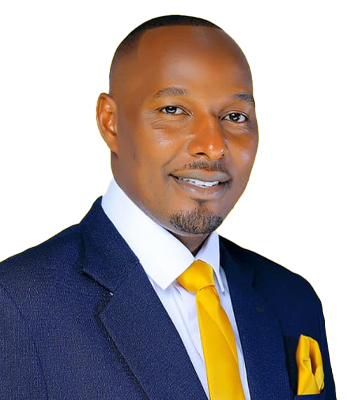
The writer is the National Vice Chairperson NRM Western Region, and CEO Jonard Conglomerate Investments Ltd.
princeasiimwe12@gmail.com
Do you have a story in your community or an opinion to share with us: Email us at Submit an Article