
Sign In
  • UGANDA
  • AFRICA
  • WORLD
watchdog uganda logo
Submit an Article
  • Home
  • News
    • National
    • Politics
    • World News
    • Media Outreach Newswire
    • Africa News
    • Tourism
    • Community News
    • Luganda
    • Sports
      • Football
      • Motorsport
  • Op-Ed
    • #Out2Lunch
    • Conversations with
    • Politics
    • Relationships
  • Business
    • Agriculture
    • CEOs & Entrepreneurs,
    • Companies
    • Finance
    • Products
    • RealEstate
    • Technology
  • Entertainment
    • Lifestyle
  • People
    • Showbiz
      • Salon Mag
  • Special Report
    • Education
    • Voices
  • Reviews
    • Products
    • Events
    • Hotels
    • Restaurants
    • Places
  • Forums
  • Donate
  • China News

Archives

  • January 2026
  • December 2025
  • November 2025
  • October 2025
  • September 2025
  • August 2025
  • July 2025
  • June 2025
  • May 2025
  • April 2025
  • March 2025
  • February 2025
  • January 2025
  • December 2024
  • November 2024
  • October 2024
  • September 2024
  • August 2024
  • July 2024
  • June 2024
  • May 2024
  • April 2024
  • March 2024
  • February 2024
  • January 2024
  • December 2023
  • November 2023
  • October 2023
  • September 2023
  • August 2023
  • July 2023
  • June 2023
  • May 2023
  • April 2023
  • March 2023
  • February 2023
  • January 2023
  • December 2022
  • November 2022
  • October 2022
  • September 2022
  • August 2022
  • July 2022
  • June 2022
  • May 2022
  • April 2022
  • March 2022
  • February 2022
  • January 2022
  • December 2021
  • November 2021
  • October 2021
  • September 2021
  • August 2021
  • July 2021
  • June 2021
  • May 2021
  • April 2021
  • March 2021
  • February 2021
  • January 2021
  • December 2020
  • November 2020
  • October 2020
  • September 2020
  • August 2020
  • July 2020
  • June 2020
  • May 2020
  • April 2020
  • March 2020
  • February 2020
  • January 2020
  • December 2019
  • November 2019
  • October 2019
  • September 2019
  • August 2019
  • July 2019
  • June 2019
  • May 2019
  • April 2019
  • March 2019
  • February 2019
  • January 2019
  • December 2018
  • November 2018
  • October 2018
  • September 2018
  • August 2018
  • July 2018
  • June 2018
  • May 2018
  • April 2018
  • March 2018
  • February 2018
  • January 2018
  • December 2017
  • November 2017
  • October 2017
  • September 2017
  • August 2017
  • July 2017
  • June 2017
  • May 2017
  • April 2017
  • March 2017
  • February 2017
  • January 2017
  • November 2016
  • October 2016
  • September 2016
  • August 2016
  • July 2016
  • September 2015
  • April 2014
  • June 2013

Categories

  • #Out2Lunch
  • Agriculture
  • Big Brother Naija Dairy
  • Business
  • CEOs & Entrepreneurs,
  • China News
  • Community News
  • Companies
  • Conversations with
  • Court
  • culture
  • Deplomacy
  • Education
  • Education
  • Entertainment
  • Entrepreneurs
  • Events
  • Fashion
  • Finance
  • Football
  • Health
  • Hotels
  • Innovation
  • Lifestyle
  • Luganda
  • Motorsport
  • National
  • News
  • Op-Ed
  • Opinion
  • People
  • Photos
  • Places
  • Politicians
  • Politics
  • Politics
  • Products
  • Products
  • RealEstate
  • Relationships
  • religion
  • Reports
  • Restaurants
  • Reviews
  • Salon Magazine
  • Showbiz
  • Special Report
  • Sports
  • Stars
  • Technology
  • Tourism
  • Travel
  • Traveler
  • Trips
  • Video
  • Voices
  • World
  • World News
Reading: DR. SAMUEL B. ARIONG: Theorizing Yoweri Museveni’s Ekibaalo on food security and commercial production; Winners and losers (part two)
Share
Watchdog UgandaWatchdog Uganda
Font ResizerAa
  • Home
  • News
  • Op-Ed
  • Business
  • Entertainment
  • People
  • Special Report
  • Reviews
  • Forums
  • Donate
  • China News
Search
  • Home
  • News
    • National
    • Politics
    • World News
    • Media Outreach Newswire
    • Africa News
    • Tourism
    • Community News
    • Luganda
    • Sports
  • Op-Ed
    • #Out2Lunch
    • Conversations with
    • Politics
    • Relationships
  • Business
    • Agriculture
    • CEOs & Entrepreneurs,
    • Companies
    • Finance
    • Products
    • RealEstate
    • Technology
  • Entertainment
    • Lifestyle
  • People
    • Showbiz
  • Special Report
    • Education
    • Voices
  • Reviews
    • Products
    • Events
    • Hotels
    • Restaurants
    • Places
  • Forums
  • Donate
  • China News
Have an existing account? Sign In
Follow US
© 2026 Watchdog Uganda. Ruby Design Compan. All Rights Reserved.
Conversations withOp-Ed

DR. SAMUEL B. ARIONG: Theorizing Yoweri Museveni’s Ekibaalo on food security and commercial production; Winners and losers (part two)

Watchdog Uganda
Last updated: 7th October 2023 at 09:30 9:30 am
Watchdog Uganda
Share
Dr. Samuel B. Ariong (PhD)
SHARE

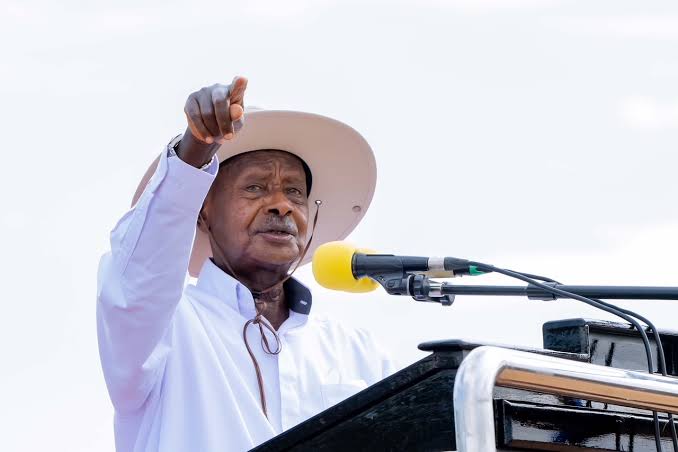
In his address while commissioning the new Tororo Cement vertical rolling mill plant on 25th September 2023, President Yoweri Museveni repeated his plea to Ugandans to diversify production at the household level. He noted “I told you that since many families have fragmented land, don’t just do agriculture aimlessly without “ekibaro”. If you have got four acres, I advise you on the four-acre plan; on one acre plant coffee, second plant fruits like mangoes, oranges and pineapples, third acre put pasture for zero grazing cows and the fourth acre you put food like cassava. And if you are near a swamp do fish farming, meanwhile in the backyard you put poultry for eggs and also for those who are not Muslims or traditional Banyankore you put pigs,” he said. 

The President continued, “That is what we advised you, but Ugandans don’t listen. Many of them are determined to remain in poverty. The Bakedi have cultivated but they have done so without “ekibaro” because I see half an acre of maize yet to get money from that crop you need like 100 acres. I’m going to come back and really; we shall have to discuss this issue.” 

The central question, therefore, why have Ugandans, especially millions of poor small holder farmers dotted across the country (like in Akadot, Mukongoroshire) failed to take up the President’s plea? 

Let me attempt to address this question in phases; commercialization of smallholder agriculture – meaning a shift from subsistence to more market-oriented farming – can lead to productivity growth, income growth, employment growth, and poverty reduction. Previous studies confirmed that commercialized farms have higher household incomes than continued practice of subsistence-oriented farming, also after controlling for other relevant factors (von Braun, 1995). A few studies also showed that commercialization contributes to poverty reduction among African smallholders. Agricultural commercialization also improves food supply in urban areas, with broader growth and welfare effects. 

Byerlee et al., (2006) argued that development of market-oriented food systems could be the best option for sustainable agricultural productivity and food security. Market production involves increased use of purchased inputs which in turn produce marketable surpluses (Martey et al., 2012). Market-oriented production can impact food security through direct and indirect effects. Direct effects include gains from enhanced economic access to food as a result of raised income which can be used to purchase food, while indirect effects are gains derived from investing income from the cash crop into production of staple crops. Market production plays a significant role in reducing regional food insecurity. Local food shortages caused by imbalances in food distribution due to ecological differences in some rural areas can be addressed through market production. It further allows (productivity enhancing) specialization in production and access to a variety of food, hence reducing the burden for households to produce all that they have to consume (Timmer, 1997). 

This is, however, only practical when a well-functioning agricultural marketing system exists. The functioning of markets is critical for market-oriented households to sell their produce and raise sufficient income for non-food consumption, as well as to acquire the food they do not produce themselves. 

Ntakyo (2018), in her PhD thesis highlights that in situations of missing markets and market imperfections that characterize most rural areas in rural Uganda, market-oriented production, if not properly supported, can be a threat to food security, especially for the resource poor households. Poor infrastructure -especially poor roads in rural areas, pushes up transport costs and makes it difficult for farmers to access markets. This affects both sellers and buyers. Sellers will not get competitive prices due to limited competition of traders, and buyers will pay high prices which might affect the quantities purchased. In most rural areas, local farmers tend to produce similar crops, and for similar reasons of poor infrastructure, food outflows exceed inflows. Therefore, during the lean season there is less food in the local markets, and this puts market-oriented households at risk of food insecurity. Moreover, poor households who cannot produce sufficient quantities of high-quality foodstuffs may not compete on the market. The implication is that they cannot raise enough income for food and non-food consumption. Food price volatility equally impacts on food security of market-oriented households. 

Most farmers sell their produce at low prices soon after harvest and buy food at higher prices during the lean period (Stephens & Barrett, 2011). This is partly attributed to inadequate support services and weak institutions. Lack of agricultural insurance and limited access to financial institutions in the rural areas make farmers vulnerable to seasonal price variability. Limited access to and high cost of credit compel farmers to sell their produce at low prices as they cannot borrow to smooth consumption and deal with shocks. This negatively affects returns from market production thus affecting livelihoods and household food security. 

Besides, commercialization of agriculture sometimes diverts resources away from home production of food and exposes resource poor households to a greater risk of food insecurity. Reallocation and untimely allocation of critical inputs to staple food production may result into technical inefficiency and expose households to food insecurity. Some economists have argued that market production partly contributed to why the green revolution in Asia did not address the problem of food and nutrition security. Reallocation of crop land from subsistence to production of grain for income replaced pulses that provided food to the peasants for wheat, significantly exposing poor households to a greater risk of food and nutrition insecurity (Frison et al.,

Lastly on poverty, existing empirical evidence of agricultural commercialisation among peasants and poverty effects of commercialization only looked at income poverty. While income (or expenditure and savings) data are widely used to analyze poverty, the data cannot fully capture the multidimensional and complex nature of poverty in Uganda, including deprivations in education, health, nutrition, property ownership and other dimensions of living standard. The simple argument that additional income earned from agricultural commercialization will automatically be spent on satisfying basic needs or accumulating of more wealth may only be hypothetical. Different types of income may be controlled by different persons within the farm household and used for different purposes away from poverty reduction areas, eg drinking local brew (Ajon/Malwa), marrying more women (Apailon), betting on who will win European football matches or buying soda, bottled beer, doughnuts (Otum beru), airtime or cooking oil (buto).

In light of the above argumentation, it might be important to undertake more studies to explore why millions of Ugandans do not listen to the President, as he laments. 

Dr Samuel B. Ariong (PhD) is a recent post doctorate fellow, obtained a PhD in poverty reduction, and he is a lecturer in Australia and a Model Farmer in Kidetok, Serere, rural Eastern Uganda. 


Do you have a story in your community or an opinion to share with us: Email us at Submit an Article

Subscribe to Our Newsletter
Subscribe to our newsletter to get our newest articles instantly!
TAGGED:Commercial productionFood SecurityugandaYoweri Museveni
Share This Article
Facebook Whatsapp Whatsapp Email Copy Link
ByWatchdog Uganda
Follow:
Watchdog is a breaking news and blogs online publication covering majorly issues about Uganda and East Africa at large. Email: info@watchdog.co.ug
Previous Article ADAM KAMULEGEYA: Politics of Commonsense: The Road Ahead for MK (Part II)
Next Article Rukungiri: Man murdered by colleagues over bar girl

Editor's Pick

Op-EdPolitics

NESTOR BASEMERA,PhD: ‘Overly ambitious’ ‘too aggressive’, -or ‘slay queens’: Gendered attacks, threats, and disinformation in Ugandan politics

Disinformation has become a prominent aspect of electoral campaigns worldwide, shaping political…

By
watchdog
3 Min Read
Community NewsNewsPolitics

Petition Against Joel Ssenyonyi Sparks Political Debate As His Aunt Joan Vumilia Responds

Kampala, Uganda – A petition challenging the nomination of Nakawa West Member…

3 Min Read
Politics

Pastor Kayanja Says Museveni’s Seventh Term Will Be a Season of Completion

The Founder and Senior Pastor of Miracle Centre Cathedral, Pastor Robert Kayanja,…

2 Min Read

Top Writers

Mike Ssegawa 671 Articles
Two decades of reporting, editing and managing news content. Reach...
Mulema Najib 4292 Articles
News and Media manager since 2017. Specialist in Political and...

Op-ED

#OutToLunch: How Uganda can easily reduce the housing deficit

By Denis Jjuuko It is not uncommon to find a…

8th January 2026 at 13:50

OWEYEGHA AFUNADUULA: Two sides of the same coin: Intellectual Death and cultural death in Uganda

Since 1986, Uganda has been subjected…

8th January 2026 at 11:17

NESTOR BASEMERA,PhD: ‘Overly ambitious’ ‘too aggressive’, -or ‘slay queens’: Gendered attacks, threats, and disinformation in Ugandan politics

Disinformation has become a prominent aspect…

7th January 2026 at 22:14

Why Trump’s Visa Bond Targets Uganda — And What It Means for US–Uganda Relations

Diplomatically, the bond policy introduces quiet…

7th January 2026 at 09:30

RICHARD MUSAAZI: Police militarization is a mindset

“There's a reason you separate the…

6th January 2026 at 19:56

You Might Also Like

Op-EdPolitics

Dr.Ayub Mukisa: Rather Than Real Politics: Why Do Kyagulanyi’s Supporters Appear to Be Showcasing?

With only a few days left before Ugandans go to the polls in the presidential election, a critical analysis of…

3 Min Read
Op-EdPolitics

Shocking Reasons Why America Cannot Topple President Museveni

In the intricate dance of international diplomacy, the relationship between the United States and Uganda under President Yoweri Museveni has…

6 Min Read
Op-EdPolitics

NESTOR BASEMERA, PhD: Igniting Hope: Young Ugandans Ready to Make Their Voices Count Through the Vote

Before the pivotal general election on January 15th, young people in Uganda are mobilizing first-time voters to participate. Prior to…

4 Min Read
Op-EdPolitics

ISIDOROS KARDERINIS: The unprecedented kidnapping of Maduro

The unprecedented kidnapping in the world annals, in the manner in which it took place, of Venezuelan President Nicolas Maduro…

8 Min Read
watchdog uganda logo

About Us

Watchdog Uganda is a portal for solution journalism, trending news plus cutting edge commentaries in the fields of politics, security, business, tourism, entertainment, technology, agriculture, climate change, environment, public health et al. We also give preference to Ugandan community news and topical discussions. The portal also publishes community news and topical discussions.

Quick Links

  • Submit an Article
  • Forums
  • About Us
  • Contact Us
  • Advertise
  • Terms and Conditions

Follow Us

FacebookLike
XFollow
YoutubeSubscribe

© 2026 Watchdog Uganda. All Rights Reserved.

Welcome Back!

Sign in to your account

Username or Email Address
Password

Lost your password?