The World Bank Group (WBG) is an international organization tasked with promoting economic development and combating poverty in the developing world. As part of its mission, the Bank helps to plan, implement, and fund development projects which among other things, build schools, water treatment plants, and hydroelectric dams. The World Bank is one of the largest, most well-funded, and influential international institutions in the world. With a staff of over 10,000 and operations in 188 countries, the Bank has a truly global reach. In addition to the global scale of its operations, the Bank also commands significant financial resources. In 2012 the WBG distributed $52.6 billion dollars’ worth of development aid, a value which is greater than the gross domestic product (GDP) of most developing nations (World Bank Annual Report 2012a).
Given its depth of resources, the scope of its reach, and its unique mandate, the Bank has a profound impact on the lives of millions of people across the globe, Ugandans inclusive, irrespective of morals, cultural or religious values.
The WBG is composed of five agencies, four of which are engaged in development activities while the fifth providing dispute resolution services to mediate conflicts between investors and the Bank’s members. The main branch of the WBG group is the International Bank for Reconstruction and Development (IBRD). Its sister agency is the International Development Association (IDA), which provides low interests loans and grants to the World’s most impoverished nations like Uganda.
In addition to the IBRD and IDA, the WBG is also composed of the International Finance Corporation (IFC), and the Multilateral Investment Guarantee Agency (MIGA). The IBRD, IDA, and IFC provide developing countries access to capital through the use of loans, grants, and in the case of the IFC, direct investment.
The IBRD and IDA offer funding to the governments of developing countries, whereas the IFC lends directly to private industries in the developing world. MIGA differs from the other arms of the WBG, in that it provides an indirect form of development assistance. Rather than awarding funding directly to recipient countries, MIGA works to attract foreign investors by providing investment risk insurance.
In early August 2023, the World Bank suspended financial support to any new projects in Uganda over the law which prohibits and punishes those who dabble in the immorality of homosexuality, recruiting children into immoral acts indulging in exhibitionism and promoting the vice.
Donor sanctions like cutting aid/loans are by their nature coercive and reinforce the disproportionate power dynamics between donor institutions and recipients, […] the sanctions sustain the division between the LGBTQI community and the broader civil society.
In a context of general human rights violations, where women are almost as vulnerable as LGBTQI people, or where access to health or food security are not guaranteed for anyone, singling out LGBTQI issues highlights the notions that LGBTQI rights are special and hierarchically more important than others to donor nations and their frontline institutions like the World Bank. It also, paradoxically, has the effect of supporting, rather than counteracting, the vicious notion that homosexuality is ‘un-African’ and a Western-sponsored ‘idea’ and that countries like the US will only act when ‘their interests’ have been threatened. When millions of Ugandans like those in Akadot -Mukongoroshire in rural Eastern Uganda go without food or when thousands are buried alive by floods in Buginyanya, Bulambuli, its seen as their failure to cultivate or to relocate from the slopes of the volcanic mountain.
As such it’s therefore important to clearly understand the factors which frame how the World Bank and other international and bilateral donor agencies and institutions distribute their development aid and loans. The central question is, what explains variation in the Bank’s lending behaviour; today they suspend loans, tomorrow they change? Is the Bank really concerned about what two or more adults agree in their private rooms, or is the government of Uganda going to deploy Police officers into people’s private rooms to watch what they do?
I will attempt to address these questions, in two or three parts if the time allows, but most importantly, I will touch on issues of World Bank independence and how this frames the distribution of loans or aid. There are two dominant images of the World Bank. The first depicts the institution as a technocratic international bureaucracy which awards funding based on objective development criteria. The second portrays the Bank as an instrument of Western political power, in which development aid and loans are distributed according to the foreign policy prescriptions of the Bank’s most influential members—principally the United States. According to the former, the Bank is an autonomous institution which takes its cues from member-states, but largely charts an independent course. In contrast, the latter characterizes the Bank as little more than a tool of powerful Western hegemony as Robert Wade once described the situation, the Bank is “a source of funds to be offered to US friends or denied to US enemies” (Wade 2002, p. 203).
Existing explanations of the Bank’s behaviour centre on two, largely competing narratives which tend to reinforce the “independent versus captured” dichotomy described above. The first, and dominant explanation, is derived from studies which focus directly on the Bank’s provision of development capital. Such studies find that the Bank’s behaviour is heavily influenced by international political pressures. Several studies have shown that politically well-connected countries are both more likely to receive development aid and loans and tend to receive larger volumes of funding than their less well positioned peers, irrespective of the so called human rights violations in ‘recipient’ countries (Andersen et al. 2006, Dreher et al. 2009, Fleck and Kilby 2006, Vreeland and Dreher 2014). The main implication of such studies is that development aid or loans are subject to politicization from powerful states—specifically the United States and northern governments. From this perspective, the Bank is viewed as subordinate to the whims of its most powerful members. Besides, while there has been considerable focus on whether the World Bank and other Bilateral donor agencies connect aid and loans to human rights performance, the attention should be drawn to whether aid conditionality—and donor responses more broadly—prevent rights violations in recipient countries. This is despite numerous examples of the failure of the World Bank conditionality to avert rights abuses (Brown 2005; Crawford 1997). This argument is demonstrated through an in-depth analysis of donors’ response to recent introduction of the legislation in Uganda that violates the basic rights of LGBTQI people in the country. The Anti-Homosexuality Bill (AHB) was first tabled in the Ugandan Parliament in 2009. It was signed into law as the Anti-Homosexuality Act (AHA) in February 2014, before being overturned six months later, though it later into law again with stringent measures. It generated significant international attention and strong condemnation by Western governments and donors, including now suspension of aid or loans for new projects in Uganda.
In contrast, a second set of studies on reform periods within the Bank highlights the organization’s ability to resist external pressures and maintain an independent course (Nielson and Tierney 2003, Nielson et al. 2006, and Weaver 2008). These studies focus on various dimensions of the principal-agent relationship between the Bank and its most influential members, to explain the organization’s ability to resist the demands of powerful states.
However, in reality, the Bank lies somewhere in between these two narratives – being subject to donor-state pressures, but not so much so that is it loses its independence or that it becomes simply a clearinghouse to reward the politically connected governments that continue to advance Western hegemony, human rights protection being secondary or a camouflage.
In Summary, utilizing data on the Bank’s lending behaviour across all four development arms of the WBG between 1990 through 2011, there is consistent evidence that the amount of aid and loans countries receive is positively correlated with their political and economic ties to the Bank’s largest donors. Across multiple dimensions of donor influence, including hitherto untested measures, countries with closer geostrategic ties to the Bank’s largest donors tend to receive more aid than their peers. Most importantly away from the hype around human rights protection, it’s clear a multi-donor model of political influence is an improvement over traditional models which tend to overlook the impact of donors other than the United States. Along several dimensions of donor influence the Bank’s other top donors, Japan, Germany, the United Kingdom, and France have all shown to exert a statistically significant impact on the organization’s lending approaches.
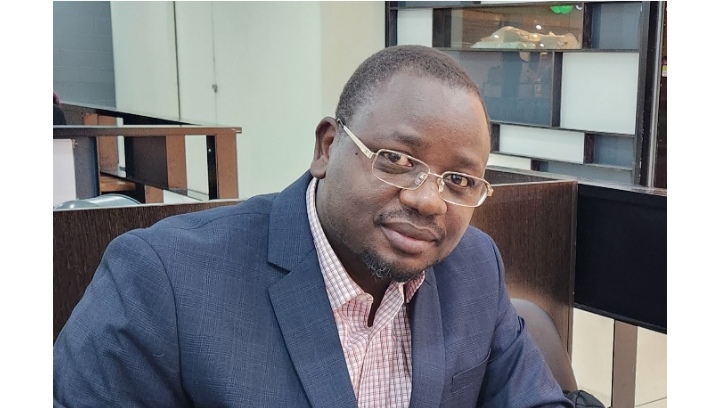
Dr. Samuel B. Ariong (PhD) is a recent Post Doctorate Fellow of Aid, policy and poverty, and obtained a PhD in Poverty reduction, and is a lecturer and a Model Framer in Kidetok Serere.
Do you have a story in your community or an opinion to share with us: Email us at Submit an Article