Sign In
  • UGANDA
  • AFRICA
  • WORLD
watchdog uganda logo
Submit an Article
  • Home
  • News
    • National
    • Politics
    • World News
    • Media Outreach Newswire
    • Africa News
    • Tourism
    • Community News
    • Luganda
    • Sports
      • Football
      • Motorsport
  • Op-Ed
    • #Out2Lunch
    • Conversations with
    • Politics
    • Relationships
  • Business
    • Agriculture
    • CEOs & Entrepreneurs,
    • Companies
    • Finance
    • Products
    • RealEstate
    • Technology
  • Entertainment
    • Lifestyle
  • People
    • Showbiz
      • Salon Mag
  • Special Report
    • Education
    • Voices
  • Reviews
    • Products
    • Events
    • Hotels
    • Restaurants
    • Places
  • Forums
  • Donate
  • China News

Archives

  • January 2026
  • December 2025
  • November 2025
  • October 2025
  • September 2025
  • August 2025
  • July 2025
  • June 2025
  • May 2025
  • April 2025
  • March 2025
  • February 2025
  • January 2025
  • December 2024
  • November 2024
  • October 2024
  • September 2024
  • August 2024
  • July 2024
  • June 2024
  • May 2024
  • April 2024
  • March 2024
  • February 2024
  • January 2024
  • December 2023
  • November 2023
  • October 2023
  • September 2023
  • August 2023
  • July 2023
  • June 2023
  • May 2023
  • April 2023
  • March 2023
  • February 2023
  • January 2023
  • December 2022
  • November 2022
  • October 2022
  • September 2022
  • August 2022
  • July 2022
  • June 2022
  • May 2022
  • April 2022
  • March 2022
  • February 2022
  • January 2022
  • December 2021
  • November 2021
  • October 2021
  • September 2021
  • August 2021
  • July 2021
  • June 2021
  • May 2021
  • April 2021
  • March 2021
  • February 2021
  • January 2021
  • December 2020
  • November 2020
  • October 2020
  • September 2020
  • August 2020
  • July 2020
  • June 2020
  • May 2020
  • April 2020
  • March 2020
  • February 2020
  • January 2020
  • December 2019
  • November 2019
  • October 2019
  • September 2019
  • August 2019
  • July 2019
  • June 2019
  • May 2019
  • April 2019
  • March 2019
  • February 2019
  • January 2019
  • December 2018
  • November 2018
  • October 2018
  • September 2018
  • August 2018
  • July 2018
  • June 2018
  • May 2018
  • April 2018
  • March 2018
  • February 2018
  • January 2018
  • December 2017
  • November 2017
  • October 2017
  • September 2017
  • August 2017
  • July 2017
  • June 2017
  • May 2017
  • April 2017
  • March 2017
  • February 2017
  • January 2017
  • November 2016
  • October 2016
  • September 2016
  • August 2016
  • July 2016
  • September 2015
  • April 2014
  • June 2013

Categories

  • #Out2Lunch
  • Agriculture
  • Big Brother Naija Dairy
  • Business
  • CEOs & Entrepreneurs,
  • China News
  • Community News
  • Companies
  • Conversations with
  • Court
  • culture
  • Deplomacy
  • Education
  • Education
  • Entertainment
  • Entrepreneurs
  • Events
  • Fashion
  • Finance
  • Football
  • Health
  • Hotels
  • Innovation
  • Lifestyle
  • Luganda
  • Motorsport
  • National
  • News
  • Op-Ed
  • Opinion
  • People
  • Photos
  • Places
  • Politicians
  • Politics
  • Politics
  • Products
  • Products
  • RealEstate
  • Relationships
  • religion
  • Reports
  • Restaurants
  • Reviews
  • Salon Magazine
  • Showbiz
  • Special Report
  • Sports
  • Stars
  • Technology
  • Tourism
  • Travel
  • Traveler
  • Trips
  • Video
  • Voices
  • World
  • World News
Reading: ANDREW MWENDA: Lessons on poverty from COVID-19
Share
Watchdog UgandaWatchdog Uganda
Font ResizerAa
  • Home
  • News
  • Op-Ed
  • Business
  • Entertainment
  • People
  • Special Report
  • Reviews
  • Forums
  • Donate
  • China News
Search
  • Home
  • News
    • National
    • Politics
    • World News
    • Media Outreach Newswire
    • Africa News
    • Tourism
    • Community News
    • Luganda
    • Sports
  • Op-Ed
    • #Out2Lunch
    • Conversations with
    • Politics
    • Relationships
  • Business
    • Agriculture
    • CEOs & Entrepreneurs,
    • Companies
    • Finance
    • Products
    • RealEstate
    • Technology
  • Entertainment
    • Lifestyle
  • People
    • Showbiz
  • Special Report
    • Education
    • Voices
  • Reviews
    • Products
    • Events
    • Hotels
    • Restaurants
    • Places
  • Forums
  • Donate
  • China News
Have an existing account? Sign In
Follow US
© 2026 Watchdog Uganda. Ruby Design Compan. All Rights Reserved.
Conversations withOp-Ed

ANDREW MWENDA: Lessons on poverty from COVID-19

watchdog
Last updated: 23rd October 2020 at 13:19 1:19 pm
watchdog
Share
Andrew Mwenda
SHARE

It is seven months since Uganda locked down due to COVID. The lesson I have learnt from the lockdown is not related to health but economics. It concerns the method we use to measure poverty (indirectly, wellbeing).

Currently, the Uganda Bureau of Statistics (UBOS), like nearly all measurements of poverty elsewhere in the world, relies on income. COVID has taught us that income can sometimes be a misleading indicator of wellbeing.

To be accurate, UBOS believes that people are often unwilling to declare their income. So it uses people’s expenditure as a backdoor to understand their income i.e. the “mean consumption per capita.” This refers to a basket of goods and services someone needs to sustain a bearable lifestyle. UBOS believes people can be honest about how much they spend not how much they earn.

Now according to UBOS, the number of people living in poverty in Kampala District is only 2.6% and in the surrounding Wakiso District, 2.7%, making these two districts the richest (or the least poor). The districts with the largest percentage poor people are Kotido (73.4%) and Nabilatuk (73.1%). Ideally we should conclude from these poverty numbers that people from Kampala and Wakiso have the least precarious livelihoods in Uganda. Right?
However, during the COVID lockdown, government distributed relief food in Kampala and Wakiso, not Kotido and Nabilatuk. Why? Why were the districts with the least number of poor people the ones that got relief food during COVID lockdown? Or was this a sign that government was politically pandering to the most articulate section of our society in Kampala and Wakiso while neglecting of the most vulnerable in Kotido and Nabilatuk?
Governments everywhere tend to fear urban constituencies. This is because being educated; urbanized and articulate, they have a higher ability to organize politically. Cities are centers of political gravity; so urban constituencies can threaten the security of governments, even dictatorial ones. Thus in cases of emergency, governments would be much more responsive to urban than rural demands. We cannot therefore remove this political calculation from the analytical arithmetic that caused government to distribute food in Kampala and Wakiso, and not in Kotido and Nabilatuk.

Yet even with this insight, I think the main reason government provided relief food in Kampala and not Kotido has much more to do with the precariousness of livelihoods than political calculation. I am inclined to believe that the more urbanized a place the more precarious life would be for those at the bottom. This is because practically everything that sustains livelihoods of people in urban areas is secured through the intermediation of the market – they pay rent; buy food, water, energy for cooking, etc.

The lockdown threatened the livelihoods of urban than rural people. For instance, it stopped many of them from working, thereby losing their only source of livelihood – a salary or an income from trading. This meant they could not go to the market to buy the things they need to sustain life. Meanwhile the guys in rural areas live in their own homes, eat from their own gardens, fetch water from their well and collect firewood from the nearby forest or bush.

Thus, even though their incomes may be higher than those of the people in Kotido, people in Kampala live from paycheck to paycheck. For many (taxi drivers, conductors and touts, hawkers and vendors, bar tenders, waiters and waitresses, prostitutes, luggage carriers etc.), it takes only one week of not earning for them to become destitute, homeless and without food. In terms of livelihood security, the fairly better off people in Kampala with higher incomes are much more vulnerable to shocks than the poorer ones in Kotido.

This is where measurement of wellbeing using income becomes misleading. One other measure we can use is wealth. A guy in Kotido may live in a grass thatched hut, but he owns his hut, owns cows, goats and chicken, owns land i.e. commands some wealth. The guy in Kampala who lives a seemingly better lifestyle may own almost no assets at all. In fact his net worth may be negative because he took a loan from a bank to finance his lifestyle. So repayments of the loan take a big chuck of his income at the end of every month.

UBOS’s mean consumption per capita studies the “flow” of income (indirectly using expenditure) at a specific moment in time. A study of wealth deals with the stock of assets a household has accumulated (or inherited) over time. If you do the household survey on poverty during a draught, as happened in 2016, you are likely find many people’s expenditure has significantly declined i.e. they have fallen into poverty. But this would really be misleading because this is a short-term shock that does not reflect their overall quality of life over a period of time.

However, if you do a study wealth i.e. the stock of assets that a household possesses, it does not fluctuate the way their incomes do – based on short-term shocks such as the vagaries of weather. Therefore if the household has a motorcycle or bicycle, own land, have a house built out of permanent materials, own a television, a sofa set, a smart phone, solar power, good beds, blankets and mattresses, descent clothing, etc. – assets they have accumulated over time and which actually measure his actual wellbeing – you will realize that they will not have fallen into poverty.

This realization came to me while I jogged through my village of Kanyandahi. As the seemingly better off people in Kampala were complaining of lack of food during the lockdown, people in my village were less bothered. Yes they complained that prices of their food crops had dramatically declined and they were therefore earning much less. But they were not desperate and did not need external relief. This was a short-term economic shock to their money income but which did not fundamentally affect their lifestyle.

Back in Kampala, even people with a seemingly good middle class background were desperate. With their salaries frozen or cut into a half, bank loans chocking their necks, they found it difficult to survive. Some even sought to return to their villages for livelihood security. One may ask why people still choose to migrate to Kampala. That is a debate for another day. For now, I hope public officials who study poverty and wellbeing take this lesson seriously.


Do you have a story in your community or an opinion to share with us: Email us at Submit an Article
Subscribe to Our Newsletter
Subscribe to our newsletter to get our newest articles instantly!
TAGGED:Andrew MwendaCOVID-19
Share This Article
Facebook Whatsapp Whatsapp Email Copy Link
Bywatchdog
Follow:
Watchdog Uganda is a news portal for trending news and commentaries in the areas of politics, security, business, tourism, technology, education, et al.
Previous Article Pastor Augustine Yiga is not dead- ABS TV management 
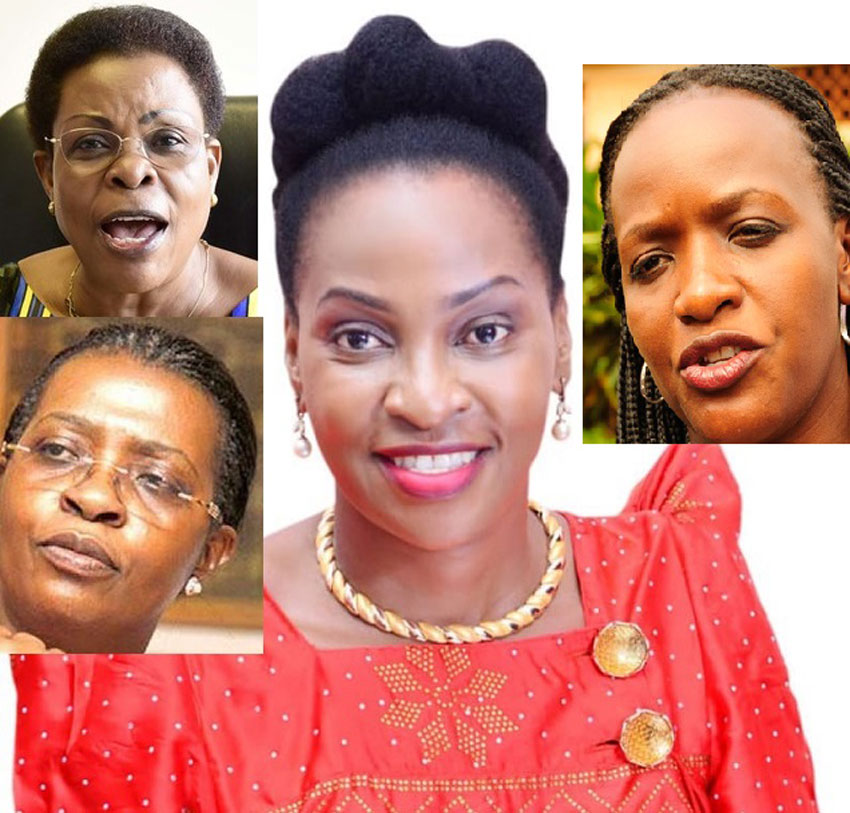
Next Article 2021 Elections: Here are the 4 powerful women standing against men in Kampala 

Editor's Pick

Op-EdPolitics

RICHARD MUSAAZI: Police militarization is a mindset

“There's a reason you separate the military and the police. One fights…

By
watchdog
5 Min Read
Op-EdPolitics

Dr.Ayub Mukisa: Rather Than Real Politics: Why Do Kyagulanyi’s Supporters Appear to Be Showcasing?

With only a few days left before Ugandans go to the polls…

3 Min Read
NewsPolitics

Minister Babalanda Rallies NRM Sub-County Chairpersons to Emphasise Door-to-Door Campaign

Following a special meeting with the NRM Sub-County Chairpersons from Busoga, held…

2 Min Read

Top Writers

Mike Ssegawa 640 Articles
Two decades of reporting, editing and managing news content. Reach...
Mulema Najib 4084 Articles
News and Media manager since 2017. Specialist in Political and...

Op-ED

RICHARD MUSAAZI: Police militarization is a mindset

“There's a reason you separate the military and the police.…

6th January 2026 at 19:56

Dr.Ayub Mukisa: Rather Than Real Politics: Why Do Kyagulanyi’s Supporters Appear to Be Showcasing?

With only a few days left…

6th January 2026 at 19:51

Shocking Reasons Why America Cannot Topple President Museveni

In the intricate dance of international…

6th January 2026 at 08:51

NESTOR BASEMERA, PhD: Igniting Hope: Young Ugandans Ready to Make Their Voices Count Through the Vote

Before the pivotal general election on…

5th January 2026 at 12:18

ISIDOROS KARDERINIS: The unprecedented kidnapping of Maduro

The unprecedented kidnapping in the world…

5th January 2026 at 12:00

You Might Also Like

Op-EdPolitics

Dr. Ayub Mukisa: Who Is Really Wasting Time Under Museveni’s Regime: Kyagulanyi or His Supporters?

As Uganda’s presidential elections draw closer, political emotions are once again intensifying. This moment demands honesty—particularly to reduce the frustrations…

3 Min Read
Op-EdPolitics

Dr. Ayub Mukisa: Are Kyagulanyi’s Supporters Living in Falsehoods About His Presidential Bid Against Museveni?

While Robert Kyagulanyi Sentamu (Bobi Wine) has shown the ability to mobilize and establish a strong connection with urban youth…

3 Min Read
Conversations withOp-Ed

OWEYEGHA AFUNADUULA: The missing link: Why a vibrant society needs public intellectuals to bridge academia and public life

In an age of information overload and polarized discourse, we are not suffering from a lack of knowledge, but from…

5 Min Read
Conversations withOp-Ed

OWEYEGHA- AFUNADUULA: From publish or perish to public purpose: A new chapter for the retired academic 

My first article in this line of thought was "Why Publish or Perish; Why Not Publish and Perish?" published in…

15 Min Read
watchdog uganda logo

About Us

Watchdog Uganda is a portal for solution journalism, trending news plus cutting edge commentaries in the fields of politics, security, business, tourism, entertainment, technology, agriculture, climate change, environment, public health et al. We also give preference to Ugandan community news and topical discussions. The portal also publishes community news and topical discussions.

Quick Links

  • Submit an Article
  • Forums
  • About Us
  • Contact Us
  • Advertise
  • Terms and Conditions

Follow Us

FacebookLike
XFollow
YoutubeSubscribe

© 2026 Watchdog Uganda. All Rights Reserved.

Welcome Back!

Sign in to your account

Username or Email Address
Password

Lost your password?